Washington, DC —
For September 1995, Sony release im big home console, PlayStation, for US for $299.99, wey come cheaper pass Sega Saturn wey dem commot the same year for $399.99.
By 2020, the normal PlayStation 5 cost $499.99. Dis kain jump easy to explain: technology dey move, economy dey change.
Wetin hard pass na where the price dey now. Di same console generation dey sell today for $649.99, after two price hikes inside less than eight months — from $499.99 to $549.99 for August 2025, den to $649.99 this April.
Price increase wey high like dis, for late part of console life-cycle, na break from how industry usually dey do; normally dem dey cut price for middle of generation, no dey raise am.
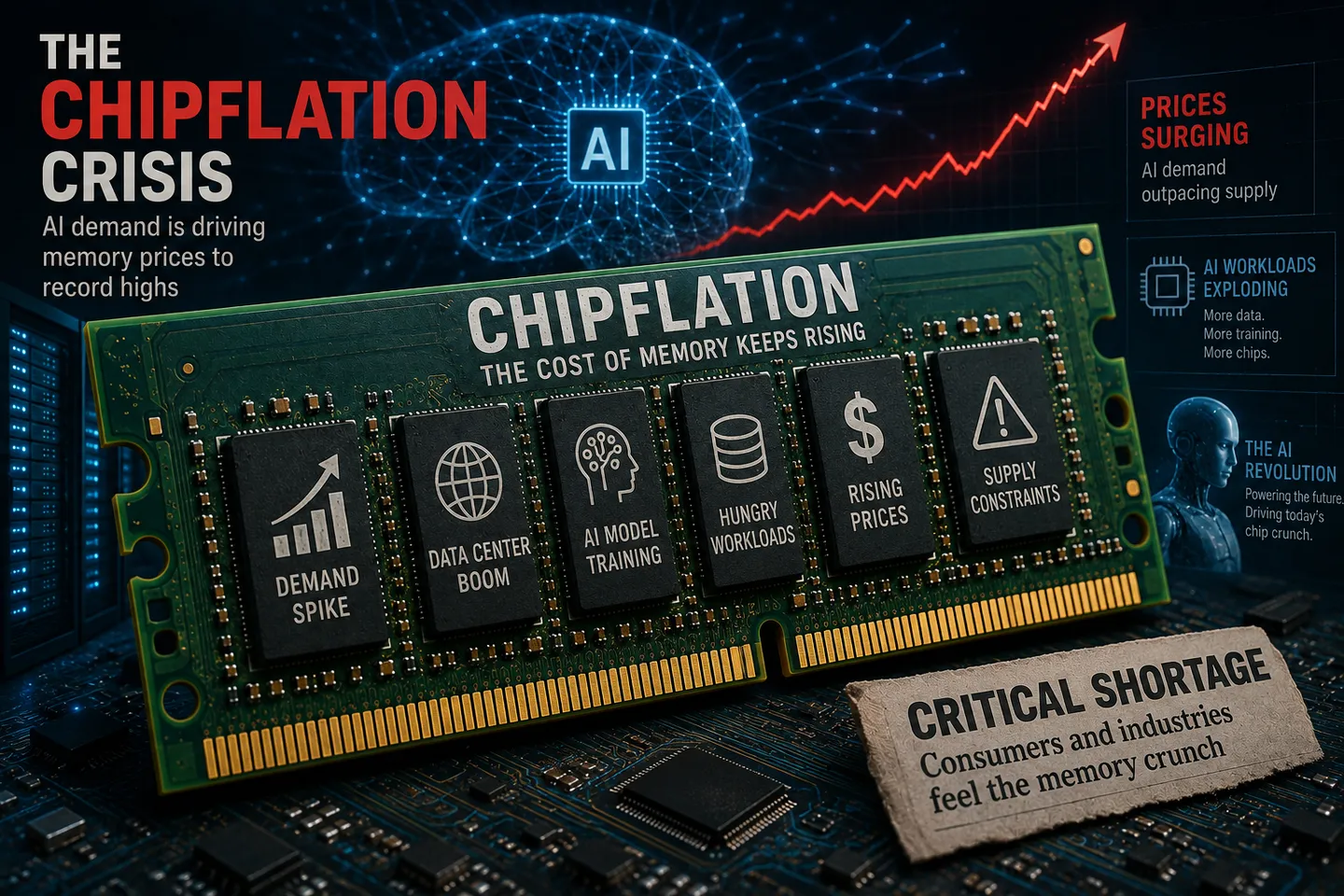
PS5 na the most visible sign. Laptops, smartphones, tablets, smart TVs and even connected vehicles dey feel the same thing: chipflation — memory price rise wey AI boom cause.
A vanished subsidy
Chipflation na as dem dey call the rise for cost of memory chips and semiconductors. But behind the word dey one supply chain wey normal consumers no dey see, one wey dey run by contracts, allocations and sometimes spot markets — no be only shelf wey person dey buy for shop.
Big manufacturers dey predict their memory needs years before and dem go lock supply deals. When demand jump or supply tight, prices go move quick.
Ram Bala, associate professor for AI and analytics for Leavey School of Business, Santa Clara University, talk say Morgan Stanley na dem first use "chipflation" to explain how trend wey dey last 50 years don change — memory prices dey halve almost every five years before.
"That steady deflation na the quiet subsidy behind the consumer electronics business model: every year you dey get more storage and more RAM for the same price. That subsidy don waka," Bala tell TRT World.
"The magnitudes dey historic. For the second quarter of 2026, DRAM contract prices rise 58 percent to 63 percent quarter over quarter and NAND Flash 70 percent to 75 percent, the largest increases for one decade, with the supply gap the widest since 2011."
One 32GB DDR5 memory kit wey dey sell for $100 to $200 for October 2025 now dey start from $350, if e still dey available at all.
AI boom at the centre
To expand chip production capacity go take years and billions of dollars, so even if demand sharp, e go still shake the whole supply chain. AI data centres don create huge demand for high-bandwidth memory (HBM).
"This no be general inflation, and no be tariff. Na capacity allocation decision inside three companies," Bala talk, meaning Samsung, SK Hynix and Micron, wey control 90 percent to 95 percent of global DRAM production and dem don redirect capacity toward HBM for AI accelerators.
HBM dey use three to four times the wafer capacity of standard DRAM per gigabyte, that one mean say each unit wey dem send to AI data centre dey remove about three units of conventional DRAM from everybody else supply.
HP talk for February say memory now dey make up 35 percent of hin PC materials, compared to 15 percent to 18 percent just one quarter before.
"No manufacturer fit absorb swing wey big like dat," Bala add.
Shrinkflation
Companies dey respond in two ways: dem dey raise prices and dem dey cut cost.







"Price: Lenovo, Dell, HP, Acer and ASUS don warn customers say dem fit do 15 percent to 20 percent increases and contract resets. Xiaomi and Redmi don tell customers make dem expect increases of 20 percent to 30 percent," Bala talk.
Some manufacturers dey quietly remove features instead — lower quality screens, cut corners — without changing the price tag. "Call am shrinkflation for electronics," Bala talk.
Others dey rearrange product lines: Samsung, Microsoft and Dell don raise price for some models while dem cut availability of the cheaper ones, postpone launches and stop discounts on old stock.
Consoles: the cleanest illustration
Game consoles show the pattern clear pass, Bala talk, "because three companies wey no dey move together normally all move the same direction, and mid-cycle price cuts na the industry norm."
Sony's Digital Edition PS5 climb from $399.99 to $499.99 for August 2025, den go $599.99 this April. The PS5 Pro don climb from the $699.99 launch price to $899.99.
Nintendo tell customers for May say the Switch 2, wey dem launch for 2025 at $449.99, go rise to $499.99 from 1 September, and dem mention "various changes in market conditions, which are expected to extend over the medium to long term."
Microsoft don raise price of Xbox Series X three times since e start for $499.99 in 2020, most recently to $799.99 this August. For one June statement, Xbox point straight to memory costs: "The entire consumer electronics industry is struggling with the current components crisis, but the effects are particularly hard on consoles."
The pressure no end for consoles alone.
"On the PC side: Dell's COO call the cost escalation unprecedented, and Lenovo tell customers say all current quotations and prices go expire on 1 January 2026," Bala talk.
"Raspberry Pi's CEO describe the situation as painful" for one December blog post wey dem announce higher prices.
Wider fallout
The effects reach markets wey dey more sensitive to price than the US.
GSMA talk for March say the memory-price surge dey make am hard to hit the $30-$40 range wey needed for mass-market 4G smartphones for Africa.
Counterpoint report say Mexico's smartphone market fall 9 percent year-on-year for January and February, and rising memory costs na one of the causes.
Bala expect "demand destruction" inside the next 12 to 18 months: IDC forecast 13.9 percent decline in global smartphone shipments and 11.3 percent drop in PCs.
"Replacement cycles go long, and the refurbished market go grow," he talk, adding say J.P. Morgan estimate every 10 percent rise in hardware costs add about 0.1 percent to core inflation measures, with 0.2 to 0.4 percentage points tied specifically to the memory shock.
Relief go take time. New fabrication capacity go take 18 to 24 months to build, and meaningful volume no dey expected before 2028, when Samsung's P5 fab for Pyeongtaek dey target mass production.
Estimates of how long the squeeze go last dey vary plenty: SK Hynix's CEO tell Reuters for July say e fit continue "beyond 2030," while one ex-Samsung chip chief say prices fit fall as early as the second half of next year.
"There is no consensus on the long term," Bala talk. Consumers, meanwhile, go face higher prices, longer upgrade cycles and less memory for their money well into 2027.