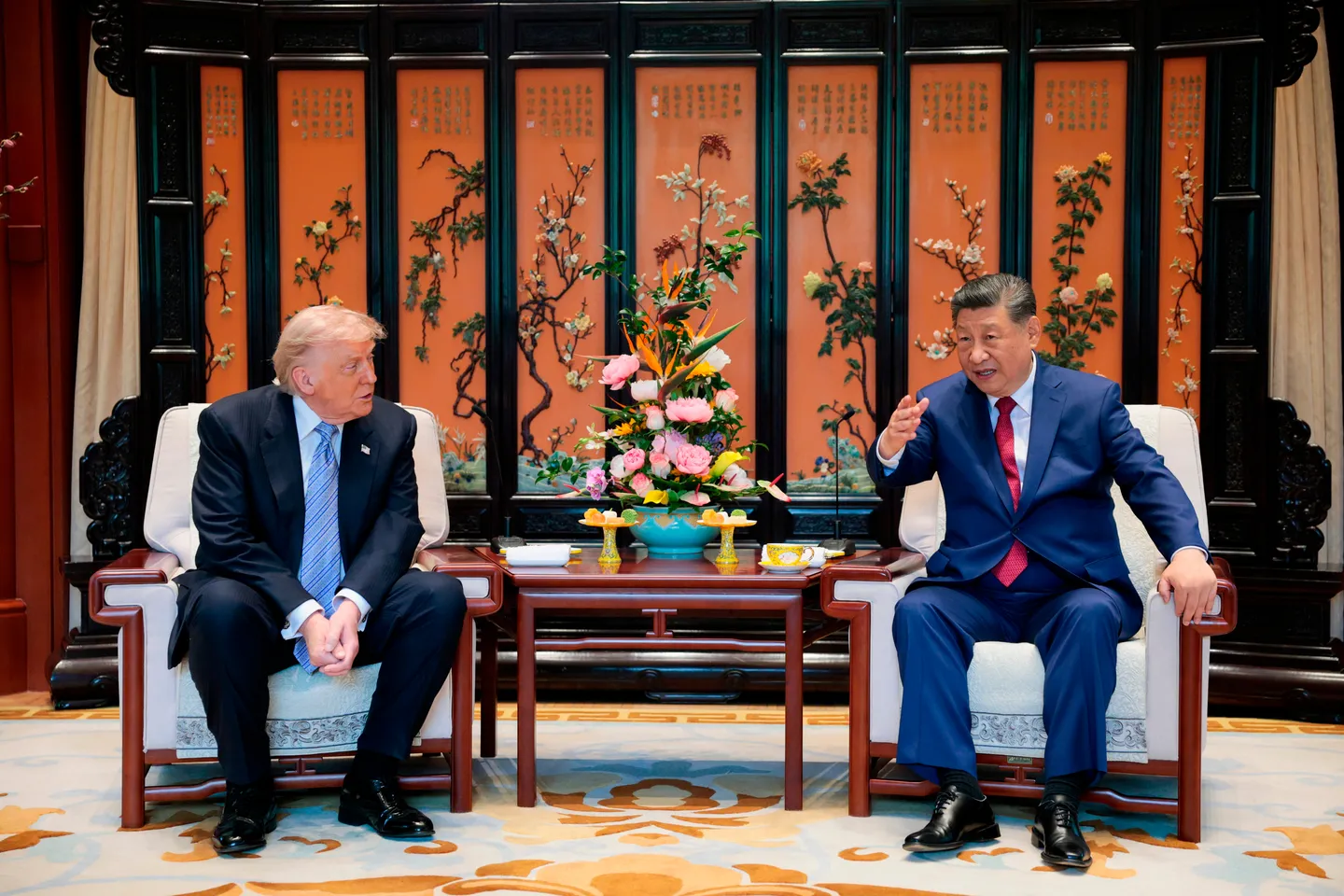
Chinese President Xi Jinping dey visit Washington from September 23 go reach 25 for state visit and to do talks with US President Donald Trump, and e no go attend this year UN General Assembly wey dey New York. Beijing talk say the visit go include discussions about bilateral ties and "world peace and development".
But the immediate question be whether Xi and Trump fit prevent the strategic rivalry between their countries from dey escalate, analysts dey talk.
Xi and Trump suppose meet for White House on September 24 — na their second face-to-face meeting this year after Trump visit Beijing in May. Trade, Taiwan, technology, Russia sanctions, Iran and artificial intelligence (AI) dey likely go feature as the two powers try hold one fragile detente.
With the current trade truce wey go expire on November 10, US Treasury Secretary Scott Bessent and Chinese Vice Premier He Lifeng hold "very successful" talks on Sunday, wey lay groundwork for the summit. Tariff reductions, critical minerals and a proposed US-China AI safety mechanism dey for the agenda.
For Xi, the visit na to consolidate wetin Beijing dey call "constructive strategic stability". For Trump, e give chance to secure economic gains while e still dey try make relations with America's main strategic competitor no slide back to full confrontation.
I see the visit as an anchor — a real bedrock — for further US-China relations, Henry Huiyao Wang, founder and director of the Beijing-based Center for China and Globalization and former Counselor to China’s State Council, tell TRT World.
But the summit go still show the limits of that stabilisation.
From trade truce to strategic stability
The May meeting between the two leaders for Beijing produce understandings wey aim reduce immediate pressure for the relationship. Since then, officials don try turn dem into longer-term arrangements wey go cover trade, investment, technology and critical minerals.
Henry Wang talk say the leaders' diplomacy dey give a "guiding compass" for the relationship, while Chinese geopolitical analyst Gao Jian say Beijing want to consolidate the "constructive strategic stability relationship" wey dem agree for May through more predictable communication and mechanisms to manage differences.
The immediate test be economic. For the May summit, both sides bin float one proposal to reduce tariffs on $30 billion worth of goods wey each side dey import from the other.
Henry Wang talk say the proposed mechanism for tariff-free imports from each side fit be a starting point. "$30 billion tariff-free imports for each side go be a good start," e say, and e suggest say e fit eventually expand.
Chinese investment for the US fit become another pillar. Sourabh Gupta, wey be head of the trade and tech programme at the Washington-based Institute for China-America Studies, talk say e go dey watch for an investment framework wey go allow Chinese capital go selected areas of America's industrial expansion.
James Borton, senior fellow at Johns Hopkins SAIS, talk say the bigger question be whether Trump and Xi fit turn temporary truces into a "durable mechanism" wey go manage competition.
"A sweeping strategic settlement unlikely," Borton talk.
AI: competition with guardrails
AI dey turn big arena of US-China competition, from advanced chips to computing power and frontier models.
But, different from some other disputes, both sides get reason to prevent the technology race make e no produce uncontrolled security risks.
Borton describe the emerging model as "technological rivalry alongside narrow cooperation — competition with guardrails rather than technological detente."
Henry Wang talk am plain: "We no need AI arms race; we need global AI governance."
Gupta talk say framework or announcement on AI safety na one of the three key indicators wey e go use to judge whether the summit produce meaningful progress.
So the likely outcome no be end of technology competition, but attempt to put boundaries around am.
Russia sanctions law tests the truce
Trump sign Russia sanctions law on September 18, and that one introduce another potential fault line.
The law give the president authority, under particular conditions, to put tariffs up to 100 percent on major buyers of Russian energy, including China and India, and e give am discretion whether to apply or waive them.
Borton talk say the summit go show whether Russian energy go become "bargaining chip" or whether dem go keep am separate from the US-China trade talks.
Gupta get different view for the immediate risk. If dem apply the 100-percent tariff to China, e argue, e go directly undermine the existing US-China arrangement wey dey limit tariff escalation and dey try keep critical-mineral flows stable.
E fit also make China retaliate over rare earths.
So Gupta expect say Trump go use im waiver power to exclude China, rather than risk the broader trade understanding.
That one make the Russia issue a test of Washington ability to compartmentalise im pressure on Moscow from im effort to stabilise ties with Beijing.



From Beijing perspective, Wang Hanyi, research fellow at Shanghai International Studies University, talk say China oppose unilateral sanctions and wetin dem call extraterritorial pressure.
"If the US further pressure China with tariffs and sanctions, e go only complicate bilateral relations," she tell TRT World, adding say "the two sides suppose handle differences through dialogue and consultation based on mutual respect and equality."
Iran, Hormuz and the Houthi-Saudi flashpoint
The Middle East fit give unexpected test whether Washington and Beijing fit cooperate where their interests dey overlap.
The Iran conflict don disturb shipping through the Strait of Hormuz, while fighting don intensify around Yemen and the Red Sea. Houthis don advance towards the Bab al Mandab Strait and dem don launch missile and drone attacks towards Saudi Arabia, wey dey further threaten regional energy and shipping routes.
The developments don already draw Beijing deeper into the diplomacy.
After Saudi Arabia appeal China for help, Beijing privately urge Iran to use im influence over the Houthis to restrain the group, according to reports. China dey heavily depend on Middle Eastern energy and e get direct interest to keep both the Bab al Mandab and Hormuz routes open.
That one give Trump reason to test wetin influence Xi fit exert over Tehran, analysts talk.
"China na the biggest guarantor, supporter and stabiliser wey Trump fit get," CCG’s Henry Wang talk, pointing to Beijing relationships with Iran and Gulf states.
Gupta see space for China to act as diplomatic bridge, noting im relationships across the region and im earlier role to help the Saudi-Iran rapprochement.
But e warn make people no expect Beijing to become Washington regional troubleshooter. China get limited leverage over Israel and little interest to coerce regional actors, e talk.
Borton also say China unlikely go become US intermediary, though e fit serve as diplomatic bridge.
The shared interest clearer for energy and shipping. If Hormuz or Bab al Mandab close or dem disrupt for long, e go hurt China and the global economy.
The question be whether that common interest fit turn into practical diplomacy.
Taiwan remains the hard limit
Even if trade and AI give room for practical arrangements, Taiwan still remain one of the hardest limits for US-China accommodation.
Beijing see Taiwan as part of China and oppose US interference. Washington still dey maintain im longstanding policy while e dey continue defence cooperation with Taipei.
Henry Wang talk say Beijing fit welcome Trump earlier statements wey oppose Taiwan independence and wey show reluctance to station US forces many thousands miles from America.
Gao Jian say China want Washington respect im core interests and avoid actions wey go increase tensions. At the same time, Wang Hanyi describe Taiwan as "the most important issue" and "very core of China's core interests."
For Washington, any perceived shift for Taiwan policy fit carry big strategic and domestic consequences.
That one make presidential language on Taiwan fit be as important as any formal agreement.
What would count as progress?
Zhiqun Zhu, professor of political science and international relations and director of the China Institute at Bucknell University, warn make people no expect breakthroughs on Iran, Taiwan, advanced technology or Asian security.
He say a cordial meeting wey extend the trade truce and stabilise bilateral relations fit on its own be meaningful.
Gupta dey look beyond immediate tariff concessions. The three watchpoints wey e get na: an investment framework, an AI-safety arrangement, and progress on arms control, strategic stability and extra military-to-military channels to handle emergencies.
Those measures no go solve the fundamental disagreements between Washington and Beijing, analysts talk, but dem fit reduce the risk of miscalculation as competition dey intensify.
That one fit be the realistic measure of the summit.
Most analysts believe the Washington meeting no likely go transform US-China relations. The importance go dey whether Xi and Trump fit build mechanisms wey allow their countries to compete without dey repeatedly slide back into confrontation.
From Taiwan and Russian energy to Iran, Hormuz and the Houthi attacks around Bab al Mandab, analysts talk say Washington and Beijing dey meet each other inside theatres wey dey far beyond their own borders.
The choice no necessarily be between cooperation and rivalry, experts for both sides say. The question be whether the two powers fit build enough guardrails to manage both at the same time.