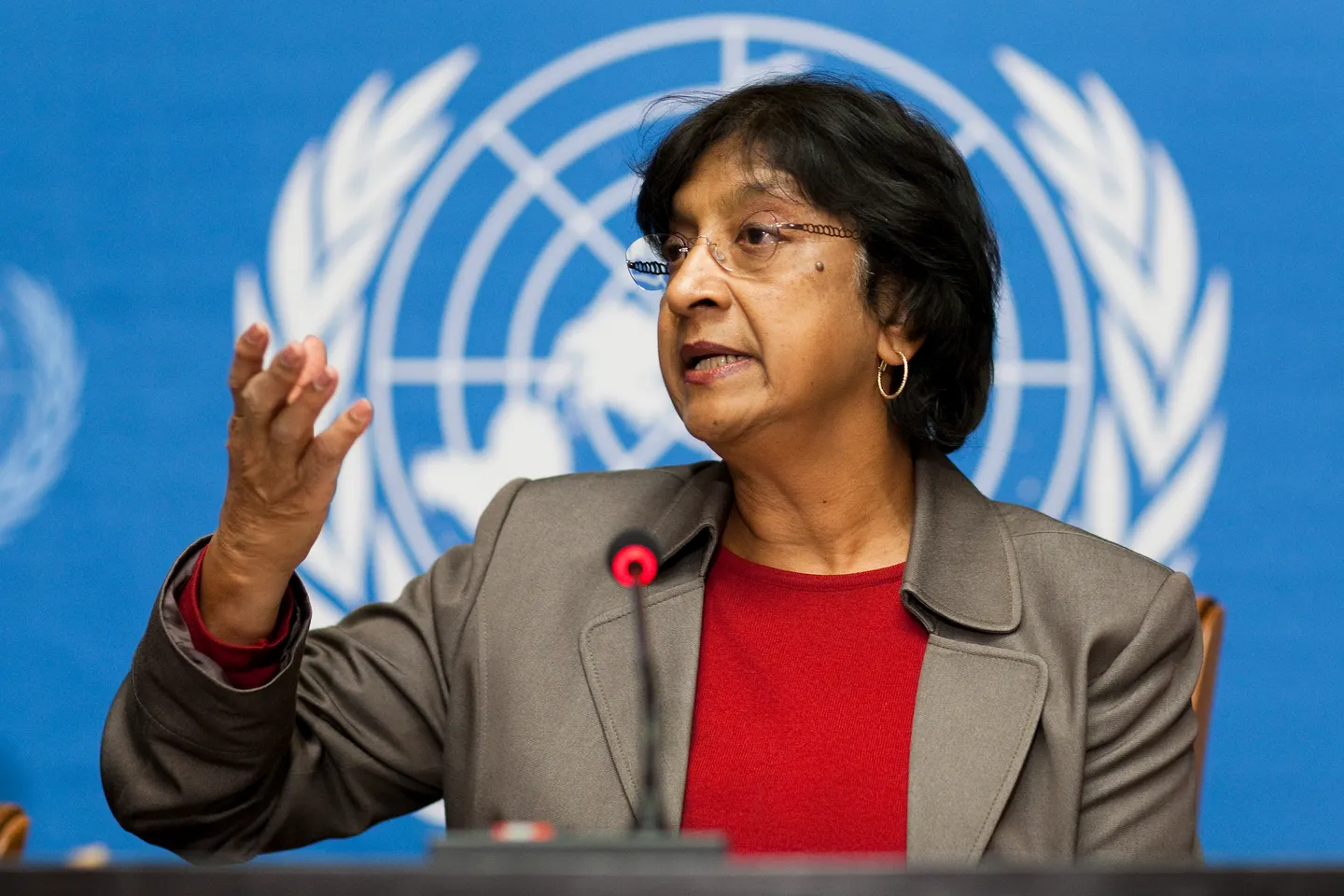
Navanethem 'Navi' Pillay, the South African jurist wey lead one United Nations commission wey come conclude say Israel don commit genocide for Gaza, na she dem give the 2026 Nobel Peace Prize on Friday for her work to push peace and international law.
Jorgen Watne Frydnes, chair of the Norwegian Nobel Committee, wey announce the award, talk say Pillay play big part to make sure say war crimes, crimes against humanity and genocide dey prosecuted.
The committee praise her decades of work wey dey hold states and national leaders answerable, dem put spotlight for career wey cross South Africa struggle against apartheid, international criminal tribunals and the UN human rights system.
The 85-year-old jurist win come at a time wey international legal institutions dey face plenty political pressure as dem dey try make powerful states and officials answer for international crimes.
The importance of Pillay’s findings dey for the legal process and the evidence wey support dem, Nasir Qadri, international law practitioner and critical legal scholar for Koc University, talk.
Qadri tell TRT World say, 'The commission build its case on an evidentiary record and apply the Genocide Convention's specific intent standard through the same legal framework Pillay help develop for the International Criminal Tribunal for Rwanda (ICTR).'
'For there, her rulings set ground that rape and sexual violence fit constitute acts of genocide,' he add.
'One jurist wey spend three decades to develop international law capacity to handle mass atrocities don now apply that framework to conflict wey the world's most powerful states try put beyond reach of accountability,' Qadri say.
From apartheid South Africa to international courts
Pillay born for Durban in 1941 inside family of Indian Tamil descent, and she grow up under South Africa apartheid system wey force racial segregation and discrimination.
The things wey she see for society wey base on racial hierarchy help shape her legal career wey focus on challenging injustice.
In 1967 she become the first woman wey open law practice for Natal Province, wey now be part of KwaZulu-Natal.
As lawyer she defend people wey oppose apartheid, including activists wey the white minority government persecute.
When dem appoint her to South Africa High Court in 1995, na another milestone e be: she become the first Black woman wey serve as judge for the country's highest provincial court.
Pillay comot to the international stage later, join the International Criminal Tribunal for Rwanda in 1995.
She serve for eight years for the tribunal, four years as president, and help prosecute those wey responsible for the 1994 genocide wey kill about 800,000 people.
Her work for the tribunal help make sexual violence clear as weapon of genocide and as crime under international law.
The tribunal landmark 1998 judgment for the Jean Paul Akayesu case establish say rape and sexual violence fit be acts of genocide when dem do am with the required intent.
Pillay later serve as judge for the International Criminal Court from 2003 to 2008 and become the UN High Commissioner for Human Rights in 2008, a position she hold until 2014.
For that role she push for accountability for human rights violations and dey pressure governments to meet their obligations under international law.
Gaza and the fight for accountability
Pillay recent work put her for front of international moves to hold Israel answerable for actions for Gaza.


As chair of the UN Independent International Commission of Inquiry on the Occupied Palestinian Territory, including East Jerusalem, and Israel, she oversee report wey dem publish in September 2025 wey conclude say Israel commit genocide against Palestinians for Gaza.
After dem examine brutal Israeli military actions, the destruction of civilian infrastructure, restrictions on humanitarian assistance and statements from political and military officials, the commission find say Israel commit four of the five acts wey the 1948 Genocide Convention define as genocide.
Dem conclude these acts carry out with specific intent to destroy Palestinians for Gaza, whether fully or partly.
The commission also find say Israeli President Isaac Herzog, Prime Minister Benjamin Netanyahu and former Defence Minister Yoav Gallant incite genocide.
Israel reject the findings; its Foreign Ministry call the report 'libellous rant' and Ambassador Daniel Meron describe am as 'scandalous' and 'fake'.
But the commission base its conclusions on evidence, and the findings directly challenge Israel efforts to deny genocide and avoid international accountability.
Qadri say, 'Wetin Israel and the US do to the commission Pillay chair, the International Criminal Court (ICC) and Palestinian human rights organisations like Al Haq follow one familiar pattern.'
'Since modern international accountability institutions start, states don try to limit dem when dem work begin to threaten powerful interests,' he add.
'Those of us wey don work for this field across places like Kashmir and Palestine never operate under the illusion say the law dey apply the same for everybody. The past three years don clear that pretense for everybody,' Qadri talk.
The president of the ICC say the Nobel Peace Prize wey dem give former ICC judge Navi Pillay matter wella because international law dey under attack now.
Tomoko Akane for a statement say, 'At a time of big challenges to the international legal order and the rule of law, this recognition get special significance.'
The cost of challenging Israel's impunity
The pressure against international accountability no stop for Pillay commission alone.
In July 2025 the US administration impose sanctions on Francesca Albanese, the UN special rapporteur on the occupied Palestinian territory, after she call for accountability over Israeli genocide for Gaza and ask for international criminal proceedings wey fit involve Israeli and US nationals.
The measures restrict her access to the US financial system and bar her from entering the country.
In May 2026 one federal judge find say the measures likely violate Albanese free speech rights. Later one appeals court allow the sanctions to come back while the legal fight still dey.
Pillay, Chris Sidoti and Miloon Kothari, the three members of the commission, resign for July 2025, short time before dem publish the genocide findings.
Their resignation happen as pressure on UN accountability mechanisms dey increase, inclusive of Washington campaign against Albanese.
According to Qadri, accountability mechanisms never apply the same way to states wey dey inside the Western security architecture.
He say, 'Sanctions against ICC judges and the tagging of Palestinian human rights lawyers under counterterrorism tools na measures wey dem dey use when findings don become too legally strong to be handled by institutional pressure alone.'
'Wetn don change be say the evidentiary record wey Pillay commission, the ICC prosecutor and the ICJ provisional measures produce don reach level of legal authority wey you no fit wipe out simply by attacking the institutions wey produce am,' he add.
'The states wey don spend three years to follow that strategy don, by their own actions, help build the most comprehensive public record of the architecture of impunity wey international law ever generate,' Qadri conclude.