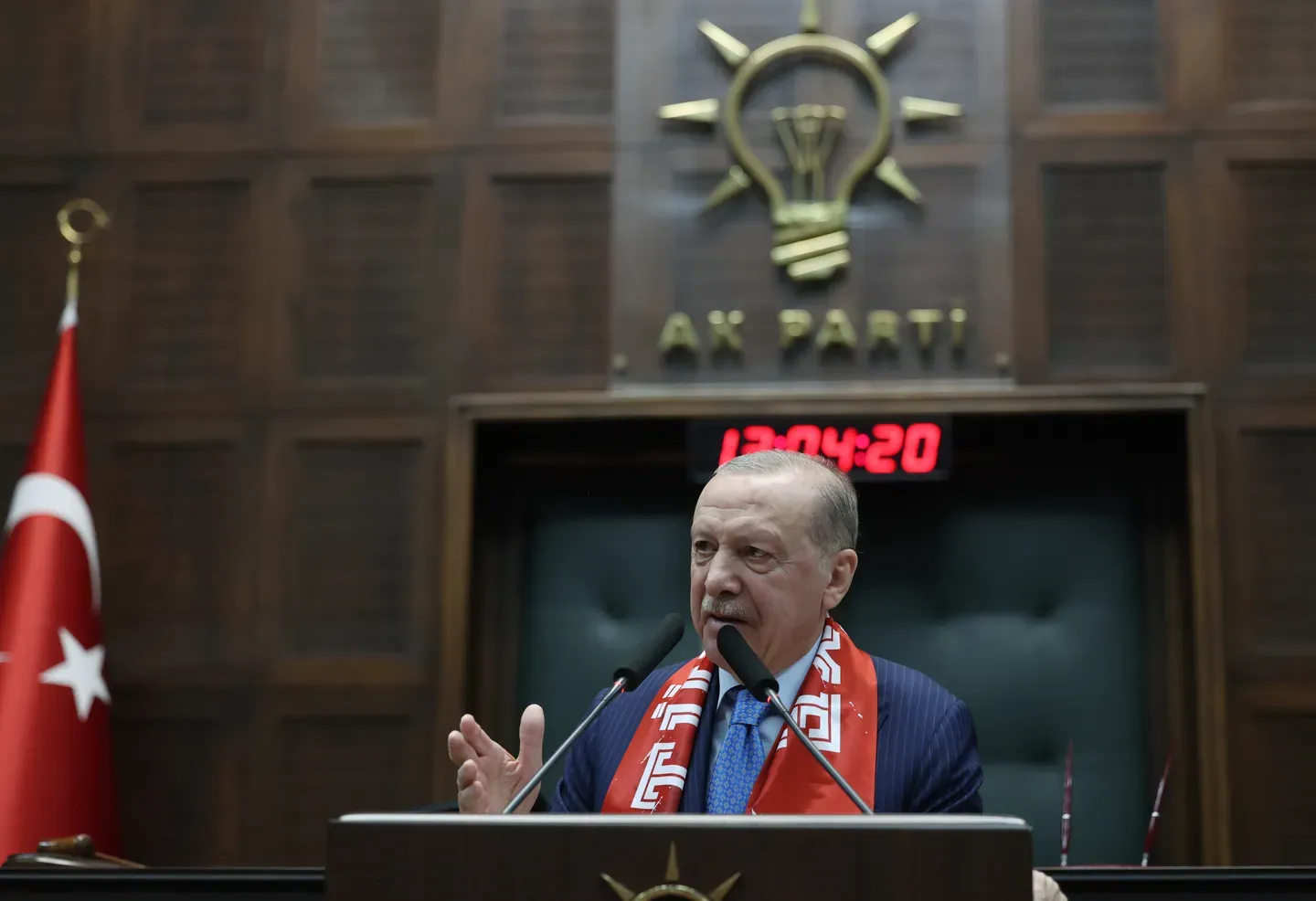
Raiten: Ahmet Uysal
As AK Party dey celebrate im 25 years anniversary on August 14, thankful Türkiye go dey look back this quarter century as di main period wey change how country stand for global matter.
Dem come power soon after dem start the party, and dem bring big transform for inside Türkiye and how country take dey operate for global level.
AK Party-led government grab control by remove entrenched military and bureaucratic power centres, recognise cultural and social diversity, fix economy and strengthen the link between people and state.
Wetin make dem fit move into foreign policy be say dem get strong hold for inside matters of the country; from there dem begin build pragmatic foreign policy wey increase Türkiye regional and global role.
For the beginning years, AK Party government put eye for better economy and improve international standing, with EU membership and better relationship with neighbours as main goals.
As time pass, dem open many sides — Middle East, Balkans, Africa, Caucasus, Central Asia and other far places — to boost economy and make Türkiye get more regional influence.
For inside this transformation, dem shift more economic capacity, expand diplomatic network and bring more independent security tools into foreign policy.
According to World Bank data, Turkish GDP increase from $236 billion to $1.6 trillion in 2025.
AK Party government try diversify Türkiye relations without cut traditional Western ties.
Di beginning of EU accession talks for 2005 mark the Western dimension, while Türkiye try reduce tensions with neighbours, open to Africa, build economic links with Gulf countries, and tighten institutional ties with Central Asia.
With public support and di international situation, President Recep Tayyip Erdogan and him allies finish military control by change Constitution and laws.
For di second decade of government, AK Party had to face Arab uprisings for Middle East, di chaos for Syria, tensions for Eastern Mediterranean, di July 15 coup attempt, Western dislike of Turkish autonomy, Russia-Ukraine tensions, and di Qatar embargo.
After all dis, Ankara begin move towards more security-centred and independent decision-making. This strategic independence don mark Turkish foreign policy for the last fifteen years. The constitutional amendment in 2010 wey break military tutelage make dem sabi do security and foreign policy freely.
Türkiye strategic rise
Di civilian AK Party administration tighten NATO ties while e still get flexible relations with other centres like Russia, Central Asia, the Gulf, Asia and Africa.
With this autonomy, Türkiye don strengthen im defence capabilities.
For 2002 domestic production for defence industry be only two percent; today e pass 80 percent and still dey grow — na big achievement.
Turkish UAV technologies, warships, armoured vehicles, missile systems and electronic warfare capabilities help the Turkish economy and turn into foreign policy tools wey deepen relations with Pakistan, Ukraine, Gulf countries, Africa and Central Asia.
Bayraktar UAV and di 5th-generation Kaan fighter jet don stand out for world stage. Because of these successes, Türkiye defence and aerospace exports rise from $248 million in 2002 to $10.05 billion in 2025.
Developments for defence industry allow Türkiye run military operations with more independence, but dem still dey invest well for research and development to reduce remaining gaps.
Turkish military support help Azerbaijan reclaim im occupied territories for di same year.
For di past two decades, Türkiye increase military presence and cooperation with many countries, including Somalia, Qatar, Libya, Pakistan and Azerbaijan.
On August 7, dem launch one trilateral defence alliance with Pakistan (di only nuclear power for Muslim world) and Saudi Arabia (one of world biggest oil producers).
Other Arab countries fit join the alliance later, wey go mark new era of regional security cooperation and peacebuilding.
AK Party governments expand Turkish diplomatic activity and missions for the world.
According to di Ministry of Foreign Affairs, Türkiye network of foreign representations don reach 262 missions, making am one of di largest diplomatic networks for world.
For example, while na only 12 embassies dey Africa for 2002, di number climb to 44 in 2026.

For the same time, trade volume between Türkiye and Africa don rise from about $3 billion to $36.6 billion, and Turkish Airlines dey fly to 64 African destinations now.
Türkiye build strong economic and diplomatic relations with the Balkans and Central Asia.
With Balkan countries, Türkiye set up di Balkan Peace Platform in 2025 to stop old conflicts from starting again and encourage cooperation for border security, energy and transport.
For Central Asia, Türkiye lead di change of Turkic Council into Organization of Turkic States in 2021, wey make relations with di region more institutional.
At the same time, Türkiye improve relations with big Arab countries like Saudi Arabia and Egypt after rough time during the Arab Spring, and the revolution for Syria turn into big geopolitical gain for di region.
Türkiye role for mediation and crisis diplomacy draw global attention too.
In the past, Türkiye mediate between Bosnia and Serbia, Syria-Israel, Iran-US, Russia-Ukraine, Afghanistan-Pakistan, Ethiopia-Somalia, and among Iraqi factions.
Most recently, dem mediate di Black Sea Grain Initiative during di Russia-Ukraine war in 2022. This one prevent famine and big hard times for some parts of the world, and show Türkiye diplomatic capacity.
Soft power and humanitarian diplomacy na important part of Turkish foreign policy.
Institutions like TIKA, Yunus Emre Institute, Turkish Scholarships, Maarif Foundation, AFAD, Turkish Red Crescent and Turkish Airlines don expand Türkiye social ties through different channels.
According to the OECD, Türkiye provide about $7.3 billion gross bilateral development assistance in 2024; $6.1 billion of am na humanitarian aid.
TIKA get coordination offices for 61 countries, 22 of them dey Africa. Turkish Maarif schools dey educate thousands of students abroad, and many students dey get scholarships to study for Türkiye.
Also, economy, energy and connectivity form di material basis of Turkish diplomatic influence.
Türkiye exports increase from about $36 billion in 2002 to $273 billion in 2025, na major achievement.
Pipelines like TANAP, TurkStream, Baku-Tbilisi-Ceyhan, Kerkük-Yumurtalik and Baku-Tbilisi-Kars don make Türkiye transit position strong between Europe, Caucasus, Middle East and Central Asia.
Beyond di Strait of Hormuz
If Strait of Hormuz close during Iran-US war, Arab countries need new routes through Türkiye, and we don see road, railway and pipeline projects because of that.
Gulf countries and Iraq want access to di West through Türkiye, and Türkiye welcome this new trend of cooperation.
Discovery of natural gas for Black Sea don become big gain for Türkiye since 2020.
These days, Turkish foreign policy dey more active for international organisations to influence regional and global agendas.
Di active role for platforms like G20, NATO, Organisation of Islamic Cooperation, D-8 and Organization of Turkic States; the growth of Antalya Diplomacy Forum into international forum; and mediation initiatives inside UN and OSCE na examples of this trend.
But capacity to set agenda no mean guarantee say everything go positive, as Türkiye dey focus on build consensus by engaging many different, sometimes conflicting actors.
To conclude, Türkiye growing international influence during AK Party 25 years governance na result of combination of active diplomacy and win-win approach, backed by strong economy, defence industry, trade, humanitarian aid, energy, transport and strategic partnerships.
Dem take risks for Libya and Karabakh when dem believe say the cause dey right.
Türkiye dey value international institutions, law and cooperation, and dem place big importance on regional and global peace.
From Balkans to Africa, from Black Sea to Central Asia and Middle East, Türkiye don become key player wey people need dey reason about for plenty areas.
Di institutional experience, diplomatic network and technological capacity wey dem build for the last 25 years don prepare Türkiye for bigger global role.
Whether this thing go last depend on how dem strengthen economic resilience and reduce dependence on energy and advanced technologies for future.