 Pauline Odhiambo
For Adwoa Mensah, the moment everything changed lasted less than two seconds.
“We were driving home to Achimota. My daughter, Esi, who is three, was sitting on my lap in the back seat because she had fallen asleep and I didn’t want to wake her,” 31-year-old Adwoa recounts to TRT Afrika, bouncing her healthy, laughing toddler on her knee.
“Then a taxi ahead stopped suddenly. My husband slammed the brakes. Esi’s body lifted off my lap – she floated, really – and her head hit the back of the front seat. Hard.”
Adwoa, a trader in Accra’s Makola market, screams into her palms at the memory. “She cried for an hour. No broken bones, no blood. But the doctor said: ‘If you had braked ten metres later, or if a truck had hit you from behind, your daughter would have gone through the windshield. A child car seat would have held her still.’”
That near-miss happened in late 2025. Two months later, Ghana’s parliament adopted a new national road traffic act and safety standards, which came into force in early 2026. Among its most urgent provisions: mandatory child safety restraints linked to age, height, weight, and physical vulnerabilities of infants and young children.
“Now I see the news and I just cry,” Adwoa says. “Not sad tears – angry tears. Why did we have to wait until my daughter nearly died? But also grateful tears. Because now, every parent in Ghana will know what I learned the hard way: your lap is not a car seat.”
‘Fake’ helmets
For motorcycle riders, who account for a third of all road deaths in Ghana, the stakes are even higher. Kwame Addo, a 28-year-old delivery rider in Kumasi, learned this lesson on a rain-soaked evening last year.
“I bought my helmet from a roadside seller for 20 cedis. It looked fine – shiny, thick padding. I thought, ‘This will save me,’” Kwame recalls, tracing a long scar that runs from his temple to his jaw. “Then a minibus pulled out without signalling. I went over the handlebars. My head hit the tarmac – and the helmet shattered like an eggshell.”
Kwame spent three weeks in a coma. Surgeons rebuilt his skull with a metal plate. “The doctor told me: ‘A real helmet – a certified one – reduces your risk of death by more than six times. Yours was a toy.’ I didn’t even know there was a difference.”
Many helmets in the market lack proper certification, with studies finding that a high percentage of riders use "non-standard" helmets, often referred to as "cap helmets" or "bakuli" helmets, which provide poor protection.
Under the new standards, all motorcycle helmets sold in Ghana must meet strict safety certifications. Counterfeit or substandard helmets are now illegal, and riders caught without proper headgear face fines and possible impoundment of their bikes.
“I will wear only a certified helmet for the rest of my life,” Kwame says, tapping the new, heavy-duty helmet locked to his bike. “But I am angry. How many young men like me had to crack their heads open before someone in power said ‘enough’?”






Life-saving law
The new law brings Ghana largely into line with WHO road safety legal recommendations. It comes not a moment too soon: road deaths in Ghana increased by 65% between 2016 and 2021, reaching a reported annual toll of nearly 3,000. With nearly 26 road deaths per 100,000 population, Ghana’s fatality rate is far higher than the WHO African Regional average of 19 per 100,000 and the global average of 15.
“Ghana’s amendment to the national road traffic act and new safety standards marks a major step forward for road safety,” says Dr Fiona Braka, WHO Representative in Ghana. “Good laws and policies, strong leadership, coordination and enforcement are key to building safe transport systems that prioritize people and safety.”

The new law on child safety restraints meets all WHO recommendations, including the use of car seats designed for age, height, weight, and physical vulnerabilities. Research shows child restraints can reduce deaths in crashes by up to 71% among younger infants.
Ghana has also strengthened its drink-driving law, lowering the blood alcohol limit for drivers from 0.08 to 0.05 grams per deciliter – aligning with most WHO recommendations. This is critical, as studies show that between 33% and 69% of drivers killed in collisions in low- and middle-income countries had consumed alcohol.
‘Buy the seat, buckle the child’
With support from WHO, the Bloomberg Philanthropies Initiative for Global Road Safety, and other partners, more than 60 countries have improved laws on key risk factors since 2007.
Ghana’s progress comes ahead of the United Nations High-Level Meeting on Improving Global Road Safety, where global leaders will share plans to halve road deaths and injuries by 2030. Worldwide, nearly 1.2 million people die on roads each year, and road crashes are the leading cause of death for children and young people aged 5–29.
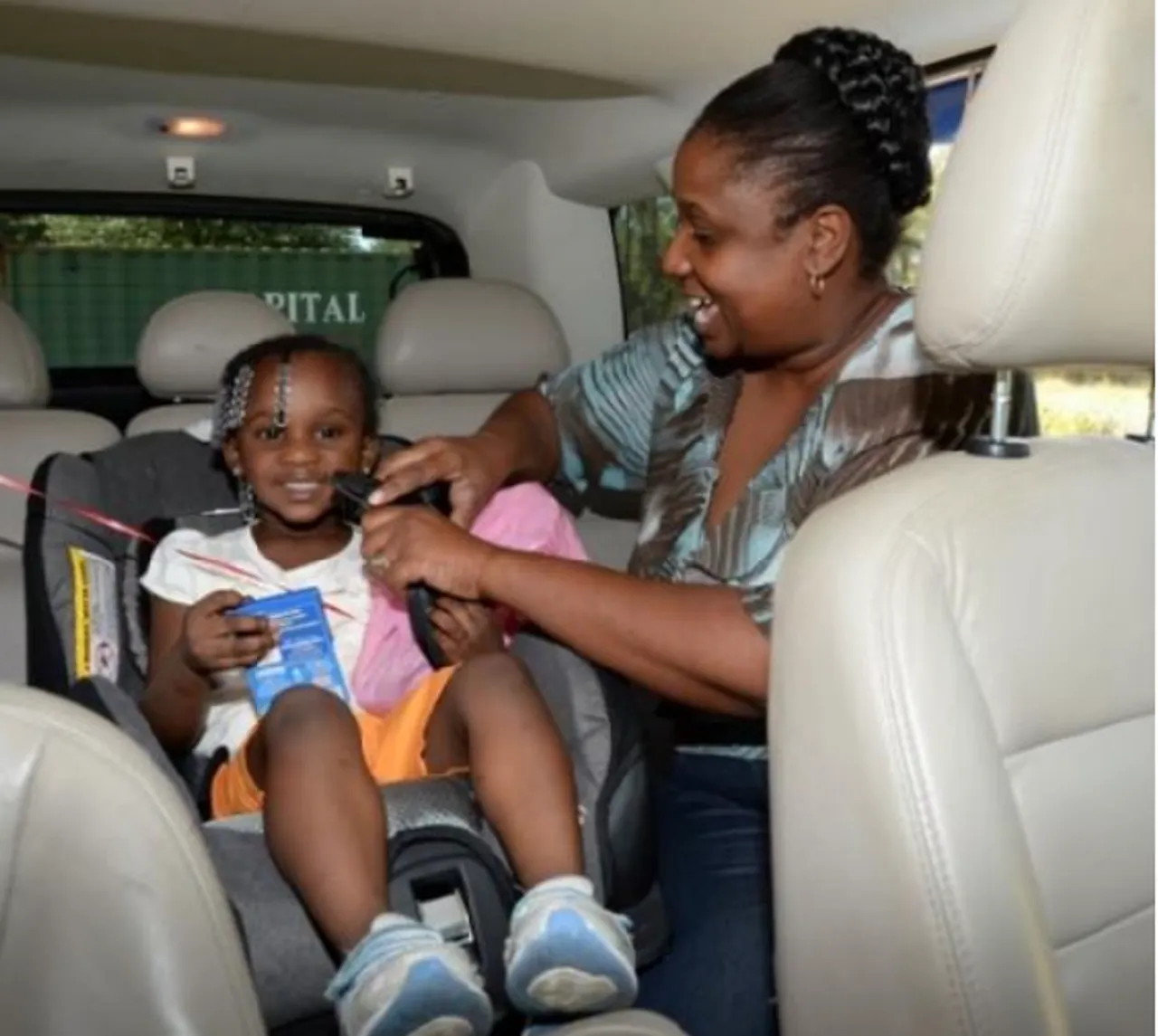
Back at her stall in Makola market, Adwoa Mensah straps her daughter Esi into a newly purchased child car seat – a bright blue one, with side impact protection and a five-point harness.
“Look at her,” Adwoa says, smiling as Esi giggles and chews on the strap. “She thinks it’s a throne. And maybe it is. Because this little chair might be the reason she grows up.”
Before every car ride, Adwoa checks Esi’s harness several times, ensuring her daughter is safely strapped in.
“The law is good. But I tell every mother I meet: don’t wait for a policeman to stop you. Don’t wait for a crash. Buy the seat. Buckle the child. That is love. The rest is just noise.”