 Sylvia Chebet
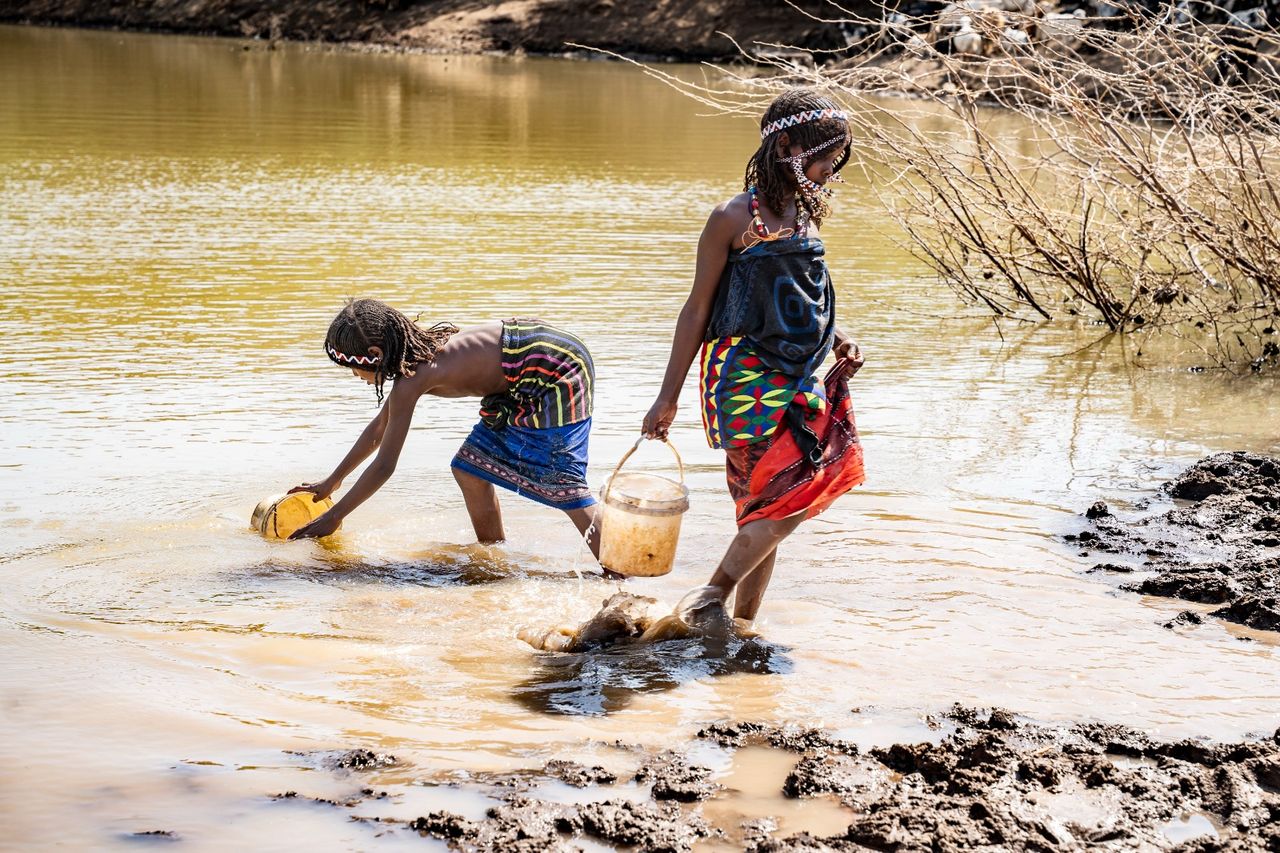
For 28-year-old Mercy Kanini Mutiso, the birth of her babies began as a moment of extraordinary joy. She had expected four. Instead, she gave birth to five, four girls and a boy, at Thika Level Five Hospital in Kenya's Kiambu County.
But the celebration quickly turned to grief, a situation Dr Frederick Kireki Omanwa, president of the Kenya Gynecology and Obstetrics Society, describes as “incomprehensible”.
The babies were born at around 25 weeks, weighing between about 630 and 800 grammes, and were transferred to Kenya's top referral facility, Kenyatta National Hospital (KNH), for specialised care.
Four of the newborns, all girls, died in quick succession hours after arrival. The surviving boy remains in critical condition according to KNH.
Speaking to TRT Afrika, the KOGS president said Kanini should have been managed at KNH from the onset.
“Ideally, the best way to transport these babies was with the mother while they were still in the womb,” he says.
That is because extremely premature babies are particularly vulnerable to changes in temperature and require specialised support from the moment they are born.
“They lose heat very easily because they do not have enough ‘padding’ — that is, fat under the skin,” he explains.
“And the way they were transported, the father carried one or two of them on the chest and told to cover them in a coat (Kangaroo care) and so on. That is not good enough for them.”
Had the mother reached the national referral hospital before giving birth, doctors could also have taken steps to improve the babies' chances of survival.
Interventions such as antenatal corticosteroids can help accelerate fetal lung development before an anticipated preterm birth, while other medications may be given for fetal neuroprotection.
Access to these interventions, as well as specialists trained to manage extremely premature births, is more readily available at high-level referral hospitals. That is what makes the timing and location of care so important.
When babies arrive before they are ready
A baby born before 37 completed weeks of pregnancy is considered premature. Before 28 weeks, the World Health Organization classifies a birth as extremely preterm.
At around 25 weeks, as in Kanini's case, newborns faced enormous physiological challenges. Their organs were still immature and not capable of functioning independently after birth.
“The biggest challenge they (extreme preterm babies) have is with breathing,” Omanwa says. “Their lungs do not expand the way they should.”
This is primarily because their underdeveloped lungs have not yet produced enough surfactant, a substance that helps keep the tiny air sacs in the lungs open.
“So if they are born with extreme prematurity, the neonatologists basically have to give them this chemical, that is number one. And then they have to put them on a machine which helps them to breathe because they don't know how to breathe.”
But breathing is only the beginning. Extremely premature babies can struggle to regulate their body temperature, fight infections, maintain blood pressure and tolerate feeding.
The earlier the birth, the more intensive the medical support required — and the narrower the margin for error.
A rare birth, a much bigger challenge
The case has drawn attention not only because quintuplet births are exceptionally rare, but because it highlights a much bigger challenge facing health systems across Africa every day.
How do we protect mothers and babies when a pregnancy involves more than one fetus, particularly when those babies arrive far too early?
Multiple pregnancies carry greater risks than singleton pregnancies. Research shows that as the number of fetuses increases, so do the chances of complications, including preterm birth, low birth weight, fetal growth restriction, stillbirth and admission to neonatal intensive care.
The difference can be stark. Data from 30 countries in sub-Saharan Africa indicate that twin pregnancies were associated with an infant mortality rate about five times that of singleton pregnancies.
And the more babies a woman carries, the greater the challenge of keeping the pregnancy going long enough for them to develop.
“The womb is basically designed to carry one, maximum two babies,” Omanwa explains.
With more fetuses, the uterus can become increasingly stretched, increasing the likelihood of contractions and very early delivery.
“Physiologically, once it's stretched to a certain threshold, it sends signals to the brain that actually the baby who is there, the brain doesn't know that they are 5, is already mature.”
This can activate mechanisms that trigger the uterus to begin contracting, potentially leading to premature birth.
And when birth occurs at an extremely early gestational age, how and where those babies are delivered can become critical.
Catastrophic, not heroic
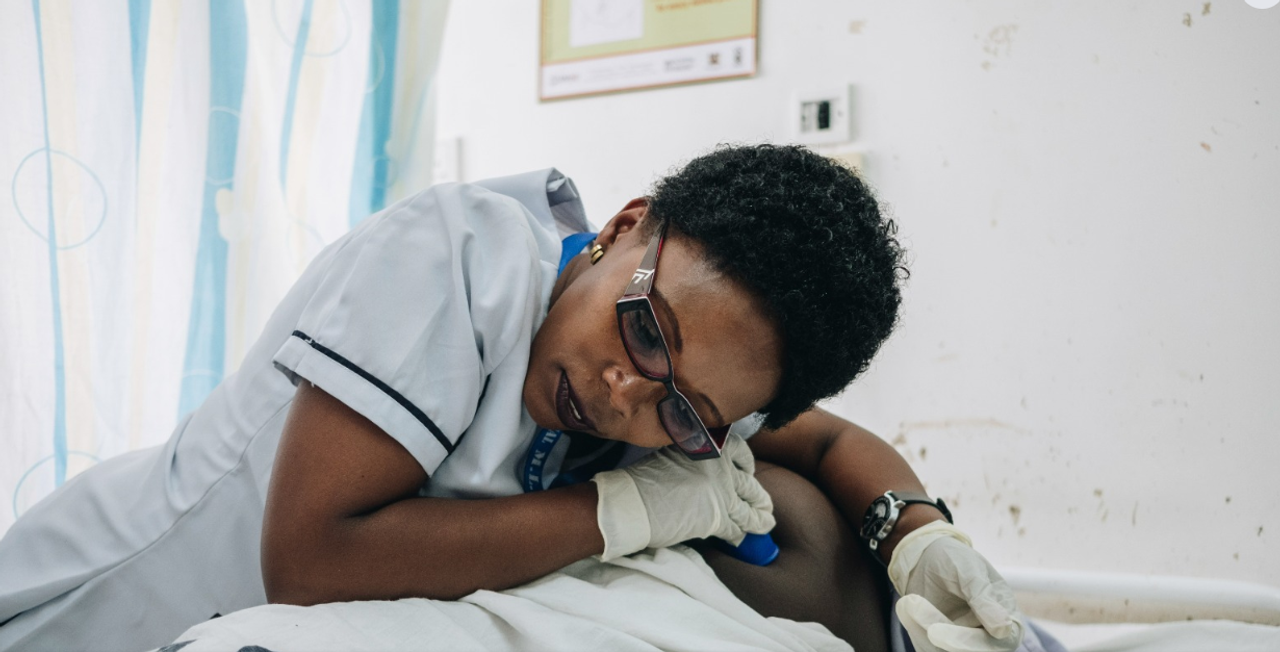
For extremely premature babies, delivery is only the beginning of a medical emergency.
Omanwa argues that the circumstances of delivery matter enormously, particularly because the fragile newborns can be vulnerable to trauma and complications during labour.






“For such extreme, preterm babies to be born vaginally, it is not heroic. It is catastrophic,” he stresses.
“The best way of delivery is actually by C-section because then we can control the pressure that is on the baby's head and we can delicately deliver them.”
At around 25 weeks, the bones and skull are still extremely fragile, and the baby may be vulnerable to the mechanical forces involved in labour and delivery.
“The pressure (in the birth canal) will cause vessels in the brain to burst,” a situation doctors call intraventricular haemorrhage.
“So, you'll find that these babies, unfortunately, can or will end up in a coma, and unfortunately, most of them will die.”
For those who survive, the consequences can extend far beyond the neonatal intensive-care unit. The risk of neurological complications can include cerebral palsy and developmental and cognitive difficulties. “That’s why it is tragic,” Omanwa says.
Survival is therefore not simply a question of getting a premature baby through the first few hours. It can involve weeks or months of intensive care and, for some survivors, lifelong medical and developmental needs.
“Sometimes we are happy that we have saved that life. But then the mother ends up living with a baby who is handicapped the whole of his or her life.”
Saving such babies require the right conditions; the right equipment, trained personnel, medicines, blood products and neonatal intensive-care capacity from the moment of delivery.
That is why getting a high-risk pregnancy to the right facility before labour begins can make such a profound difference.
Africa carries a disproportionate burden
The challenge is bigger than multiple births. Africa already carries the world's highest neonatal mortality burden.
WHO says about 1.1 million newborns died in the African Region in 2022 — almost half the global total. Prematurity, birth complications, infections and lack of oxygen account for the majority of newborn deaths.
For multiple pregnancies, those existing pressures can be magnified. One mother may need specialist obstetric care while several babies may simultaneously require incubators, respiratory support, medication, monitoring and neonatal intensive care.
That requires more than a hospital bed. It requires a functioning chain of care.
Omanwa points to shortages of blood, trained medical personnel, intensive-care beds, equipment and medicines, as well as long distances to specialised facilities, as factors contributing to Africa’s high neonatal mortality rates.
Early detection can change the equation
That preparation starts during pregnancy. Omanwa recommends pre-pregnancy health checks where possible, followed by early ultrasound once pregnancy is confirmed.
An ultrasound around seven to eight weeks can establish the location of the pregnancy, determine how many babies are present and identify other potential concerns.
Knowing early that a woman is carrying twins, triplets or more allows healthcare providers to increase monitoring and plan for possible premature delivery.
For an extremely premature newborn, specialised care does not end once the baby is delivered.
A premature newborn may need immediate stabilisation, temperature control, respiratory assistance, infection prevention, careful feeding and continuous monitoring.
And transporting such babies between facilities is itself a specialised undertaking. This is why referral networks matter as much as individual hospitals.
A health system needs to know where high-risk mothers can be sent, how quickly they can get there, and whether the receiving facility has the staff and equipment to care for both mother and babies.
In an ideal system, the mother is identified as high risk early enough to reach that facility before labour begins.
In a less equipped system, the transfer may happen only after an emergency has already started. By then, precious time can be lost.

A rare birth that raises a familiar question
Mercy's quintuplets were an extraordinary case. Most African maternity wards will never encounter five babies arriving at once.
But twins and other multiple pregnancies are far more common, and they carry elevated risks of premature birth and newborn complications.
The lesson, therefore, is not that multiple pregnancy should be viewed as a tragedy waiting to happen. It is that the earlier a multiple pregnancy is identified, the more time there is to prepare for its risks.
For mothers, that means early and regular antenatal care and delivery planning with appropriately skilled teams.
For health systems, it means investing in functioning referral networks, trained obstetric and neonatal staff, blood supplies, neonatal intensive-care capacity, medicines, equipment and reliable transport.
WHO says more than 70% of newborn deaths in the African Region could be prevented through quality care before, during and after birth.
Mercy Kanini Mutiso's story began with the rare arrival of five babies and ended in devastating loss. But beyond the heartbreak of one family, it raises a question that reaches far beyond Kenya:
When a mother carries more than one baby, are African health systems prepared for everything that can happen next?