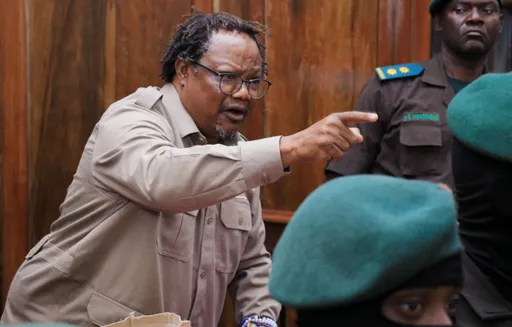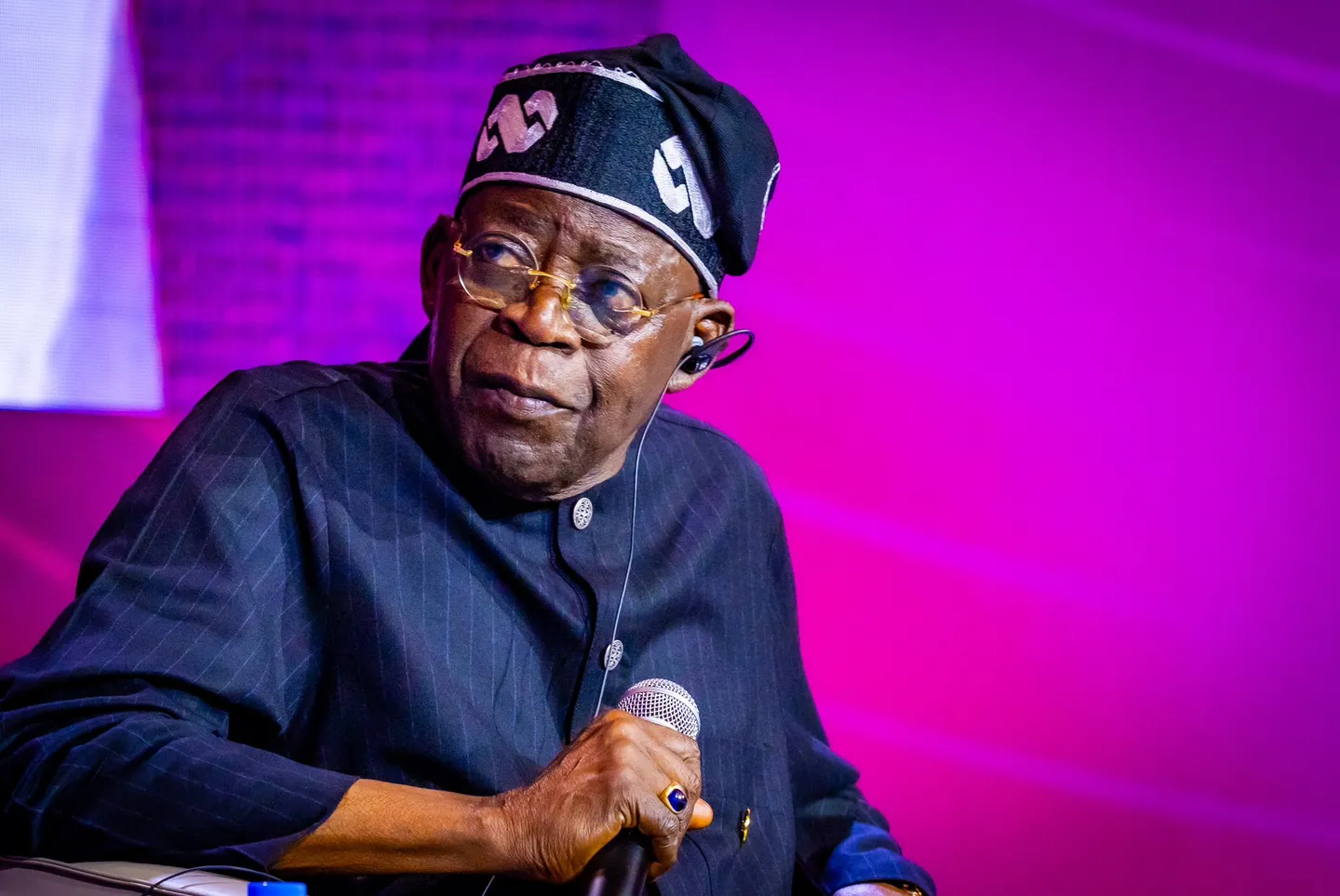
Nigeria's former Vice-President Atiku Abubakar has said that President Bola Tinubu's economic policies have worsened Nigeria's cost of living crisis, and that the head of state's recent claim that the opposition "created hunger and poverty" was an "attempt to dodge responsibility."
The West African nation of more than 230 million people is preparing for its general election on January 16, 2027, and the prominent presidential candidates have officially started their campaigns. President Tinubu, 74, and former Vice-President Atiku, 79, are expected to compete in the presidential election, marking a second consecutive time they would face off in a presidential duel.
Atiku, a powerful politician during the administration of President Olusegun Obasanjo, served as vice-president from 1999 to 2007, and has unsuccessfully run for president six times, including against Tinubu in 2023. Atiku's other unsuccessful presidential bids were in 1993, 2007, 2011, 2015, and 2019. He is confident that he would be seventh time lucky in the 2027 elections.
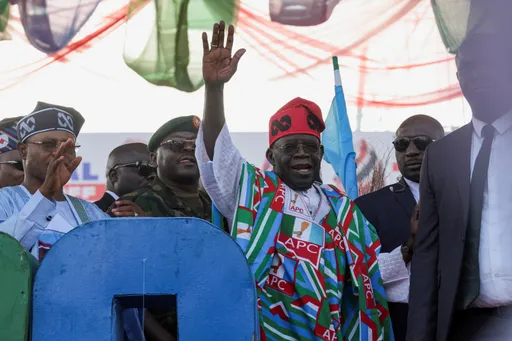
Perhaps referring to Atiku and Obasanjo's time in office, President Tinubu said on Saturday, October 24, 2026: "I hear my opponents talking about hunger and poverty. Who created it? They did. They created the hunger; they created the poverty. We are trying to eradicate it." The Nigerian leader spoke in the northwestern state of Kaduna, where he officially launched his re-election campaign.
Privatisation debate
The Nigerian Presidency's office said in a follow-up statement that during the leadership of Obasanjo and Atiku — under the Peoples Democratic Party (PDP) —, "many state-run businesses were privatised without paying the gratuities and pensions of thousands of laid-off workers." The presidency added that Tinubu's government "has been paying those workers" in efforts to remedy the harm.
In his speech in Kaduna, Tinubu also pledged to oversee Nigeria's economic recovery, ensure prosperity, and an improved future for the youth.
Atiku disagrees with President Tinubu's claim about the opposition's contribution toward Nigeria's cost of living crisis, saying in a statement on October 24: "The All Progressives Congress (APC) party governed Nigeria for eight years before you (Tinubu) took office. You have added another three-and-a-half years. Nigerians know who has been in power, and hardship did not begin when the opposition started talking about it."
But amid these competing claims and counterclaims, what is the fair assessment of the PDP's past policies, particularly its privatisation programme? Did these policies contribute to the increase or persistence of poverty in Nigeria?
Contrasting reviews
Atiku served as the chairperson of the Nigerian team tasked with handling the Obasanjo-era privatisation programme. According to the Obasanjo government, the exercise was embarked upon to improve efficiency of public enterprises and create jobs to reduce unemployment.
Between 1999 and 2007, the Nigerian government privatised 147 companies, and made around $1.5 billion from the sale of state shares in those companies, according to the Bureau of Public Enterprises (BPE). But privatisation was not first introduced by the PDP administration. Before that, hundreds of state-owned firms were privatised between 1988 and 1993, during the rule of General Ibrahim Babangida.
Depending on the side you ask, the privatisation programme during the PDP administration (1999 to 2007) draws contrasting reviews.
PDP supporters claim that the sale of tens of state companies stabilised Nigeria's economic position during the early 2000s, while those opposed to the party claim it plunged the West African country into a deep economic mess, and that is what President Tinubu alluded to as "hunger and poverty" in Nigeria.
Transfer of crucial public assets
People Over Profit, a worker-led network and campaign initiative that unites labour unions, said in November 2018: "Nigerians have no good story to tell of the privatisation exercise of the state-owned enterprises, under the PDP, as the exercise failed and the proceeds were less than transparently accounted for, as exemplified by Nigerian Telecommunications Limited (NITEL), Aluminum Steel Plant, Ajaokuta Steel Plant, Electricity distribution companies, and sundry state assets."
In its review of the programme, the World Bank said that privatisation worked mostly in the telecommunications sector in Nigeria, but it also "reflects some of the problems which have beset many other development processes: lack of political commitment, poor design, insufficient resources, weak management, and corruption."
The World Bank's review reflects the sentiments of a section of Nigerians who believe that the privatisation programme largely failed to achieve its initially set goals of improved efficiency, enhanced service delivery, and economic growth. Concerns have been voiced that it, instead, enabled the transfer of crucial public assets into the hands of a privileged few, often through opaque processes.
Power generation and distribution sector registered the most notable impact, with tariffs rising significantly after vast privatisation, although the foundation for a competitive energy market was laid during the PDP's rule.
Closure of privatised companies
In 2018, the then- director general of the privatisation agency, Alex Okoh, said 52 out 142 (37%) of privatised public enterprises from 2004 were non-performing, citing an unfavourable business environment in Nigeria that had forced privatised public enterprises to either close business or relocate to other countries.
A 2015 research conducted by John Ugoani of Rhema University in Nigeria and Grace Ibeenwo of Akanu Ibiam Federal Polytechnic, also in Nigeria, found that unemployment rates in Nigeria increased five-fold, to 25% from 5%, after the mass privatisation programme was implemented between 1988 and 2011.
"The controversial privatisation of the Nigerian Telecommunication Company and other public sector giants like the Nigerian Airways, and the balkanisation of the Power Holding Company of Nigeria along geopolitical zones for political rather than economic expediency, created more unemployment than employment in Nigeria," Ugoani and Ibeenwo said in their research published in the UK's International Journal of Economics, Commerce and Management.
A 2008 study by Afeikhena Jerome of the University of Ibadan also found that the privatisation of state-owned enterprises led to the withdrawal of government subsidies, which had accounted for up to 40% of non-salary recurrent expenditure and 30% of capital expenditure. This withdrawal increased the cost of services previously provided at subsidised rates, potentially making them less affordable to ordinary Nigerians.



PDP defends privatisation programme
The PDP, however, said that privatisation successfully reduced massive fiscal burdens on the federal budget, thereby reducing the need to borrow.
The then-ruling party also stated that privatisation gave rise to highly competitive sectors such as the telecommunications sector.
Abubakar Umar Kari, a professor of political sociology at the University of Abuja, says that although the PDP administration's privatisation programme between 1999 and 2007 was "largely unsuccessful" and resulted in "thousands of job losses", the incumbent government cannot place an entire blame on the Obasanjo-era politicians for the current economic hardships that Nigerians are facing.
"It is true the privatisation programme caused an economic ripple effect. However, the last time a PDP president was in power is more than 11 years ago, during the rule of President Goodluck Jonathan. The current economic challenges are significantly tied to the Tinubu administration's policies that were introduced in 2023, when he came to power. For instance, the removal of fuel subsidy pushed up the cost of a litre of petrol from around 400 naira in 2023 to more than 1,400 naira in 2026. Many Nigerians cannot afford that," Kari told TRT Afrika.
'Strategic statement'
While Tinubu's economic reforms remain under scrutiny, the World Bank has described Nigeria as one of Africa's "better managed" economies, citing its strong growth prospects. The International Monetary Fund (IMF), on the other hand, said Nigeria, whose growth projection is 4.2%, is "supported by improved macroeconomic stability and favourable terms-of-trade effects." The IMF, however, warned in mid-October 2026 that "higher prices for essentials are expected to further aggravate poverty and food insecurity."
Kabiru Sufi Said, a Nigerian public affairs analyst, terms President Tinubu's remarks on the genesis of poverty and hunger in the West African country a "strategic political statement" that has managed to "deflect the opposition's presidential election campaign narrative."
"Before that statement, the opposition's main campaign message, especially by Atiku and his camp, was centred on the Tinubu administration's economic policies, which had been cited as the main cause of Nigeria's current economic hardships. Now, everyone's focus is on: 'What did the president mean when he blamed the opposition for Nigeria's economic challenges', and not where has the incumbent administration fallen short," Sufi told TRT Afrika.
Both Kari and Sufi, however, note that President Tinubu's re-election prospects are largely dependent on the opposition's unity status. "Tinubu remains the man to beat in the January 2027 elections," Kari said, adding that several factors, including the availability of state machinery and the power of incumbency, bolster his prospects.
Opposition's disunity
Sufi observes that besides the opposition's apparent disunity ahead of the elections, it has "not given a concrete election message that has won over the hearts of many Nigerians." Sufi added: "They (opposition candidates) say they want to remove Tinubu from power, but Nigerians are wondering what is in it for them thereafter."
Both Atiku and Obi, who polled 29% and 25% to emerge second and third respectively in the 2023 presidential election, have declared an interest in challenging Tinubu again in 2027. Political observers say that they stand a better chance if they reconcile their ambitions and produce one candidate against the incumbent leader.
President Tinubu's camp is also banking on the support of a majority of state governors to improve the head of state's re-election prospects. APC party claims that 32 out of 36 state governors in Nigeria support Tinubu in the upcoming election.
"In the past, state governors played a crucial role in helping presidential candidates win elections. The dynamics are, however, different this time around, because a large number of the state governors will also be seeking the voters' mandate, and, therefore, their attention will be focused more on their own campaigns than the presidential election," Sufi said.
Security crisis
Nigeria's security crisis is also expected to feature prominently in election campaigns.
The West African country continues to battle armed bandits and kidnappers in the northwest and a 17-year terrorist threat in the northeast.
Tinubu's toughest electoral tests could come in the north, where 79-year-old Atiku comes from, and the southeast, where 65-year-old Peter Obi hails from.
Tinubu, 74, has said he will attend rallies in about 12 of the 36 Nigerian states because he needs to "remain focused on governing."
Presidential win threshold
To win a presidential election in Nigeria, a candidate must secure the highest number of votes cast across the country, and must also win at least 25% of the votes cast in at least two-thirds (24) of all the 36 states and the Federal Capital Territory (FCT), Abuja.
If no candidate satisfies both requirements, Nigeria's Independent National Electoral Commission (INEC) must conduct a run-off election between the two leading candidates. A simple majority vote confirms the winner in the run-off, which must be conducted within 21 days.
Under Nigeria's constitution, a presidential election winner serves a four-year term, and can be re-elected only once.