 Zeynep Conkar
A group of US taxpayers and human rights lawyers has submitted evidence to the International Criminal Court (ICC), urging its prosecutor to seek arrest warrants against US President Donald Trump, Secretary of State Marco Rubio and other senior American officials over allegations of aiding and abetting Israel's genocide, war crimes and crimes against humanity in Gaza.
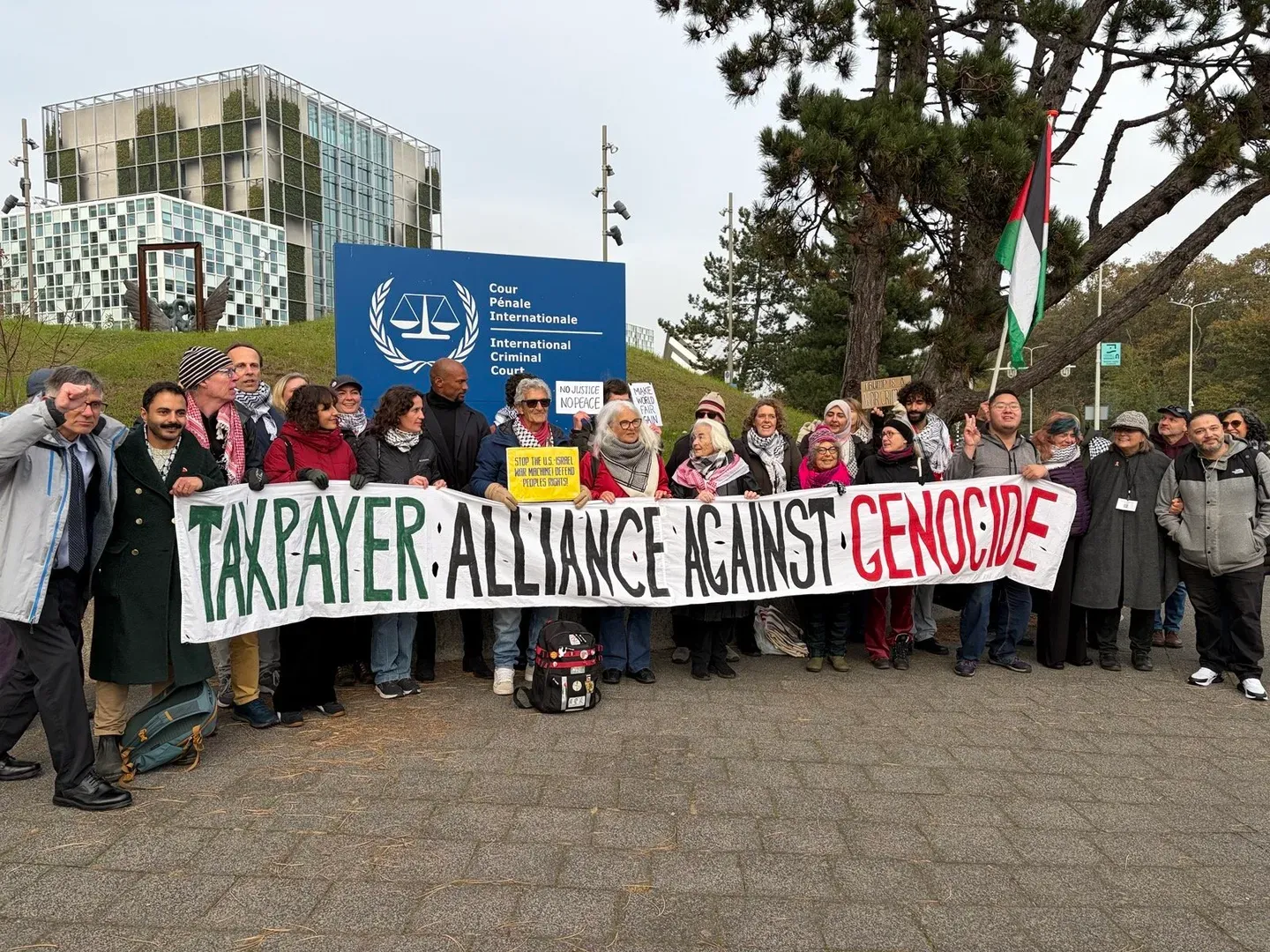
Delivered to the ICC prosecutor’s office on November 11, the submission includes more than 500 pieces of evidence, including witness statements, affidavits and documents detailing US military, financial and diplomatic support for Israel.
Organised by the Taxpayer Alliance Against Genocide (TAAG), the initiative seeks to hold American officials accountable for their alleged role in enabling crimes committed by Israeli officials in Gaza.

“For too many of us, it's been easier to ignore what is being done in our name every day using our dollars. But our clients have never looked away,” Maria Kari, a human rights attorney and TAAG's legal co-counsel, tells TRT World.
Kari says TAAG members spent a year compiling evidence against Trump and Rubio, arguing that the alleged crimes could not have been committed without the Trump administration’s “unconditional, bottomless cash, weaponry and diplomatic support” for the Israeli occupation.
“We're turning to the ICC because we have tried everything at home; we have sued in domestic courts, knocked on the door of every member of Congress and engaged in peaceful protest,” she says.
The submission also seeks to represent the more than 64,000 children killed or injured in Gaza, according to Kari.
The limits of domestic accountability
The decision to turn to The Hague followed years of unsuccessful attempts to hold US officials accountable through domestic courts.
One such effort was the 2023 case of DCIP v. Biden, in which a group of Palestinian Americans sued then-President Joe Biden, Secretary of State Antony Blinken and the Secretary of Defense, accusing them of failing to prevent genocide and being complicit in it.
Although the judge dismissed the case in January 2024, he said Israel's conduct “plausibly” constituted genocide and urged the Biden administration to reconsider its “unflagging support” for Israel.
“In other words, the courts said foreign policy decisions were the responsibility of the President and Congress, not the judiciary,” Kari says.

Other cases on behalf of Palestinian Americans had also been dismissed on procedural grounds, according to Kari.
She recalled receiving her first request for help nearly three years ago, from an American trapped in Gaza.
The Biden administration initially refused to evacuate her client, but the woman and approximately 80 other Americans were eventually evacuated after Kari's team sued the government.
Other clients were less fortunate. Mufi Harara, from Dallas, was killed by a missile that Kari says was paid for with American taxpayers' money.
Two other clients, Barack and Hashim Alaga, from Chicago, were detained in an Israeli prison while awaiting US government assistance.
According to Terry Lodge, an attorney and legal co-counsel for the initiative, these cases highlight the human cost of the failure to protect American citizens and hold US officials accountable.
“Taxpayers Against Genocide began with a lawsuit. It was formed in September 2024, when activists in counties across Northern California came together to launch a class action lawsuit against their members of Congress, accusing them of illegally using taxpayers' money to fund the genocide,” Lodge tells TRT World.
“In February 2025, the judge dismissed the case for reasons similar to those in the earlier cases, essentially ruling that the court could not intervene in what it considered a ‘political’ issue.”
“TAG, along with other groups across the US, have also protested our elected representatives' votes to keep funding genocide. These representatives have ignored us or if they've taken meetings with us they've placated us and then turned around to vote in a way that has kept arms and weaponry flowing to Israel,” Lodge says.


Taking the fight beyond US institutions
The initiative comes as Trump has intensified pressure on international institutions.
In February 2025, he signed an executive order authorising sanctions against individuals and entities involved in ICC investigations targeting US nationals or allies.
His administration has since sanctioned ICC officials and UN Special Rapporteur Francesca Albanese.
“After repeatedly encountering political obstacles in our domestic efforts, we filed a report with the UN Human Rights Council as part of its review of the US human rights record,” Kari says.
“The US response was for the Trump administration to announce that it would block the Universal Periodic Review (UPR) process. This was the first time in history that a state had refused to participate in such a review.”
“The ICC is meant to step in precisely in situations like the one we have faced in the US over the past three years. We are not only the chief enablers of this genocide; we are also governed by a system that is unwilling or unable to hold its leaders accountable,” she adds.
The petition alleges that Washington violated its obligations under the American Declaration on the Rights and Duties of Man and peremptory norms of international law by enabling human rights violations beyond its borders.
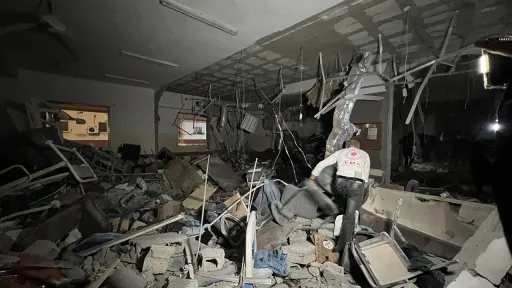
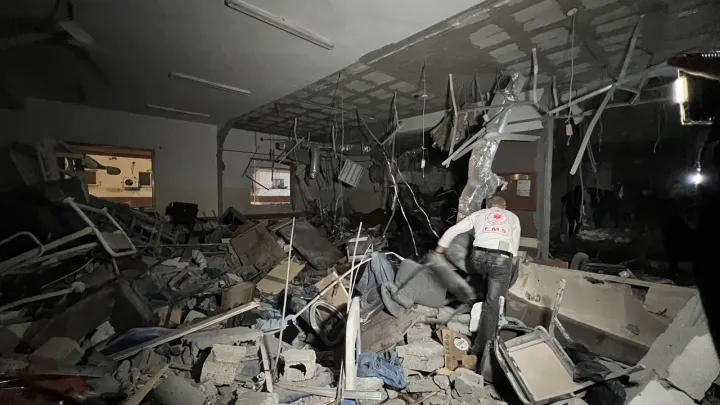
The lawyers also faced challenges in documenting potential international crimes as the destruction in Gaza continued. Investigators have had to contend with the loss of physical evidence, restricted access to sites and the deaths of potential witnesses.
Journalists, who have played a crucial role in documenting the attacks, have also paid a heavy price. Israeli attacks have killed at least 262 Palestinian journalists and injured 433 others since 2023, according to Gaza’s Government Media Office, as reported.
Medical workers treating the wounded and civilians trying to secure food for their families have also been among those killed.
A test of international justice
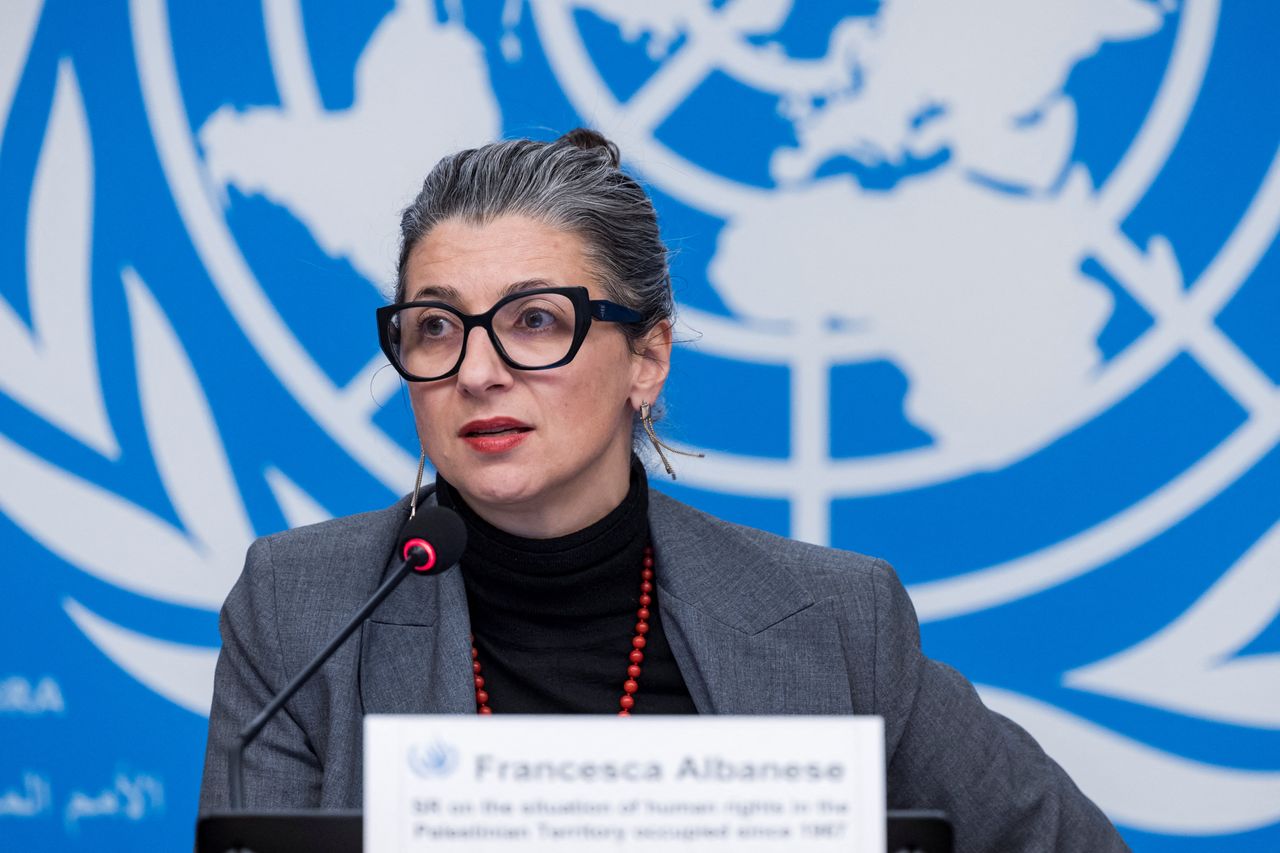
Delivering the keynote address at the initiative's launch, UN Special Rapporteur Francesca Albanese described the submission as an important effort to defend the international legal order against attempts by powerful states to undermine it.
“International law remains the last peaceful instrument we possess to confront injustice and pave the way forward. The legal tools are there; they are peaceful tools, and what is missing in many is the political courage to use them,” she said, praising TAAG for demonstrating that courage.
Albanese also criticised Washington's attacks on the ICC, the United Nations and UNRWA, arguing that they reflected a broader attempt to weaken institutions capable of challenging powerful governments.
The evidence now rests with the ICC prosecutor's office. TAAG's legal team acknowledges that the process could face significant political and legal obstacles, particularly given pressure from Washington.
“Politically, we understand the enormous pressure that the Court is under from a small number of governments, especially the US,” Kari says.
“We believe such pressure is not only politically inappropriate, but also legally untenable and a violation of the Rome Statute that should not go unpunished.
“While we acknowledge the political pressure, we hope that the prosecutor and the Court will have the courage to reject the pressure and review the evidence only in light of the elements of the crimes and the burdens of proof that flow from the Rome Statute,” she adds.

SOURCE:TRT World