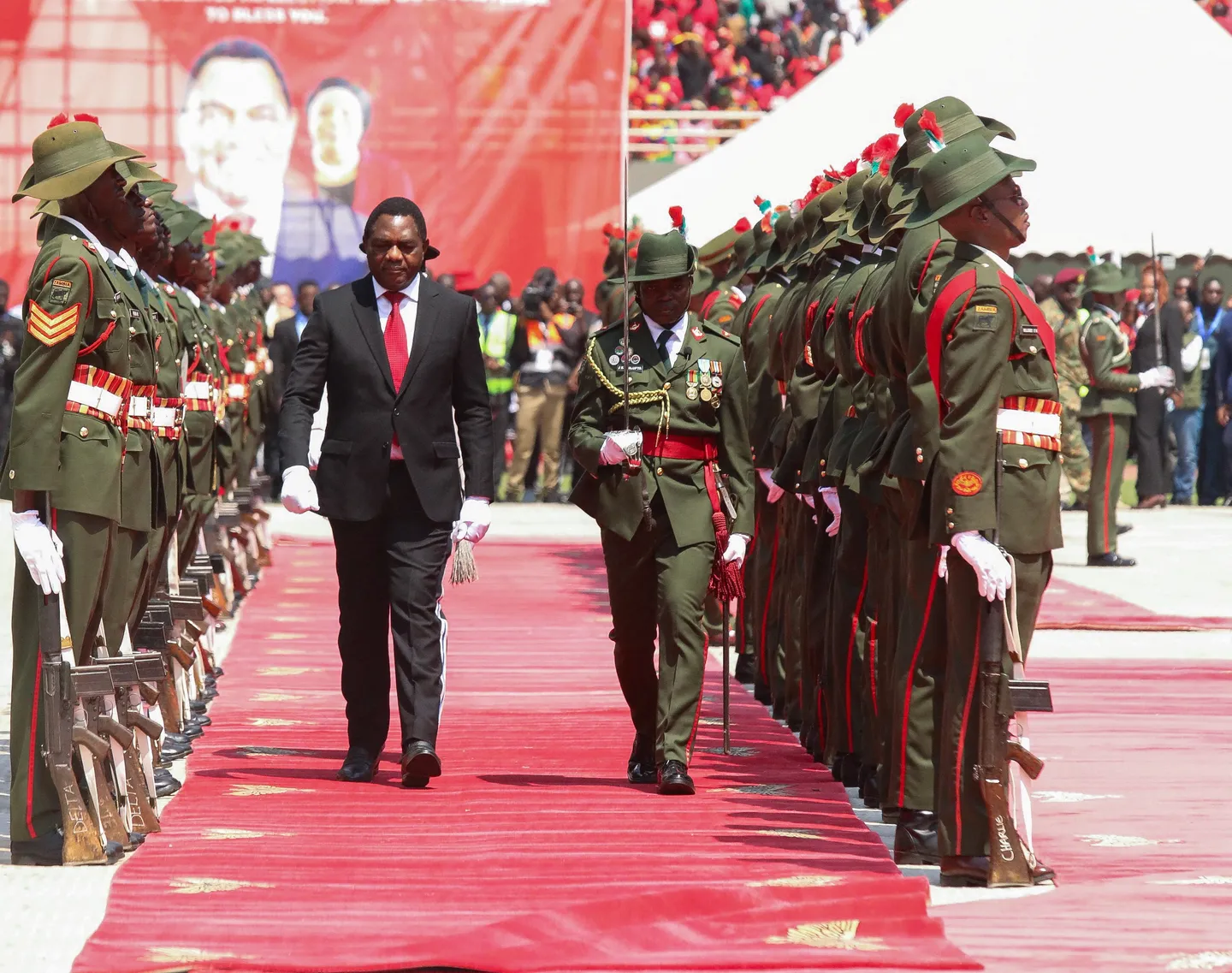
Zambia's President Hakainde Hichilema has called for an easing of political tensions following his re-election, urging Zambians not to allow political differences to descend into violence.
Hichilema, who took the oath of office on Tuesday, said political differences were an inevitable part of democracy but warned that the pursuit of political power must never come at the expense of peace, security and stability.
"It takes courage to offer oneself for public service... but it should never reach the point where it becomes a matter between life or death," Hichilema said in his address.
Thousands of cheering supporters wearing the red colours of Hichilema's UPND party packed a stadium in the capital, Lusaka, for the swearing-in ceremony, which was attended by a handful of African leaders.
Economic growth
"Having done the heavy lifting in our first term, the next five years is all about growth, expansion, opportunity and prosperity for all our people," he said in an address to the packed stadium.
Hichilema took the oath of office as the main opposition leader, Brian Mundubile, who was the runner-up in the August 13 ballot, remained under arrest on treason charges that he rejects.
“We receive your support with humility and with a clear understanding of the responsibility it places upon our shoulders. To those who chose other candidates or other parties, we say with equal sincerity, we have heard you,” Hichilema said.
Hichilema has been credited with steering Zambia through a major economic turnaround during his first five-year term after the country defaulted on its sovereign debt in 2020.


Under his market-friendly reforms, inflation fell and international reserves increased. His government also abolished the death penalty and introduced free primary and secondary education.
Chalenges ahead
Critics, however, argue that the economic growth has yet to translate into meaningful improvements for ordinary households.
Acknowledging "challenges with the cost of living", Hichilema said: "There is still a lot more to be done. And that's what this mandate is all about.
"We are moving from stabilisation to growth, effectively.
"This means, in practice, broad expansion and for all our people to access opportunities, irrespective of their backgrounds."
More than 70 percent of Zambia's 22 million people live on less than three dollars a day, according to World Bank data.
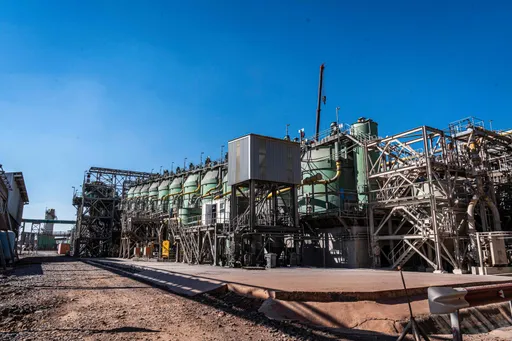
Zambia is Africa's second-largest copper producer, with the commodity accounting for around 70 percent of the country's export earnings. China is a major investor in Zambia and its largest bilateral creditor.
Since gaining independence from Britain in 1964 under founding president Kenneth Kaunda, Zambia has earned a reputation as one of southern Africa's more stable democracies, with a history of peaceful transfers of power.