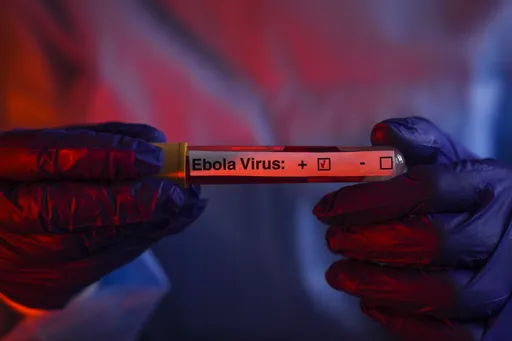
The Ebola outbreak in the Democratic Republic of Congo does not meet the threshold for a pandemic, the chair of the World Health Organization's emergency committee on the situation said Wednesday.
"The current situation and criteria for a public health emergency of international concern have been met, and we agree that the current situation does not satisfy the criteria for a pandemic emergency," Lucille Blumberg told reporters, speaking from South Africa.
The agency said the risk of global spread of the Ebola virus in Congo and Uganda is high at national and regional levels, but low at the global level.
The risk assessment came as the leader of the WHO team in Congo said the outbreak, which has led to 134 suspected deaths, could last at least another two months as aid efforts intensified on to stem the spread.
‘Scale much larger’
WHO Director-General Tedros Adhanom Ghebreyesus said so far 51 cases have been confirmed in Congo in the northern provinces of Ituri and North Kivu provinces in Congo, “although we know the scale of the epidemic is much larger.”



He said Uganda has also told the UN health agency of two confirmed cases in Uganda’s capital, Kampala. “Beyond the confirmed cases, there are almost 600 suspected cases and 139 suspected,” he said. “We expect those numbers to keep increasing.”
WHO has declared the Ebola outbreak a public health emergency of international concern, requiring a coordinated response. On Tuesday it expressed concern over the “scale and speed” of the outbreak.
The spread of Ebola in Congo means the outbreak likely began a few months ago, the health agency said.
"Investigations are ongoing and our priority is really to cut the transmission chain by implementing contact tracing, isolating and caring for all suspect and confirmed cases," Anais Legand, WHO technical officer on viral haemorrhagic fevers, told journalists.