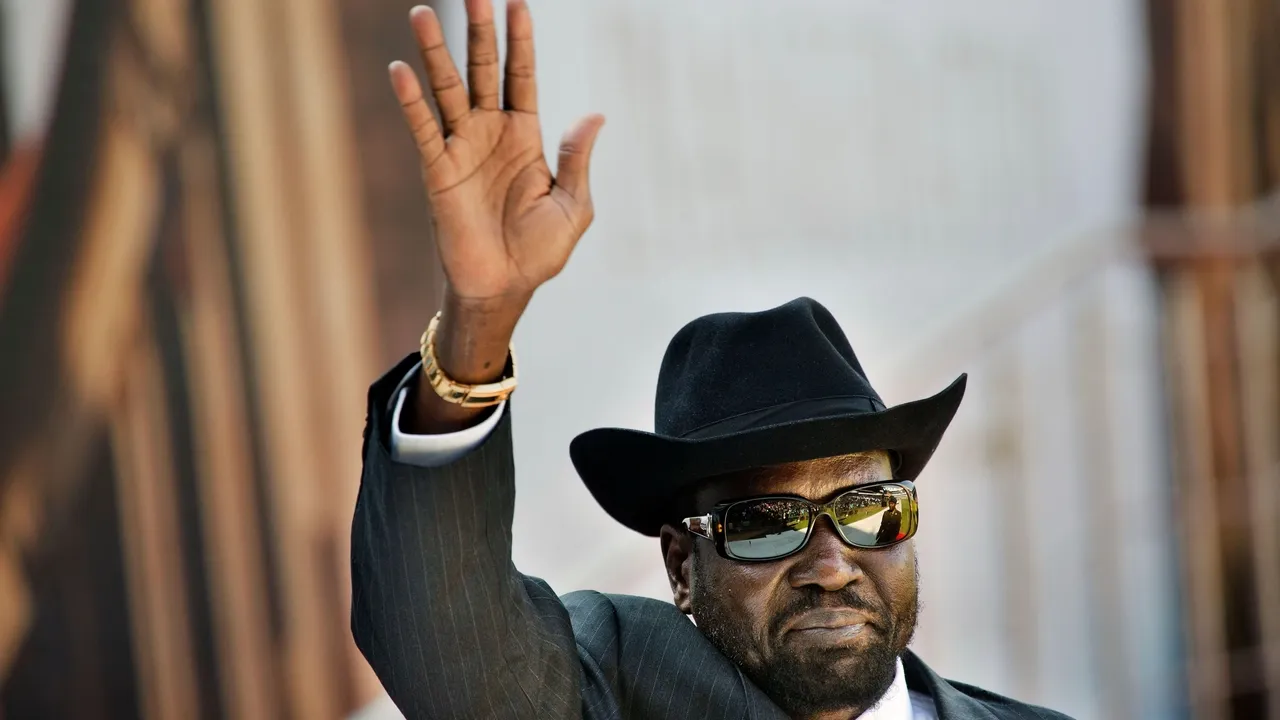
South Sudanese President Salva Kiir Mayardit on Monday inaugurated the country’s first fully operational independent air traffic management system, marking a major step in South Sudan’s aviation development and assertion of sovereignty.
Operated from the new control tower at Juba International Airport, the system allows South Sudan to independently monitor and manage its airspace for the first time since gaining independence in 2011.
South Sudan became independent from Sudan in July 2011, but air traffic management services continued to be coordinated from Khartoum under transitional arrangements.
Sudan had managed South Sudan’s upper airspace under a temporary 2016 agreement brokered by the International Civil Aviation Organization (ICAO).
'Reclaimed our sovereignty'
The arrangement was originally intended to expire in 2019 but continued because of delays in training local personnel.
Kiir inaugurated the system alongside senior government and aviation officials during a ceremony in Juba.
“We have reclaimed our sovereignty by taking control of our airspace. From today onwards, our airspace is in our hands,” President Kiir said during the launch.
He instructed the Civil Aviation Authority to ensure uninterrupted operation of the system.

'Cannot afford to fail this system'
“I am directing that this system work without interruption. We cannot afford to fail this system, so that the control of our airspace is maintained,” he added.
The country also unveiled its first modern air traffic control tower as part of the project.
Officials said the new system would improve air safety, flight monitoring, regulatory oversight and revenue collection while enabling South Sudan to fully manage its own airspace for the first time.
Ayiei Garang Deng, director general of the South Sudan Civil Aviation Authority, described the newly inaugurated system as among the most advanced on the continent.
Six radar systems
“This system is one of the best and most advanced in Africa, featuring an advanced air navigation system, with installations in Wau and Malakal,” Garang said.
He said the country now operates six radar systems – three primary and three secondary radars.
“We have six radars: three primary radars and three secondary radars, making it the most advanced system in all of Africa. The only country that competes with us is South Africa,” he added.