 Pauline Odhiambo
The morning sun had barely cleared the rusty rooftops of Bissau's Bandim district when Fátima Seidi heard her youngest daughter, two-year-old Aminata, begin to cry. Not the soft whimper of a bad dream, but the hollow, listless wail that Fátima had come to dread—the sound of hunger.
For three months, Aminata had been receiving a small daily ration of Plumpy'Sup, a fortified peanut-based supplement that had slowly brought color back to her cheeks and a spark back to her eyes. But two weeks ago, the neighborhood health post ran out. The supply that once lasted six months had been cut in half, and now the shelves were bare.
Fátima, a widow who sells fried pastries at the roadside market, watched her daughter slip backward—the chubby arms thinning again, the hair taking on that telltale reddish tint of malnutrition.
"Before the supplement, she couldn't even stand to play," Fátima tells TRT Afrika, bouncing Aminata on her hip as they waited outside the health post, hoping for news. "Then she started getting stronger. Now I feel like we're losing her again, little by little."
She does not know the language of international funding cycles or budget shortfalls. She only knew that the small blue packet that had saved her daughter was no longer there.
Hot meals
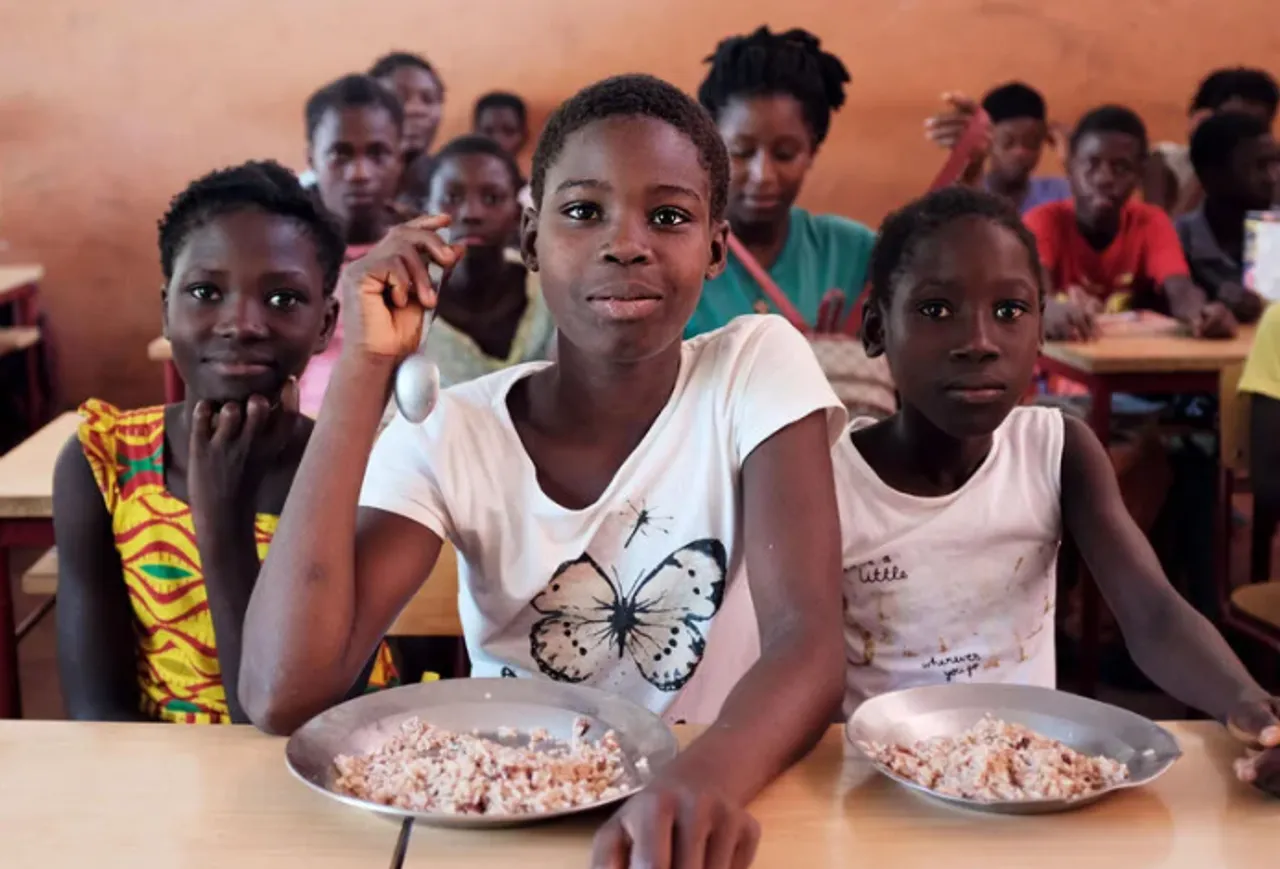
Across the capital, that same shortage was being felt in the clatter of lunchtime meals at a primary school in the Quelele neighbourhood. Until this school year, João Correia, a teacher, had watched 200,000 children across the country receive a daily hot meal—enough to keep them in class, enough to keep their stomachs quiet so their minds could work. Then the funding gap hit. The number of children receiving meals dropped to 151,800. The meals, often consisting of rice, beans, lentils and split peas, gradually diminished.
The shortfall was not an accident of nature or a dip in global donations. It was, in large part, a consequence of policy: the Trump administration’s freeze and subsequent dismantling of USAID had cut off virtually all American aid to Guinea-Bissau, part of a broader shift from humanitarian assistance to a "trade, not aid" doctrine across Africa. For WFP and the children who depended on its meals, the gap was sudden and severe.
"The children eat, yes, but the portions are smaller now," João says, standing in the school's modest courtyard where small pots simmer over a wood fire. "They get tired faster, and we see the difference. They used to run during recess. Now they sit."
Then, on a Tuesday in late March, news arrived that rippled through the capital like a cool breeze off the Geba River. The Embassy of Japan in Dakar and the United Nations World Food Programme had signed a new agreement: 200 million Japanese yen—roughly $1.32 million—earmarked for Guinea-Bissau's most vulnerable.
Balanced diet
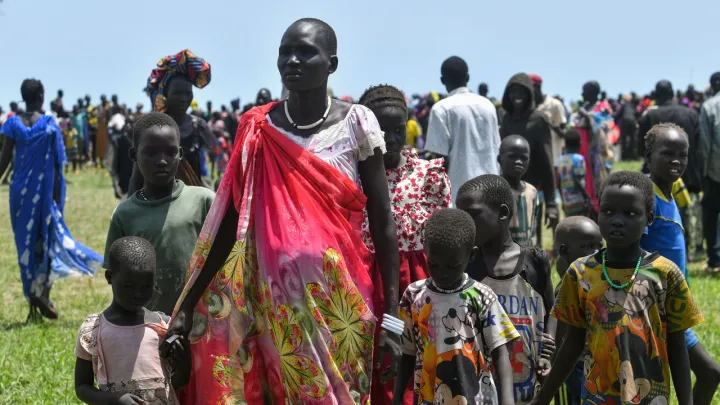
For João, the announcement meant that his 300 students would continue receiving daily meals through the end of the school year. For Fátima, it meant that Aminata and more than 3,000 other children under five would once again have access to locally produced food supplements and diversified baskets of fresh vegetables and fruits.
"It is like watching someone throw a rope into a well," João said, allowing himself a rare smile. "We are not out yet. But we can hold on."
The timing could not have been more critical. According to the 2025 Global Hunger Index, 22 percent of Guinea-Bissau's population remains undernourished, and nearly one in three children under five suffers from wasting—a condition so severe that it kills more children than malaria and tuberculosis combined in many low-income countries. The causes are not simply a lack of food, but a lack of diverse food: rice is plentiful, but fresh produce, protein, and micronutrients remain out of reach for millions.


The country’s school feeding program, largely supported by the World Food Programme (WFP), provides hot meals to over 150,000 schoolchildren annually to improve attendance and nutrition. These initiatives often include take-home rations for girls to encourage retention, with a growing focus on transitioning to a home-grown model.
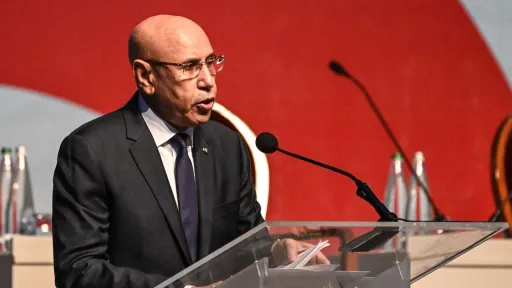
"Japan has been a longstanding partner, but this contribution comes at a moment of acute pressure," states Kinday Samba, WFP's Regional Director for West and Central Africa, during the signing ceremony in Dakar. "We hope to deliver food aid to as many people as possible to ensure that children can continue to access school meals and nutritional support, especially during these uncertain times."
For Fátima, the word "diversified" is not abstract. She remembers when Aminata refused to eat anything but white rice and broth. The supplement changed that, introducing her palate to sweet potato, moringa, and mashed beans. Now, with Japan's support, local health posts are set to restock not only therapeutic foods but also fresh produce sourced from Guinean farmers—a deliberate strategy to link hunger relief with rural development.
"The goal is to continue addressing hunger and malnutrition in a manner that can adequately respond to the needs of the people," Takeshi Akamatsu, Japan's Ambassador to Guinea-Bissau, stated at the ceremony.
‘Real food’
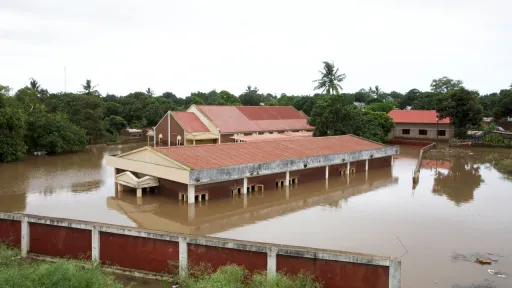
But the ambassador's words carry a weight beyond the ceremony. During the 2024–2025 school year, Japan's earlier support had already enabled WFP to reach 197,000 schoolchildren. And in 2025, emergency funding allowed the agency to provide voucher-based food assistance to nearly 2,000 families displaced by devastating floods in the Oio and Tombali regions—families who had lost their rice paddies, their cashew harvests, and in some cases, their homes.
One of those families was that of Mamadu Baldé, a farmer from Oio who now lives with relatives in Bissau. He received vouchers to buy fresh food at local markets, an intervention that kept his children out of the emergency feeding centers.
"The flood took everything," Mamadu recalls. "The voucher was not a handout. It was a bridge."
Now, that same bridge is being extended to thousands more. WFP will use Japan's contribution to reinforce local production capacities, buying food supplements and fresh produce from Guinean cooperatives—many of them run by women like Fátima Seidi —to serve school meals and therapeutic feeding programs.
It is a virtuous cycle: hungry children receive nutrition, local farmers receive income, and communities become less dependent on imported aid.
"For the first time in months, it feels like my child’s future is not slipping through my fingers,” says Fátima.
In the primary school at Quelele, small pots of food continue to simmer over wood fires in the courtyard.
"You cannot teach a hungry child," says João Correia, watching his students file back into their classroom after lunch. "And you cannot heal a malnourished child with love alone. You need food. Real food. And now, thanks to this help, we have a little more time to keep fighting."