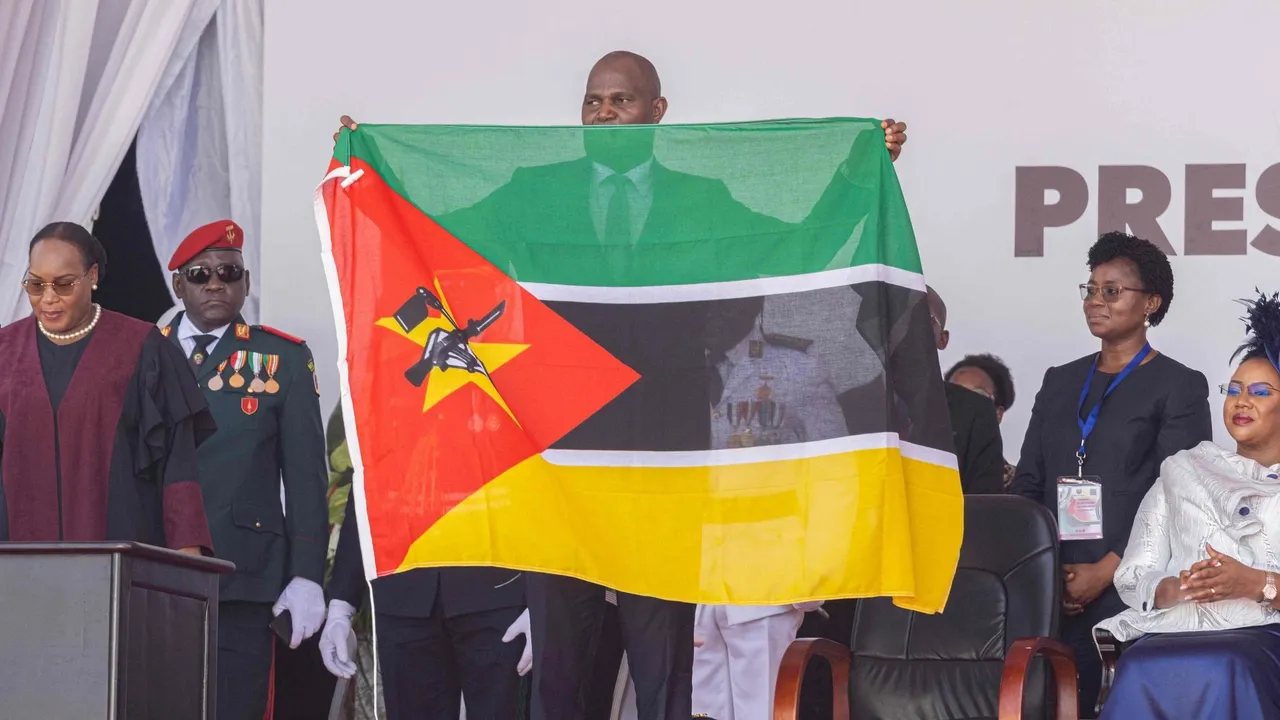
Mozambique's economic challenges have mounted in recent weeks, with at least one global lender and a ratings agency suggesting the country will seek to restructure its sole international bond.
Below are some of the issues facing the resource-rich southern African nation of 35 million people:
What is Mozambique's financial situation?
Concerns about government finances have intensified in the past few years as terrorism in the country's north continue to delay development of vast gas projects. The situation was compounded by post-election social unrest in late 2024.
Although total debt was broadly stable at around 90% of gross domestic product at end-2024 from a year earlier, the International Monetary Fund in February reclassified Mozambique's debt as unsustainable, from sustainable in its 2024 analysis, citing a deterioration in public finances.
The Fund said tough financing conditions in 2025 had led to debt-service arrears estimated at 1.3% of GDP by year-end.
Arrears include amounts owed to development financiers including the European Investment Bank and to domestic creditors such as holders of short-term government securities.
Progress has been slow on developing vast gas deposits – among Africa's largest with much of it destined for liquefied natural gas exports.
How has the evolving situation affected markets?
Mozambique's sovereign bond spread over US Treasuries — a widely watched measure of risk for investors — stands at a distressed 1,185 basis points, according to JPMorgan data.
The economy contracted by an estimated 0.5% last year.
Mozambique's currency, the metical, has also weakened 0.8% against the US dollar this year so far, according to LSEG data.
Mounting pressures have fuelled concern over Mozambique's sole $900 million international bond, maturing in 2031, with an interest payment due in September.



Fitch downgraded Mozambique's rating to "CC" last month from "CCC", saying there was a heightened risk of a credit event through a default or restructuring.
The government has not commented.
When will Mozambique secure a new IMF programme?
Fund staff will head to Maputo in June to advance talks on a new programme after the expiry of the three-year, $456 million deal agreed in May 2022.
The IMF has said the government needs fiscal consolidation and greater exchange-rate flexibility to ease financial pressures and restore stability.
Earlier this year, Maputo cleared its arrears to the IMF – a move analysts said was intended to bolster credibility as it seeks new funding.
Mozambique and the IMF have a history of uneasy relations. The Fund suspended financing in 2016 after the discovery of undisclosed debts, before Mozambique later met conditions to regain access.
In February, the IMF warned that the government's reliance on deficit financing from local financial institutions was unsustainable, as it was placing too much strain on the system and risked crowding out credit to the private sector.
S&P Global Ratings affirmed Mozambique's domestic debt rating at Selective Default in October, pointing to a series of domestic debt switches in recent quarters where short-dated local-currency bonds are exchanged for longer-maturity instruments, which the ratings agency classified as a distressed operation.
The government said last October it had authorised the consulting firm Alvarez & Marsal to assist with the country's "public debt restructuring plan", without providing more details.
What other factors are affecting the economy?
Like other countries, Mozambique is facing inflation pressures and other issues including fuel and fertiliser imports related to the Middle East conflict.
It has been hit hard by security challenges and climate change, including a deadly 2024 cyclone.