More jobs. Higher wages. Less inequality. Better housing, schools, hospitals and infrastructure.
Those are among the main concerns for Moroccan voters as they head to the polls on Wednesday to elect a new parliament.
The next government will oversee billions of dollars in investment as Morocco prepares to co-host the 2030 FIFA World Cup. A football boss could even emerge as prime minister.
Morocco's new political leadership will mainly face pressure to address everyday concerns, while operating alongside the monarchy that retains decision-making authority in strategic affairs.
Here is what to know about Morocco’s first parliamentary elections:
Morocco's economy is strong but jobs are scarce
Morocco’s economy is growing and attracting foreign investment, and new industries are developing. It has also become Africa’s most-visited destination.
The kingdom maintains strong ties with Western capitals.
At least 12.7% of Moroccans live in relative poverty. Politicians say they have heard these grievances and have proposed solutions in their election manifestos.
Parties make pledges for schools, hospitals and housing
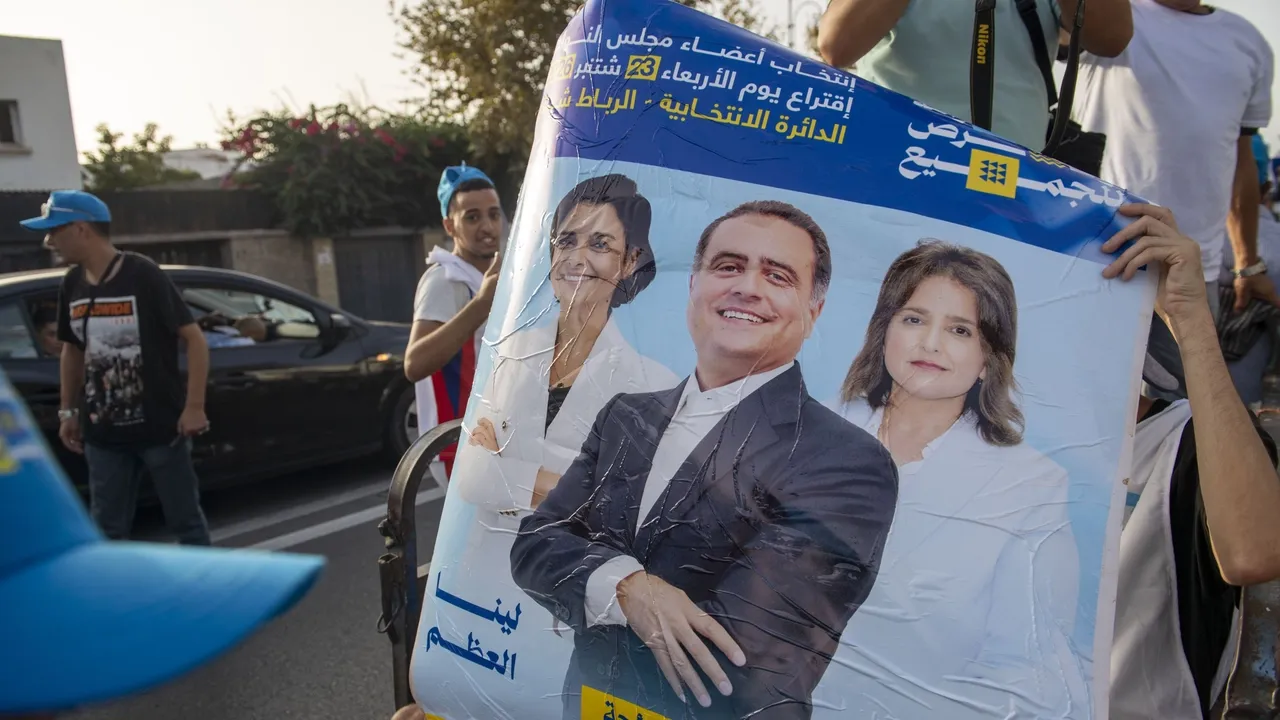
A total of 7,288 candidates from 28 political parties are competing for 395 seats.
The RNI party, part of the current governing coalition, has promised a guaranteed monthly minimum wage of 5,000 dirham ($525) and to create 1 million jobs.
Another member of the governing coalition, the PAM party, said it would exempt salaries below 15,000 dirham ($1,575) from taxes and pledged 100,000 housing solutions for young people.
The Istiqlal Party wants to speed up treatment at public hospitals. The opposition left-wing PPS aims to cut the school dropout rate in half and tighten anti-corruption rules. PJD party aims to narrow economic disparities between major economic hubs like Casablanca and other regions.
The next PM could be a football boss
Morocco’s constitution requires the king to choose the prime minister from the top-performing party in legislative elections.
Since no single party is expected to capture an absolute majority, the winner will need to build a coalition government. Portfolios are split among the political allies, but the palace traditionally keeps key posts such as defence and foreign affairs under royal control.
“The government’s overall policy platform is set by a circle of advisers close to the king, who retains ultimate power,'' said Hamish Kinnear, a UK-based risk analyst focusing on North Africa and the Middle East.
Traditionally, the king has named the leader of the party that comes first as prime minister. But in recent months, attention has turned to other possibilities, such as Faouzi Lakjaa, president of Morocco’s football federation, who recently joined the PAM party as a member of its political bureau but is not the top party official. Lakjaa, 56, who also oversees Morocco’s budget, has been buoyed by Morocco’s recent football achievements.
Morocco could get first woman PM
Yet at a rally last week, PAM members rooted for another candidate.
“We want a woman as prime minister,” many shouted, referring to Fatima-Zahra Mansouri, 50, mayor of Marrakech and minister of urban planning. If PAM wins the election and she is named, she would be Morocco’s first female prime minister.
Another potential contender is Nizar Baraka, head of PI and minister of water. The grandson of a leader of Morocco's colonial-era independence movement, Baraka's supporters see his party as a defender of Moroccan values.
Former Prime Minister Abdelilah Benkirane, leader of PJD, is seeking a comeback after the party’s sharp defeat in 2021, when it went from 125 seats to 13.
The number of registered voters has declined 9.7% from the 2021 elections even as the population has grown.