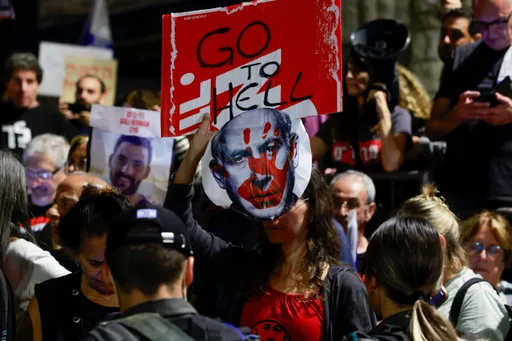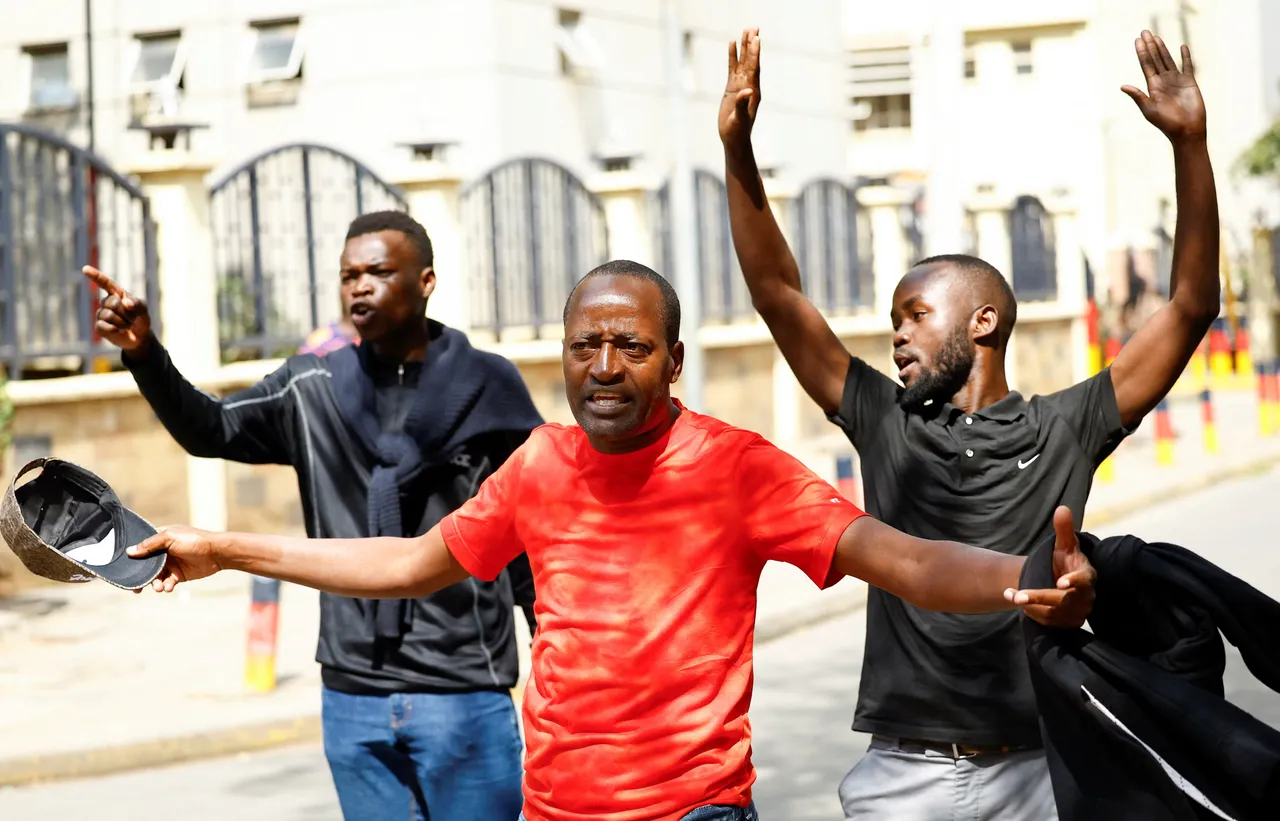
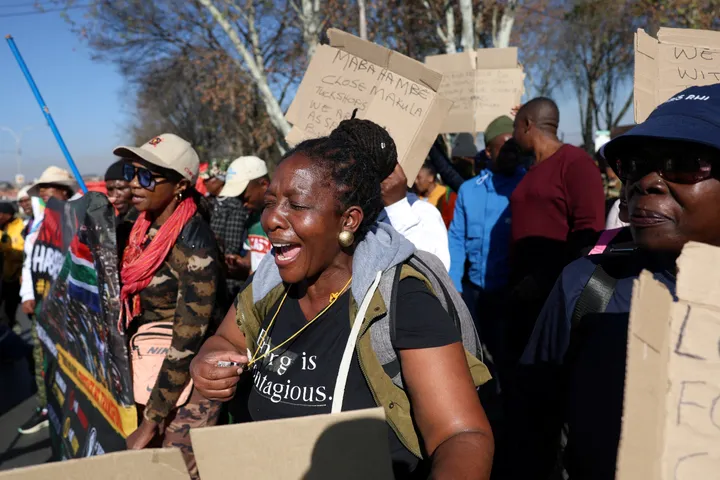
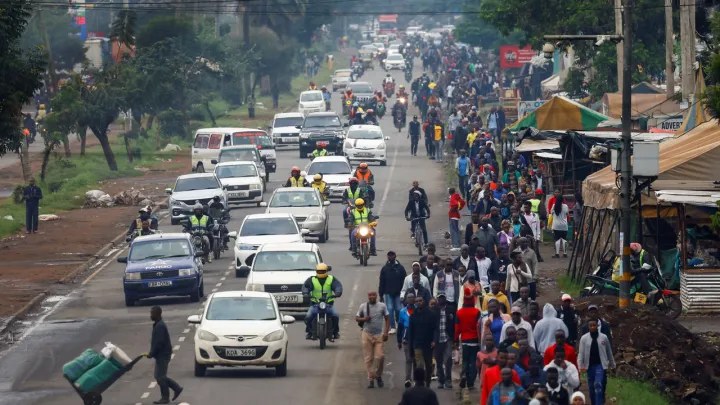
Just days before Kenya tabled its FY 2026/27 budget, young people were back on the streets. Their anger was not random. It was about fuel prices, transport costs, shrinking opportunity and a hardening belief that the state keeps coming back to the same people, the young, the struggling, the excluded whenever it needs someone to carry the burden.
Four people were killed in protests, and the immediate trigger was a 23.5 percent increase in diesel prices that pushed transport costs even higher. But the bigger story is that this unrest followed the Gen Z-led mobilisation that had already forced the withdrawal of the Finance Bill 2024.
The message from the streets was unmistakable: Kenya’s youth are no longer willing to suffer quietly under a fiscal order that demands sacrifice without fairness.
That is why this budget should not be read as a technical statement. It should be read as a political choice. Budgets tell us who matters, who waits, who pays, and who is protected. Kenya’s FY 2026/27 budget shows a country under debt pressure, but it also shows something more troubling: a state still failing to convert public finance into public trust.
Political choice
The first crisis is debt. Kenya’s public debt had crossed about KSh 13.02 trillion by May 2026, equivalent to roughly 71 percent of GDP. The FY 2026/27 budget is projected at around KSh 4.8 trillion, with a fiscal deficit of KSh 1.15 trillion to be financed largely through borrowing.
Recurrent spending is estimated at KSh 3.57 trillion, or 74.4 percent of the total budget, while development spending is about KSh 750 billion, only 15.6 percent. Interest payments now consume more than a quarter of the budget, up from around 15 percent in 2018
That means public money is increasingly being pulled toward debt service rather than toward the things that actually shape a generation’s future: education, jobs, digital inclusion, health care and productive investment.
And yet debt pressure alone is not the whole story. Governance matters too. Audit reporting has raised concerns around approximately KSh 300 billion in bond proceeds raised between 2017 and 2023 that could not be fully traced, while state agencies have also defaulted on on-lent loans that then shift the burden back onto taxpayers.

A government cannot keep telling young people to be patient, responsible and realistic while major questions remain unanswered about how borrowed money was managed in the first place.
The second crisis is credibility. This budget projects revenue of KSh 3.63 trillion, while the Kenya Revenue Authority target for FY 2026/27 is KSh 2.968 trillion. Yet recent revenue performance has repeatedly fallen below target, including a first-half shortfall of KSh 152.2 billion in FY 2025/26.
When revenue assumptions are consistently too optimistic, the result is predictable: the financing gap widens, borrowing deepens, and the same debt spiral tightens around public spending. Young people are then told to tighten their belts in an economy whose fiscal promises too often fail to hold.
The third crisis is delivery. On paper, the budget looks impressive. Education receives KSh 784.5 billion. Energy, infrastructure and ICT receive KSh 531.3 billion. Youth empowerment programmes receive KSh 20 billion. But budgets do not change lives on paper. They change lives through delivery.
Bureaucracy



And this is where the state keeps failing the young. The NYOTA programme, a flagship youth initiative intended to provide startup loans, entrepreneurship support and mentorship to vulnerable young Kenyans, aims to benefit 800,000 youth by December 2028.
Yet more than a year after launch, the implementing agency had reportedly spent KSh 1.032 billion entirely on administrative and consultancy costs in its first year, with no startup loans reaching young entrepreneurs during that time.
This is not a minor implementation hiccup. It is a warning sign of a system in which bureaucracy reaches the money before beneficiaries do.
Higher education reflects the same pattern. The State Department for Higher Education received KSh 155.2 billion against a request of KSh 311.9 billion, leaving a financing gap of KSh 156.7 billion.
HELB remains under strain, while the education sector as a whole faces a KSh 102 billion deficit. For young Kenyans, those are not just figures in a budget book. They shape whether a student stays in university, postpones learning, carries debt without opportunity, or drops out altogether.
There is also a contradiction that speaks to a wider African struggle. Kenya wants to present itself as a digital hub, a country of innovation, youth enterprise and technological ambition. But the cost of entry-level smartphones and digital participation remains a barrier.
A country cannot preach opportunity through the digital economy while making access to the tools of that future harder for the people expected to build it. For a young African trying to learn, work, build a small business or stay connected to markets and ideas, affordability is not a marginal issue. It is the frontier of inclusion.
This is why the debate must become bigger than one budget cycle. Kenya’s fiscal dilemma is part of a larger continental question. Across Africa, young people are being asked to endure austerity, underinvestment and delayed opportunity while states sink deeper into debt and recurrent expenditure.
Deferred future
The political language shifts from one country to another, but the pattern is familiar: when debt grows, it is young people who are told to be patient; when budgets tighten, it is their futures that are deferred first.
A different path is still possible. Kenya needs stronger debt transparency, tighter scrutiny of borrowing, better programme oversight, public reporting on disbursements, and tax policies that expand participation rather than punish access.
But beyond those reforms lies a simpler principle. A state that claims to believe in youth must stop treating the young as an afterthought in public finance and start treating them as the measure of whether the budget is working at all.
Kenya’s youth have already made one thing clear: they understand that budgets are not neutral. They understand that public finance is about power, dignity and whose future counts.
The real test for this budget, and for every African budget that follows it, is whether it expands the freedom of young people to learn, work, build and live with hope. Right now, that test is not being met strongly enough.
The author, Jon Kafuko, is Programs Manager at the Youth for Tax Justice Network (YTJN).
Disclaimer: The views expressed by the author do not necessarily reflect the opinions, viewpoints and editorial policies of TRT Afrika.