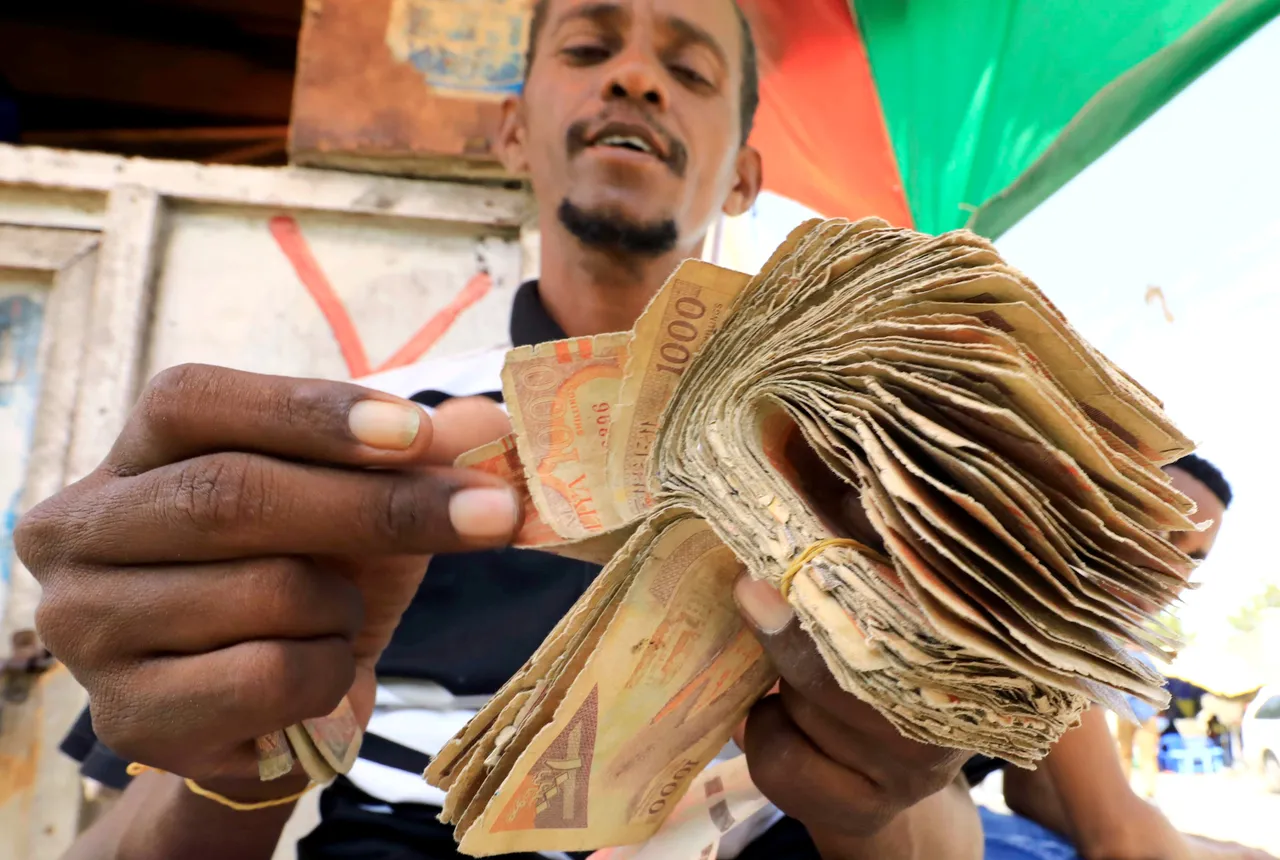
Somalia moved to enforce the use of the Somali shilling after widespread rejection of the currency, which has depreciated sharply to over 31,000 shillings to the US dollar, according to market exchange rates.
The intervention by the Banadir Regional Administration comes after days of economic disruption in Mogadishu, where rising reliance on USD and mobile money platforms further sidelined the Somali shilling in both formal and informal markets.
The situation has intensified concerns over inflation, reduced purchasing power, and the growing exclusion of cash-dependent low-income households.
The Somali shilling, which has served as the country’s official currency since the collapse of the central government in 1991, has experienced prolonged instability and steady devaluation over the years.
Somali media reports indicate that customers and traders in major Mogadishu markets have, in recent weeks, complained about the growing rejection of the Somali shilling. Even Bajaj (rickshaw) drivers are reportedly refusing to transact in the local currency.
Weeks earlier, a viral video showing a tailor repairing a torn Somali banknote sparked mixed reactions online.
Government reaction
In response, the Banadir administration convened emergency consultations at the headquarters of the Somali Chamber of Commerce and Industry, bringing together senior chamber officials, the Banadir Chamber leadership, and representatives of major Mogadishu markets.
Participants also included market union leaders from key commercial sectors such as wholesale and retail traders, currency exchangers, vegetable and meat vendors, and public transport cooperatives.
Governor of Banadir and Mayor of Mogadishu, Major General Hassan Mohamed Hussein, told the meeting rejecting the Somali dollar is a clear violation of law.
“We are issuing a clear directive that all local government taxes must be paid in Somali shillings. Any refusal to accept the national currency constitutes a violation of the law and will be dealt with accordingly,” he said.
Stakeholders were equally urged to acknowledge its importance to economic sovereignty despite ongoing challenges in liquidity and trust.
Business owners concerns







Business representatives later held a separate meeting with Muungaab to present concerns from the markets regarding pricing instability and the practical difficulties of operating in a dual-currency environment.
The governor promised the administration would work with business groups to ease implementation challenges and support measures aimed at stabilizing market operations, while reinforcing the role of the national currency.
Over the past several years, Somalia’s economy has become heavily dollarised, with businesses preferring the US dollar for its perceived stability. Mobile money systems, widely used for salaries, remittances, and retail payments, further entrenched this shift.
While these systems have improved financial inclusion in urban areas, they have also widened disparities, particularly affecting residents without access to smartphones, digital wallets, or stable dollar income.
Analysts say the near-total dominance of the foreign currency weakened the role of the Somali shilling by limiting its circulation and accelerating its depreciation.
Financial sovereignty
Business leaders and market representatives welcomed the engagement and expressed support for efforts to stabilize the currency even while highlighting operational concerns.
They noted that while the Somali shilling remains essential for financial sovereignty and accessibility for vulnerable populations, inconsistent supply, lack of confidence, and fluctuating exchange rates continue to undermine its usability in daily trade.
Stakeholders called for coordinated policy measures between the government and the private sector to address liquidity constraints, stabilize pricing mechanisms, and restore confidence in the national currency.
The Banadir administration’s directive marks one of the strongest local interventions in recent years aimed at restoring the use of the Somali shilling in Mogadishu’s economy.
However, the broader challenge remains structural, as dollarisation, inflation pressures, and digital payment dominance continue to reshape Somalia’s financial landscape.
Over the past decade, the Somali government has repeatedly announced plans to replace the national currency, while the current administration says around $40 million is still needed to complete the currency reform process.