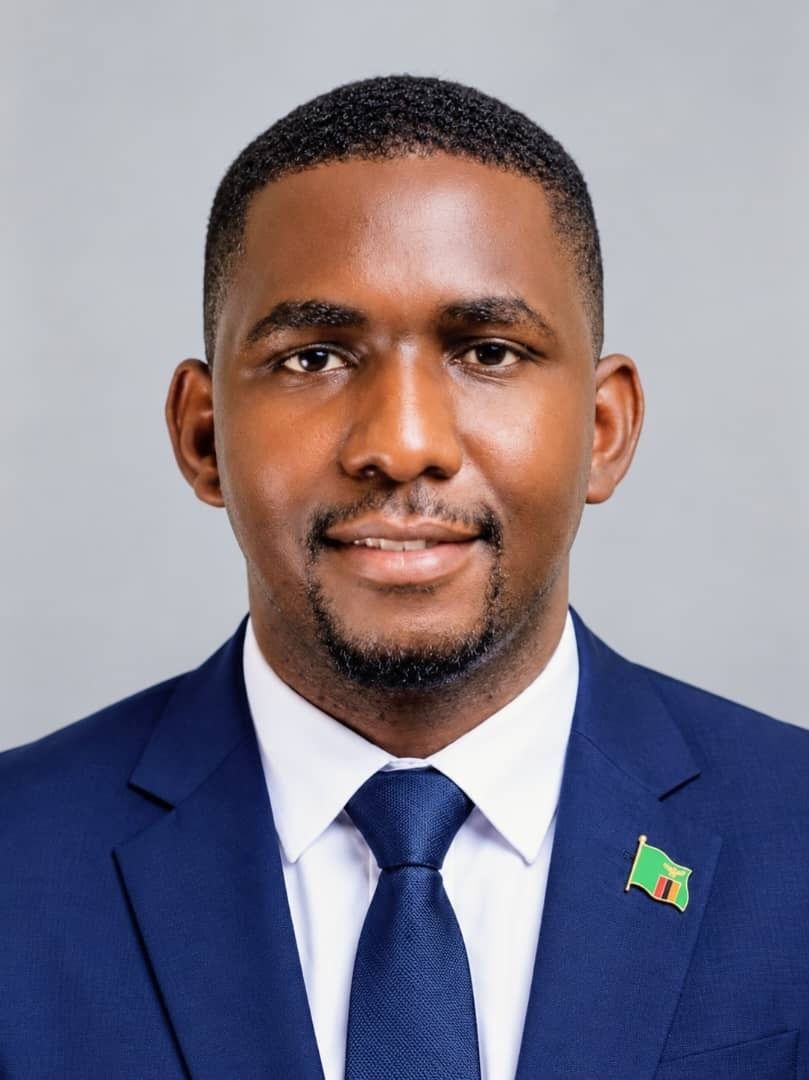
 Kennedy Chileshe
Your Excellencies, Heads of State and Government of the African Union.
I write with deep respect for the responsibilities you carry, and with a heart filled with both pride in Africa and concern about the future we are building for her people.
Every September, Africa's leaders gather at the United Nations General Assembly in New York. We speak, rightly, about the place of Africa in global governance. We remind the world that a continent of 54 +1 nations and more than 1.4 billion people remains without permanent representation on the United Nations Security Council.
We remind the world that the structure of the Security Council reflects a geopolitical order born in 1945 rather than the realities of the twenty-first century.
And we remind the world of the African Common Position embodied in the Ezulwini Consensus and the Sirte Declaration: at least two permanent seats for Africa, with the full prerogatives of permanent membership, including the veto while it continues to exist, alongside five non-permanent seats.
That demand is legitimate. It deserves to be pursued with determination.
But, Your Excellencies, I believe Africa must also ask itself a difficult question:
What are we doing with the power we already possess?

Look at our own house
For more than two decades, Africa has consistently made the case for reform of the Security Council. Yet meaningful reform remains unresolved.
We should continue making that case. But we must never allow the slow pace of reform elsewhere to become an excuse for slow progress at home.
The African Union is our principal continental institution. It is the platform through which African states can coordinate their interests, mobilise resources, address conflicts, deepen integration and advance a common African agenda.
Yet the AU continues to face a fundamental challenge: financing and implementation.
Africa's leaders have already made important commitments towards financial self-reliance. In 2015, the Union adopted targets for Member States to finance 100 percent of the operational budget, 75 percent of the programme budget and 25 percent of peace support operations. In 2016, the Kigali Decision introduced a 0.2 percent levy on eligible imports as a mechanism to support the financing of the Union.
Yet implementation remains incomplete. In 2025, the African Union reported that only 17 Member States had implemented the 0.2 percent levy. The AU has also acknowledged continuing gaps in achieving the Johannesburg financing targets.
This should concern all of us. Because there is a profound difference between having a continental institution and having a continental institution with the resources and authority to act.
Build the Africa we want
The question, therefore, is not whether Africa should continue demanding a permanent voice at the global table. We should. The deeper question is whether, while making that demand, we are doing enough to strengthen the institutions through which Africa can exercise influence today.
A stronger African Union would not replace the campaign for Security Council reform. It would strengthen Africa's hand in pursuing it. That is why I respectfully place several issues before you.
First, Africa must take greater ownership of financing its continental institutions.The commitments already made should not remain resolutions on paper. The 0.2 percent import levy, where applicable, and the agreed financing arrangements should be implemented consistently, transparently and accountably.
Financial independence should also come with stronger accountability. Africans must be able to see what their contributions are financing and what results those resources are producing.
Second, Africa's Peace Fund must become an increasingly effective instrument for African peace and security.
The Peace Fund is not an empty institution. As of February 2026, its balance stood at approximately US$400 million, while cumulative disbursements over the preceding two and a half years were approximately US$39 million. The AU has also indicated an ambition to expand the Fund's capitalization target to US$1 billion.
The opportunity before Africa is therefore significant: to strengthen mediation, preventive diplomacy and African-led peace support capacity so that our continent can increasingly respond to crises with greater speed, ownership and predictability.
Peace is not simply a security issue. It is an economic issue, an investment issue and a development issue.
Third, Africa must turn the African Continental Free Trade Area into everyday economic reality. The AfCFTA provides Africa with one of the world's most significant platforms for continental economic integration. But agreements alone do not create prosperity.
We need roads that connect markets, railways that move goods, reliable electricity, efficient borders, interoperable payment systems, modern ports, predictable customs procedures and policies that allow African businesses to trade across African borders.
A young entrepreneur in Lusaka should be able to sell to Nairobi, Accra or Lagos with increasing ease.
A manufacturer in Egypt should be able to source inputs from Zambia. A farmer in Ghana should be able to reach markets across the continent. Integration must be felt not only in conference rooms, but in the lives and businesses of ordinary Africans.
Fourth, Africa must feed itself and build value from its agricultural potential. Africa possesses roughly 60 percent of the world's uncultivated arable land, according to the Food and Agriculture Organization. Yet the continent continues to face major food-security challenges.




The answer cannot simply be to export raw agricultural commodities and import processed food. Africa needs irrigation, improved seeds, storage, rural roads, financing, research, mechanisation and agro-processing. We should not merely produce more food.
We should build African companies that process, package, distribute and export African food. That is how agriculture becomes industry.
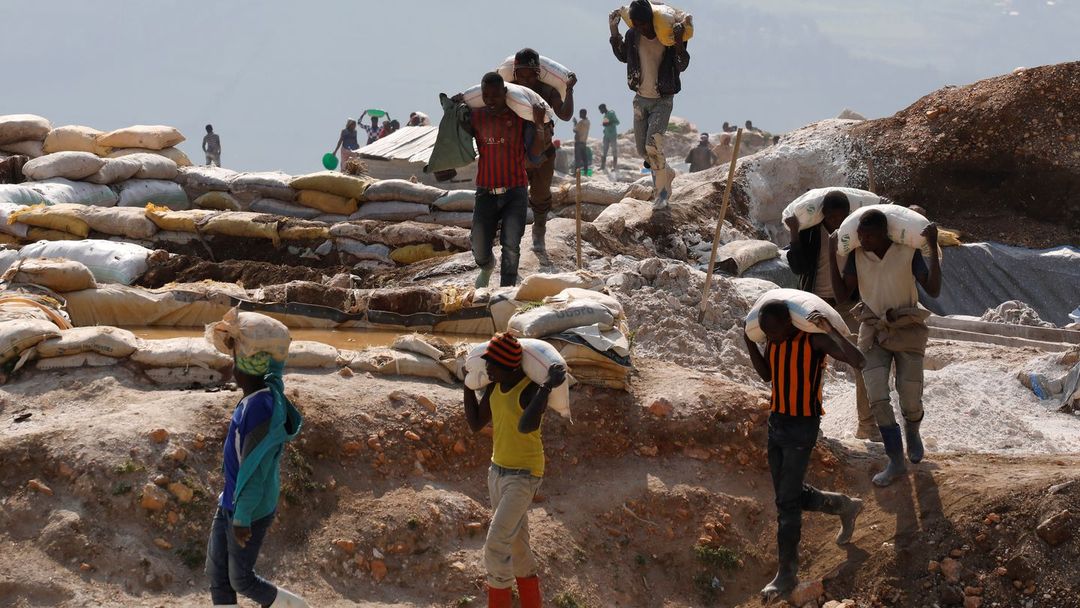
Fifth, Africa must invest collectively in energy, technology, health and its greatest resource — its people. Our young population can become one of Africa's greatest economic assets if education, skills, technology and productive employment grow alongside it.
But demographic potential does not automatically become economic prosperity. Young Africans need quality education, technical skills, access to capital, reliable energy, digital connectivity and economies capable of creating productive jobs.
Africa cannot build a twenty-first-century economy on twenty-century infrastructure and fragmented markets.
Match our global voice with our continental capacity
Your Excellencies, this is not an argument against Africa's campaign for reform of the United Nations Security Council.
It is an argument for pursuing that campaign while simultaneously strengthening what belongs to us.
Africa should seek the permanent representation it deserves internationally. But Africa should also build the institutional strength that makes its voice impossible to overlook. We should seek influence in New York while building capacity in Addis Ababa.
We should demand representation in global institutions while making our continental institutions more effective.
We should negotiate from a position of greater economic strength, greater political coordination and greater institutional confidence.
The world does not only listen to what Africa says. It watches what Africa builds. The young people of Africa are watching too.
They are not interested only in the language of historical injustice. They want to see functioning institutions, decent jobs, peaceful communities, open markets, reliable electricity, quality education, modern health systems and economies that allow them to build dignified lives at home.
They want an Africa that does not merely possess enormous potential, but converts that potential into opportunity.
A final appeal
Your Excellencies, Africa has no shortage of ideas. We have no shortage of natural resources. We have no shortage of talented people. We have no shortage of young people willing to work.
What we have struggled with is translating our many continental commitments into consistent implementation.
Perhaps, therefore, the most important question for this generation of African leadership is not simply: When will the world give Africa a permanent seat?
Perhaps it is also: What will Africa build while waiting?
Let us continue the struggle for a fairer global order. But let us also build a fairer, stronger and more integrated Africa.
Let us finance our institutions. Let us strengthen peace and security. Let us open our markets. Let us feed our people. Let us invest in our young people.
Let us build the roads, energy systems, industries, universities, digital networks and institutions that will make Africa's economic and political weight impossible to ignore.
The applause of the General Assembly lasts for a moment. Institutions endure. Economic capacity endures. Peace endures.
And the decisions we make today will shape the Africa that our children inherit tomorrow.
Africa does not need permission to build itself.
With profound respect and unwavering hope,
Kennedy Chileshe, Executive Director, Jubilee Leaders Network
Disclaimer: The views expressed by the author do not necessarily reflect the opinions, viewpoints and editorial policies of TRT Afrika.