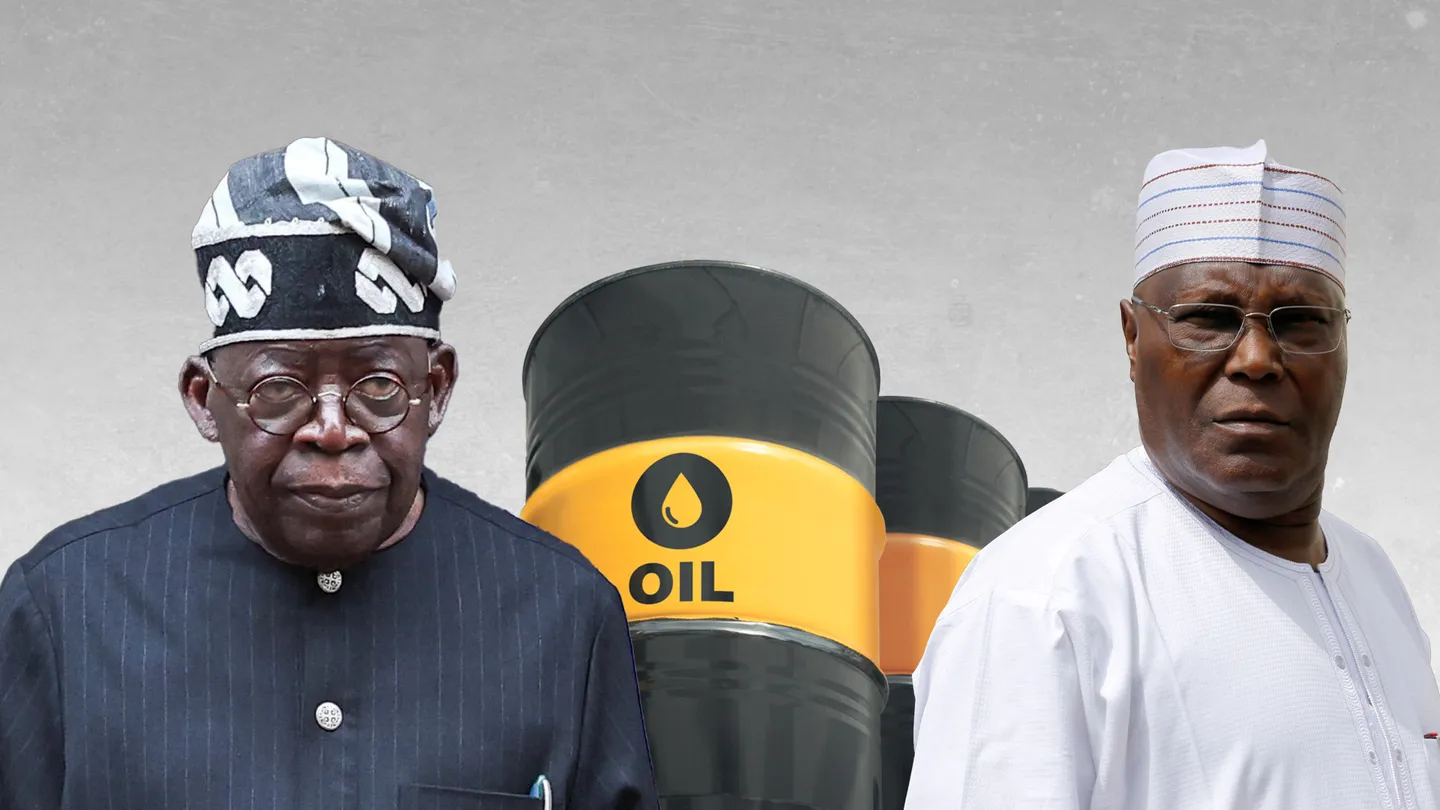
The promise by opposition African Democratic Congress (ADC) presidential candidate Atiku Abubakar to restore fuel subsidies if elected has breathed new life into Nigeria’s race for Aso Rock, the country’s seat of power.
It has also put fuel subsidies back at the centre of public debate in Africa’s most populous country.
In recent media interviews, Atiku, who served as vice president under President Olusegun Obasanjo, criticised the abrupt removal of the subsidy by President Bola Ahmed Tinubu, blaming the decision for worsening the economic hardship faced by many Nigerians.
Atiku was vice president when the Obasanjo administration began gradually reducing fuel subsidies.
Now, he says he does not need experts to explain the impact of subsidy removal to him. He can see it in the rising cost of living faced by millions of Nigerians.
His promise has struck a chord online, with many Nigerians voicing support for his position and linking the removal of the subsidy to higher transport costs and food prices.
The issue has also prompted President Tinubu and the governors of Nigeria’s 36 states to announce measures aimed at reducing transport costs from October 1, 2026.
Echoes of occupy Nigeria
Nigeria had already begun gradually reducing fuel subsidies before 2012. But the issue came to a head on January 1, 2012, when then-President Goodluck Jonathan announced the removal of the subsidy.
The decision triggered protests across Nigeria and in some countries abroad.
Known as Occupy Nigeria, the demonstrations became one of the country's largest protests in recent history.
The removal meant the price of a litre of petrol would rise from 65 naira to 141 naira — the price at which it was sold in neighbouring countries including Niger, Cameroon, Benin and Chad.
For many Nigerians, the increase was simply too much.
They took to the streets to protest what they saw as the removal of one of the few benefits they enjoyed as citizens of an oil-producing country.
But the government argued that the subsidy was unsustainable.
Nigeria had spent $8 billion on fuel subsidies the previous year, according to then-Central Bank governor Sanusi Lamido Sanusi, who is now the Emir of Kano.
Speaking at a gathering of stakeholders organised by the Newspaper Proprietors’ Association of Nigeria in December 2011, Sanusi said the country had spent 1.4 trillion naira — a third of total government expenditure — subsidising petroleum products.
He argued that Nigeria should subsidise production rather than consumption.
Sanusi warned that continuing the subsidy would leave future governments with an unsustainable debt burden.
But many Nigerians rejected the government's argument, and the protests continued.
The Nigeria Labour Congress joined the demonstrations and, on January 5, issued an ultimatum to shut down the country unless the government reversed its decision.
What had started as a spontaneous protest now had organised labour leaders with whom the government could negotiate.
After talks with labour unions, the threat of a nationwide shutdown was suspended.
In the end, some Nigerians died during the protests, and the government partially reversed the subsidy removal and introduced the Subsidy Reinvestment and Empowerment Programme, known as SURE-P.
An incentive for smuggling

The subsidy debate did not disappear after Goodluck Jonathan left office in 2015 and Muhammadu Buhari became president.
By Buhari's second term, the government was increasingly open about its desire to end fuel subsidies.
In January 2022, Buhari's finance minister, Zainab Ahmed, said the federal government remained determined to remove the subsidy.
Buhari's government ultimately did not carry out the full removal.
But Tinubu, who was campaigning to succeed Buhari, had already warned Nigerians that he would.
“Why should I have four cars and be paying [for] subsidised petrol for Cameroon, for Niger Republic, for Benin Republic? A’a, a’a, a’a, a’a. No matter how long you protest, we are going to remove subsidy,” Tinubu said to applause before he became president.
“That is the truth. Unless you don’t know... and I am going to win this election,” he added.
Tinubu was referring to the smuggling of subsidised fuel from Nigeria into neighbouring countries, where it could be sold at higher prices.
The price difference created an incentive for smugglers to buy subsidised fuel in Nigeria and sell it across the borders for profit.
Proponents of subsidy removal have long used this arbitrage argument to counter calls for Nigeria to subsidise fuel for its citizens, as some other major oil-producing countries do.
Sanusi made a similar argument as Central Bank governor, saying the price difference made fuel smuggling difficult to stop.
“Why is it that in the subsidised environment of Saudi Arabia you don't have smuggling?” he asked stakeholders in December 2011.
He argued that because neighbouring countries also subsidised fuel, there was little opportunity to make a profit by moving subsidised petrol across the border.
In Nigeria, he said, the opposite was true: subsidised petrol was significantly cheaper than in neighbouring countries, creating a lucrative market for smugglers.
A vow fulfilled
Tinubu won the election — and fulfilled his pledge.
On the day he was inaugurated in May 2023, he announced the removal of the fuel subsidy and the floating of the naira.
The two policies were followed by a sharp rise in inflation and a dramatic increase in the price of petrol, from around 234 naira to as much as 1,200 naira per litre.
The increase in petrol prices pushed up transport and food costs, making life harder for many Nigerian families, according to Atiku.
That is the backdrop to his promise to restore the subsidy if elected president.
“I want to repeat categorically that what I said — I will return subsidy, I will,” Atiku said.
“Nigeria is rich enough to look after the welfare of its citizens.”
He also defended his position after one of his spokespeople appeared to contradict it, saying the removal of the subsidy had driven more Nigerians into poverty than at any other time in the country's history.
As other opposition politicians seek to capitalise on the public interest generated by Atiku's position, fuel subsidies are once again emerging as a political fault line.
The issue could become a defining theme of Nigeria's 2027 presidential election — and another test of Atiku's latest bid for the presidency.
As the January 2027 election draws closer, the question is whether Nigerians will be won over by Atiku's promise to restore the subsidy or Tinubu's palliative measures aimed at easing the pain of its removal.