 Pauline Odhiambo
The morning sun crept over the red dust roads of Tamale, Ghana, where Abena Osei stood surveying her poultry farm with growing anxiety. Just last week, she had lost twelve birds to a mysterious illness that swept through her neighbor's flock.
In her community, poultry farming isn't just a business—it's survival. The eggs provide protein for her children, and the birds are her ticket to paying school fees. When avian influenza rumors began circulating, Abena felt the familiar grip of fear that has become all too common among smallholder farmers across Africa.
"Every time a new disease comes, I wonder if this will be the one that takes everything," Abena tells TRT Afrika. "I've heard stories from farmers in other regions who lost their entire livelihoods overnight. We are always waiting for the next disaster, never sure if our animals will be healthy tomorrow."
Abena's story represents just one of millions across the continent whose lives hang in the balance of transboundary animal diseases—unpredictable, fast-moving threats that know no borders.
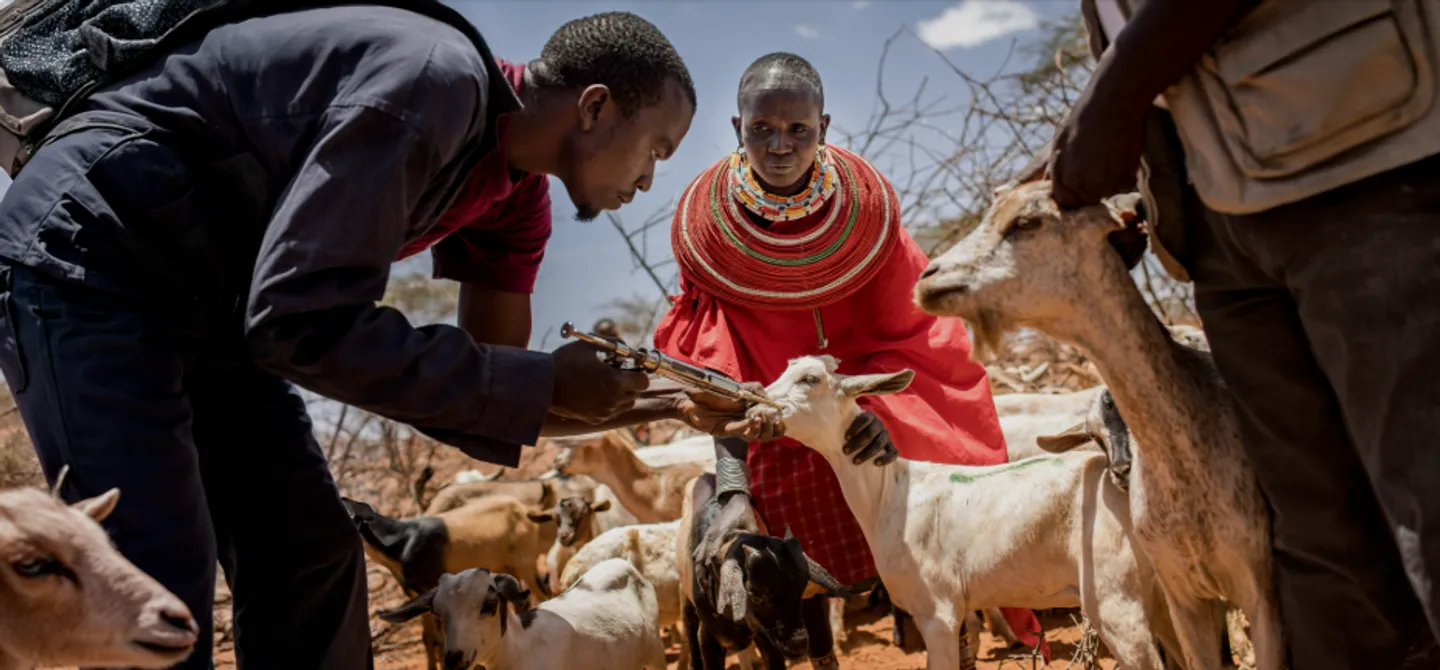
Six hundred miles away in Nakuru County, Kenya, livestock trader David Mwangi stares at his phone, scrolling through alerts about foot-and-mouth disease outbreaks in neighboring Tanzania. For David, animal health isn't academic—it's the difference between feeding his family and watching his business collapse. He's witnessed how a single outbreak can close borders, halt trade, and devastate communities that depend entirely on livestock.
"Last year, when foot-and-mouth disease hit just across the border, our prices dropped by half overnight," David recalls. "Buyers from Nairobi stopped coming. I had animals I couldn't sell and mouths I couldn't feed. These diseases don't respect our national boundaries, but our responses always seemed to stop at the border."
Disease prevention
The fears of Abena and David are precisely what the Food and Agriculture Organization of the United Nations aims to address with its newly unveiled Global Partnership Programme for Transboundary Animal Diseases (GPP-TAD). This transformative initiative represents a fundamental shift from reactive crisis management to proactive, country-led prevention.
Presented at a FAO event attended by ministers from seventeen nations, including Cameroon, Kenya, Burkina Faso, and Egypt, GPP-TAD responds to requests from member countries for a broader, sustainable platform to tackle diseases that have plagued communities like Abena's and David's for generations. The urgency is clear: cases of highly pathogenic avian influenza, African swine fever, and foot-and-mouth disease are spreading faster and further than ever before.
FAO Director-General Qu Dongyu emphasized the critical economic imperative, noting that the recent introduction of the SAT1 serotype of foot-and-mouth disease into Asia could lead to $2 billion in annual losses. "Prevention costs far less than inaction," he stressed, advocating for a comprehensive One Health approach encompassing soil, plant, animal, human, and environmental health.



What makes GPP-TAD transformative is its governance structure.
Unlike previous donor-funded, project-by-project approaches, this partnership creates national platforms where governments, private sector entities, producers, financial institutions, and farmers' organizations collaborate under one framework. Countries lead implementation, with FAO providing technical support calibrated to local needs. Regional hubs coordinate cross-border action—crucial for diseases that exploit the very boundaries that limit individual nations' responses.
The financing model represents another breakthrough. Instead of relying primarily on traditional donors, GPP-TAD introduces diversified, solidarity-based contributions where participating countries contribute according to their capacity, supplemented by development partners, international financial institutions, and the private sector. This predictable investment model ensures long-term prevention rather than sporadic crisis response.
Cautious hope
Currently, 110 countries have submitted official letters expressing interest in joining GPP-TAD—a testament to the global appetite for change. The programme works across five interconnected areas: prevention and disease control; digital surveillance and early warning; preparedness and anticipatory action; rapid emergency response; and legislation, partnerships, and financing models.

For Abena Osei, the promise of this new approach brings cautious hope. She imagines a future where early warning systems alert her to outbreaks before they arrive, where regional coordination means her government receives support to vaccinate and protect flocks, where partnership with financial institutions helps her recover if losses occur.
"Farmers like me are always reacting—we never get ahead of these diseases," Abena says thoughtfully. "But if this new programme means we can see trouble coming and prepare before it arrives, that changes everything."
David Mwangi echoes this sentiment, particularly appreciating the emphasis on sustainability. "We've seen many programs come and go with donor funding," he reflects. "But a model where we all contribute—countries, businesses, farmers—that feels like ownership. That feels like something that will last."
As the afternoon heat settles over Nakuru, David's phone alerts him to a regional veterinary meeting scheduled for next month—the first of what promises to be many collaborative efforts under the new framework. The transition from crisis-driven response to coordinated prevention has begun.
Perhaps most tellingly, it is Abena who captures the spirit of this transformation as she watches the sunset paint golden hues across her recovering flock.
"We are not just raising animals anymore—we are building resilience," she states. "And when we work together across borders, these animals become bridges rather than barriers, carrying us toward a future where health is shared, not threatened."