 Asuman Kiyingi
Events surrounding Uganda’s proposed participation in the Gaza International Stabilisation Force (ISF) are moving rapidly. Strategic, legal and operational realities reveal that key parameters of the mission were far from settled when Uganda’s Parliament voted to approve the deployment on 6 August 2026.
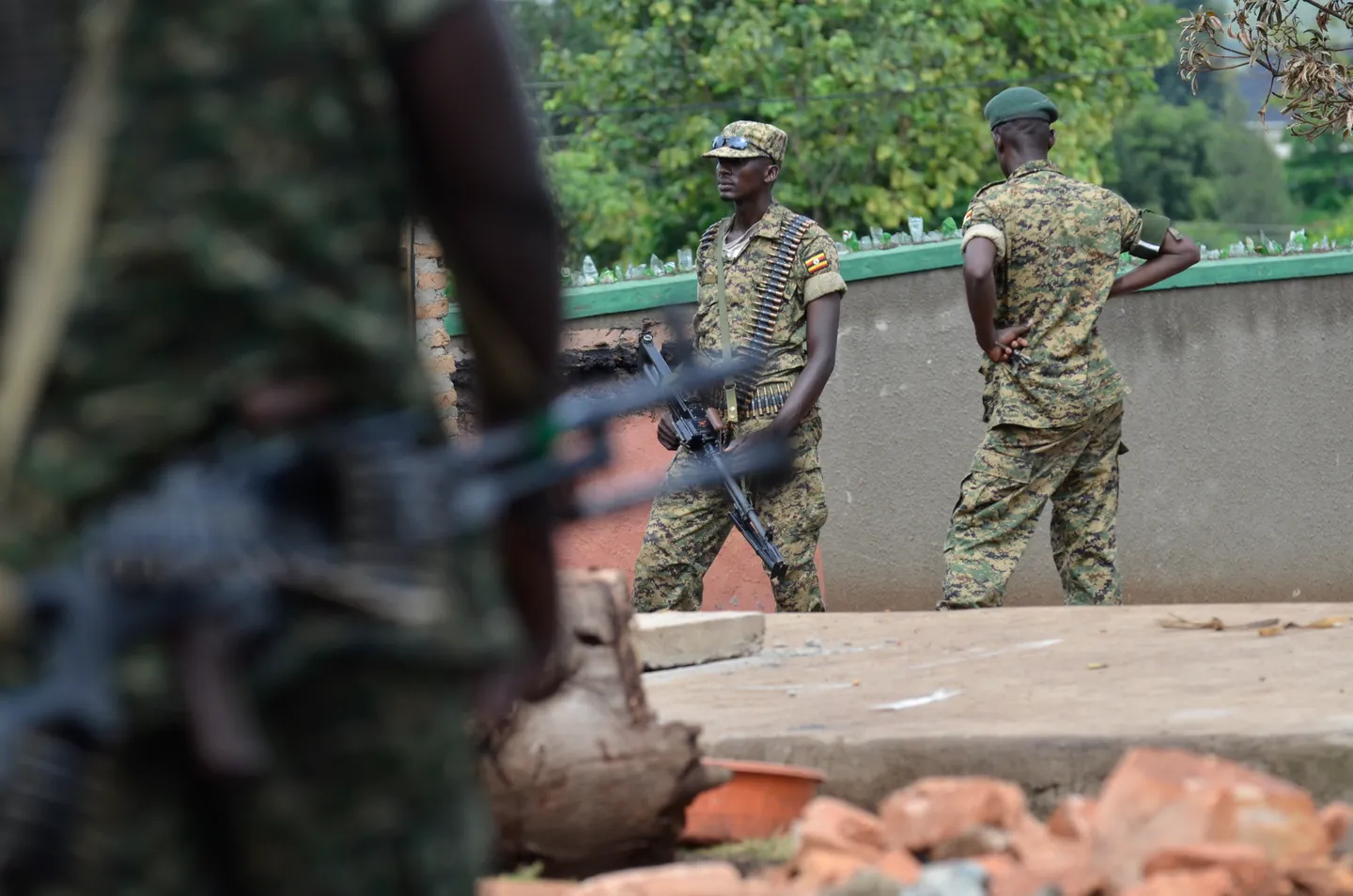
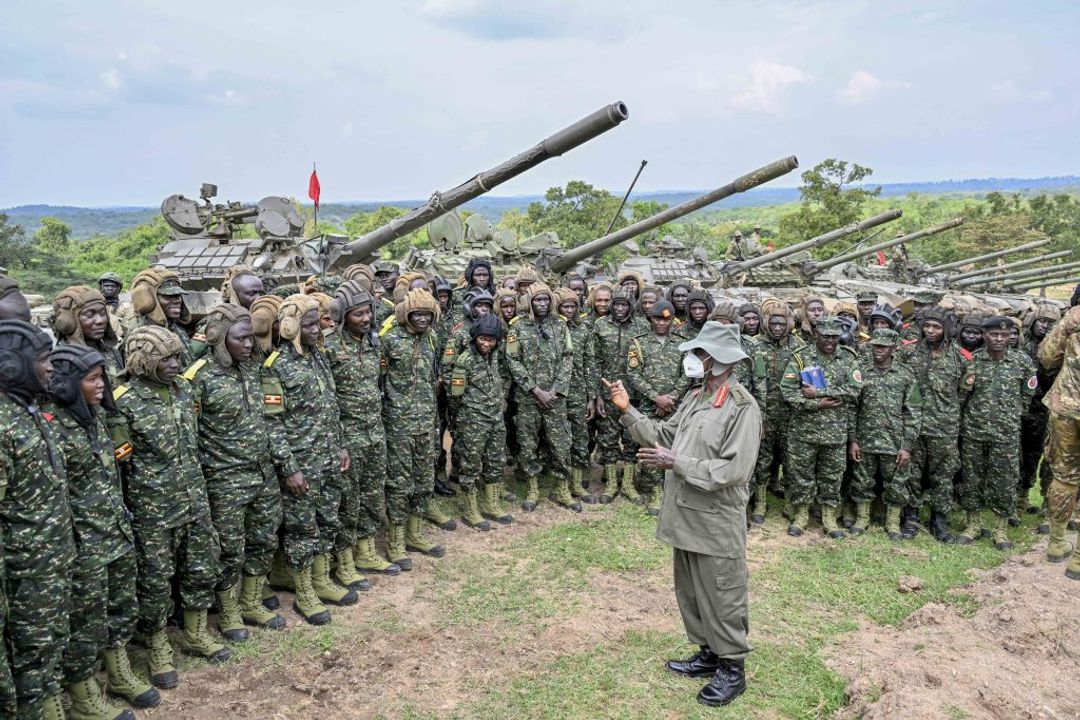
Uganda’s Defence and Veteran Affaris Minister Kiryowa Kiwanuka informed MPs that US President Donald Trump had, through emissaries, contacted President Yoweri Museveni in July seeking Uganda’s contribution to the proposed force. Uganda has committed approximately 1,200 personnel to a proposed 20,000-strong, US-led force commanded by US Major General Jasper Jeffers.
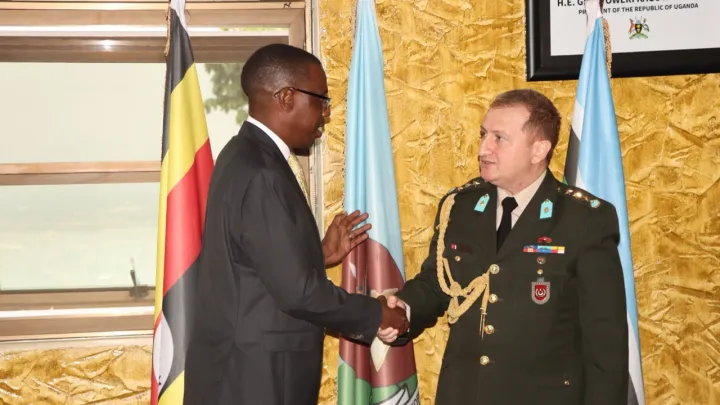
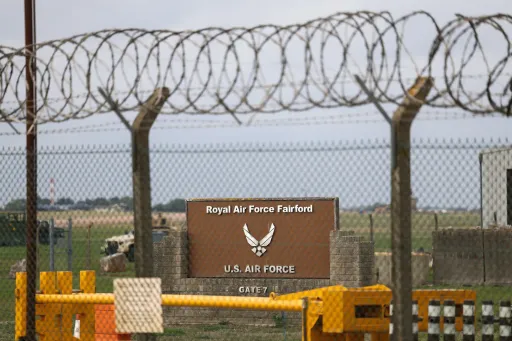
Crucially, Ugandan military officials subsequently travelled to Israel for operational discussions concerning the proposed force. On 17 August, Ugandan and Burundian military officials were reported to have visited the US command centre in Kiryat Gat, Israel, in connection with discussions on participation. Kiryat Gat is part of the US-led coordination architecture for the Gaza mission.
These developments demonstrate a rapidly evolving operational context. They also raise a fundamental constitutional question: Can parliamentary authorisation given on 6 August reasonably be treated as the end of parliamentary scrutiny when significant elements of the mission were still being worked out afterwards?
I believe the answer must be no.
Parliamentary authorisation should be the beginning of continuing oversight, not its termination.
The 2007 Somalia precedent
Parliament’s handling of Uganda’s participation in the African Union Mission in Somalia (AMISOM) in February 2007 provides a useful benchmark.
When the Government sought approval for the deployment of 1,500 Ugandan troops to Somalia, Parliament subjected the proposal to substantial scrutiny. The Hansard record shows MPs interrogating the legal framework, command structures, troop welfare, financial arrangements and other operational questions surrounding the mission.
The House eventually voted 155 in favour of the deployment.
That vote should not, however, be described as an entirely unanimous parliamentary vote. The figure represented those who participated in the division rather than the entire membership of the House.
The more important point is institutional. The Somalia deployment was examined in the context of an identifiable African Union peace-support mission directed towards regional stability. Parliament was not merely being asked to endorse an abstract political commitment; it was examining the implications of putting Ugandan soldiers into a specific African conflict environment.
That provides an important precedent for the present moment.
Parliamentary authorisation of military deployments should mean more than approving the Executive’s preferred policy. It should provide an opportunity to interrogate the legal basis, command arrangements, financing, troop protection, rules of engagement and strategic purpose of sending Ugandans into harm’s way.
A departure from Pan-Africanism and multilateral commitments
The Gaza deployment represents a significant departure from Uganda’s traditional commitment to the principle of African solutions to African problems.
The Somalia mission was anchored in an African Union framework and directed towards regional stability. Gaza is fundamentally different. Uganda would be inserting the Uganda People’s Defence Force (UPDF) into an external Middle Eastern conflict through a US-led multinational architecture.
More critically, the deployment raises questions about Uganda’s consistency with political commitments it has repeatedly affirmed through the Non-Aligned Movement (NAM) and the African Union.
Just two years ago, Uganda hosted the 19th NAM Summit in Kampala and assumed the Movement’s chairmanship. The Kampala Declaration reaffirmed NAM’s commitment to sovereignty, international law, self-determination and peaceful settlement of disputes.
The summit adopted strong positions on Palestine, including support for Palestinian self-determination and an independent Palestinian state, while condemning Israel’s military campaign, settlement activity and occupation.
Uganda's role in NAM has not been merely ceremonial. Kampala has repeatedly presented its stewardship of the Movement as an expression of the principles of sovereignty, equality of states, non-interference and opposition to domination by powerful states.
The question, therefore, is not whether Uganda possesses the sovereign right to participate in an international security operation. Because of course, it plainly does.
However, the question is whether participation in a US-led security architecture operating from Israel is consistent with the diplomatic posture Uganda has publicly championed on Palestine.
By choosing to participate in an external, US-led architecture outside the established AU peace-support framework, Kampala risks exchanging a longstanding reputation for principled non-alignment and African multilateralism for short-term strategic favour.
Compromised neutrality in a complex arena
Gaza presents an exceptionally difficult environment: a devastating humanitarian crisis, unresolved questions of sovereignty, Israeli military control over substantial areas and profound hostility between Israel and Palestinian armed groups.
For any stabilisation force to have credibility among the Palestinian population, it must command confidence as an impartial actor.
Uganda has already compromised that perception of neutrality.
The decision to conduct operational discussions within a US command architecture located in Israel, followed by the visit of Ugandan military officials to Kiryat Gat, inevitably raises questions about Kampala’s independence from one of the principal parties to the conflict.
This is not to suggest that meeting American or Israeli officials automatically makes a Ugandan soldier a combatant. It does, however, create a serious problem of perception and operational credibility.
A simple counterfactual illustrates the point.
If Ugandan commanders had instead travelled to Tehran, Beirut or Damascus to negotiate the operational parameters of the mission, Israel would almost certainly question Uganda’s neutrality and suitability for the force.
The reverse cannot logically be dismissed as irrelevant.
True peacekeeping requires not merely the absence of partisan intent, but sufficient diplomatic and operational distance from the principal parties to inspire confidence among all sides.
The New-US Israel defence architecture
There is another development that Parliament should examine carefully before Ugandan troops are deployed: the United States Congress is moving to deepen the institutional integration of American and Israeli defence technology.
The US House of Representatives passed the Fiscal Year 2027 National Defense Authorization Act (NDAA), H.R. 8800, on 22 July 2026. The bill contains Section 219, the United States-Israel Defense Technology Cooperation Initiative. The Senate version contains a corresponding provision, Section 1217. The legislation has not yet become law, but its inclusion in the congressional versions demonstrates the strategic direction in which Washington is moving.
Section 219 is not an ordinary statement of political support for Israel. It would establish a formal mechanism within the Pentagon to expand and accelerate US-Israel cooperation in defence research, development, testing, evaluation and industrial cooperation.






The provision reaches into some of the most consequential areas of modern warfare, including artificial intelligence, autonomous systems, cyber defence, biotechnology, network integration and data fusion. It also envisages deeper integration of Israeli-origin and jointly developed defence technologies into US defence systems and programmes.

The significance for Uganda is not that Section 219 creates a joint US-Israeli command over the Gaza International Stabilisation Force. It does not.
Its significance is strategic.
Uganda is being asked to place approximately 1,200 of its soldiers into a force organised under US leadership at precisely the moment when the US Congress is seeking to institutionalise an even deeper US-Israel defence-technology relationship.
That coincidence cannot simply be ignored.
The proposed International Stabilization Force (ISF) is intended to perform significant security functions in Gaza, including monitoring the ceasefire, supporting demilitarisation, facilitating humanitarian assistance and helping train Palestinian police. Yet the final composition of the force, its mandate and the conditions for its deployment remain subject to political and operational developments.
For Uganda, this raises a question Parliament has not adequately answered:
What institutional and operational safeguards will ensure that Ugandan troops participating in a US-led Gaza force remain subject to Uganda’s national policy and international humanitarian law rather than becoming functionally embedded in a wider strategic architecture whose principal US-Israel relationship has objectives extending beyond Gaza?
This is not an argument against American cooperation with Israel. Nor is it an assertion that technological cooperation automatically translates into operational command.
It is an argument for strategic clarity.
Before deploying Ugandan soldiers, Parliament should understand the command, intelligence, communications, targeting, technology-sharing and rules-of-engagement arrangements within which the ISF will operate.
It should establish precisely what information Ugandan commanders will receive, what authority they will exercise, and what orders they may lawfully refuse.
The mission is not yet settled
This is perhaps the most compelling reason for Uganda’s Parliament to revisit the issue.
Parliament of Uganda approved the deployment on 6 August, but even then the mission was contingent upon political and military developments that were not entirely within Uganda’s control. The US plan envisages the international force operating after an Israeli withdrawal and Hamas disarmament, while implementation of the wider Gaza arrangement has continued to face serious obstacles.
The proposed 20,000-strong force is therefore not a conventional, long-established peacekeeping operation with an existing UN command structure and settled rules of engagement. It is a new US-led security architecture whose composition and operational arrangements are still developing.
Indeed, the latest reports indicate that Uganda is still finalising details of its participation following the parliamentary approval, while other prospective troop-contributing countries are also still considering their positions.
This makes the distinction between authorization and deployment crucial.
Parliament may have authorized Uganda to participate. It does not follow that Parliament has surrendered its constitutional responsibility to scrutinize the final mission before Ugandan troops actually enter Gaza.
Questions must still answer
Before a single Ugandan soldier is deployed, Parliament should demand clear answers to at least five fundamental questions.
Rules of Engagement: What precisely are the rules governing the use of force? What happens if UPDF soldiers encounter Israeli forces conducting independent operations in their area of responsibility?
Command Integrity: Who has ultimate operational authority over Ugandan soldiers? Does a Ugandan commander retain explicit legal authority to refuse an order from US leadership if that order conflicts with international humanitarian law, Ugandan law or Uganda’s declared national policy?
Legal Safeguards: What are the exact terms of the Status of Forces Agreement? What jurisdiction will apply to Ugandan soldiers accused of offences? What protections exist for them in the event of detention, injury or death?
Financial Arrangements: Who pays for the deployment? What are the reimbursement arrangements? What equipment, insurance, medical evacuation and logistical guarantees have been secured?
National Interest: What tangible strategic dividend does Uganda obtain from the mission? Is the country genuinely advancing peace in Gaza, or is it risking the lives of its soldiers and its diplomatic credibility primarily to secure political goodwill in Washington?
Parliament should revisit— not abdicate
Uganda’s peacekeeping record is a source of legitimate national pride. The bravery and professionalism of Ugandan soldiers in Somalia and elsewhere should not, however, become an argument against scrutiny.
Military bravery is no substitute for foreign-policy clarity.
Nor should parliamentary reconsideration be portrayed as hostility towards the UPDF or disloyalty to the Commander-in-Chief. Serious parliamentary scrutiny is one of the ways a constitutional state protects both its soldiers and its national interests.
Parliament need not necessarily rescind its authorization.
It should, however, treat that authorization as conditional upon the disclosure and scrutiny of the mission’s final mandate, command arrangements, rules of engagement, legal agreements, financing, troop protection and political objectives.
Uganda should not send its soldiers into Gaza simply because an influential foreign power has asked it to do so.
It should send them only if Kampala can demonstrate that the mission is legally sound, operationally coherent, genuinely directed towards peace, consistent with Uganda’s international commitments and clearly in Uganda’s national interest.
The question before Uganda is therefore not whether its soldiers are brave enough to go.
The question is whether the political leadership has been sufficiently clear about what they are being asked to do, under whose authority, for whose strategic objectives and at what national cost.
That is a question Parliament still has a constitutional duty to answer.
Asuman Kiyingi is a senior advocate of the High Court of Uganda, former Member of Parliament, and former State Minister for Foreign Affairs (Regional Cooperation).
Disclaimer: The views expressed by the author do not necessarily reflect the opinions, viewpoints and editorial policies of TRT Afrika.