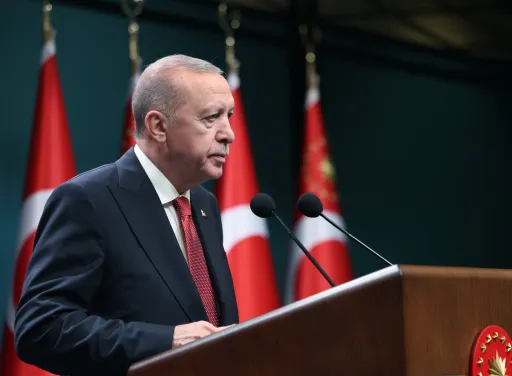
Nigerian President Bola Ahmed Tinubu has asked a US federal court to block the release of records held by American law enforcement agencies relating to historical investigations involving him, according to court documents and his lawyers.
Tinubu’s legal team argued that the records should remain redacted or withheld.
The lawyers filed a 16-page submission before the US District Court for the District of Columbia opposing a request by American transparency activist Aaron Greenspan for the release of records held by the US Department of Justice, Federal Bureau of Investigation (FBI) and Drug Enforcement Administration (DEA).
Greenspan filed a Freedom of Information Act (FOIA) lawsuit against several US government agencies in 2023, seeking records relating to historical investigations involving Tinubu.
Privacy rights
Among the documents sought are the FBI’s entire file on Tinubu and FBI Form 302 interview records concerning the period between 1992 and 1993.
The case also concerns records linked to a 1993 civil forfeiture proceeding in the US involving about $460,000 associated with Tinubu.
Tinubu has denied wrongdoing.
In their latest filing, Tinubu’s lawyers argued that releasing the requested records could violate his privacy rights, maintaining that the disclosure of some information in an earlier forfeiture proceeding did not amount to public disclosure of the details or outcome of any alleged criminal investigation.
The lawyers urged the court to deny Greenspan’s motion for summary judgment and allow the FBI and DEA to maintain redactions or withholdings applied to the records.
Long-running legal battle
The development is the latest in a long-running legal battle over Greenspan’s efforts to obtain US government records concerning Tinubu.






Greenspan’s FOIA requests date to 2022 and 2023 and included records concerning a historical investigation dating to the late 1980s and early 1990s.
In April 2025, US District Judge Beryl Howell ruled that the FBI and DEA could no longer rely on so-called “Glomar” responses, under which agencies refuse to confirm or deny the existence of requested records.
Howell ordered the agencies to process non-exempt records responsive to Greenspan’s requests. The ruling, however, did not establish that Tinubu committed a drug-trafficking offence or amount to a criminal conviction against him.
Rather, it concerned the agencies’ obligations under FOIA and whether requested records could lawfully be withheld.
Sensitive information
Earlier this month, the FBI asked the court for permission to submit sensitive information privately and under seal to explain its decision to withhold portions of the requested records.
The agency said some of the information was protected under FOIA exemptions covering privacy, confidential sources, law-enforcement techniques and information whose disclosure could reasonably be expected to endanger an individual’s life or physical safety.
Anadolu Agency earlier reported that Tinubu had also previously joined a request by the US Justice Department for additional time to respond to the court’s orders concerning the records.
Judge Howell declined to grant the full extension sought by the government. Anadolu reported on Aug. 19 that the court set a deadline for the government and Tinubu to respond.
The latest filing now places Tinubu directly at the centre of the dispute over whether additional records concerning the historical investigations should become public.
The court is expected to determine whether the FBI and DEA may retain their redactions and withholdings or whether further records sought by Greenspan must be released.