 Göktuğ Çalışkan
Northern Benin is no longer the quiet margin that the South once viewed as a distant periphery, useful for administrative maps and speeches about stability.
It is becoming a testing ground—a place where, quietly, the ability of a coastal state to prevent the Sahelian grammar of fear, attrition, and gradual entrenchment from taking hold in its countryside is being measured.
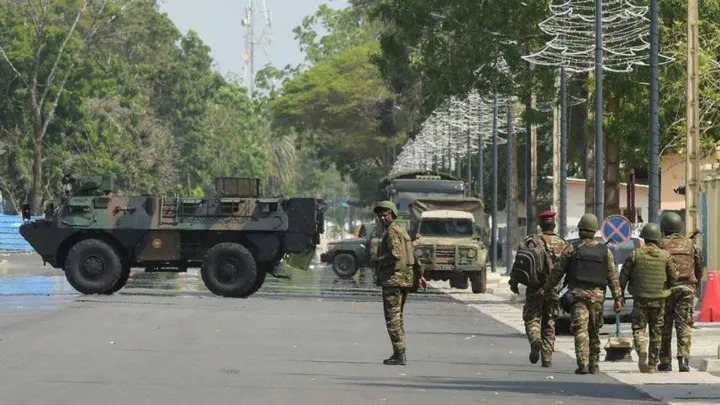
The March 4 attack on the Kofounon position near Karimama, which claimed the lives of 15 Beninese soldiers, brutally accelerated this realization. What is at stake in Alibori goes far beyond security alone. It is a battle for presence, for trust, for economic opportunities, and for the very idea of a future.
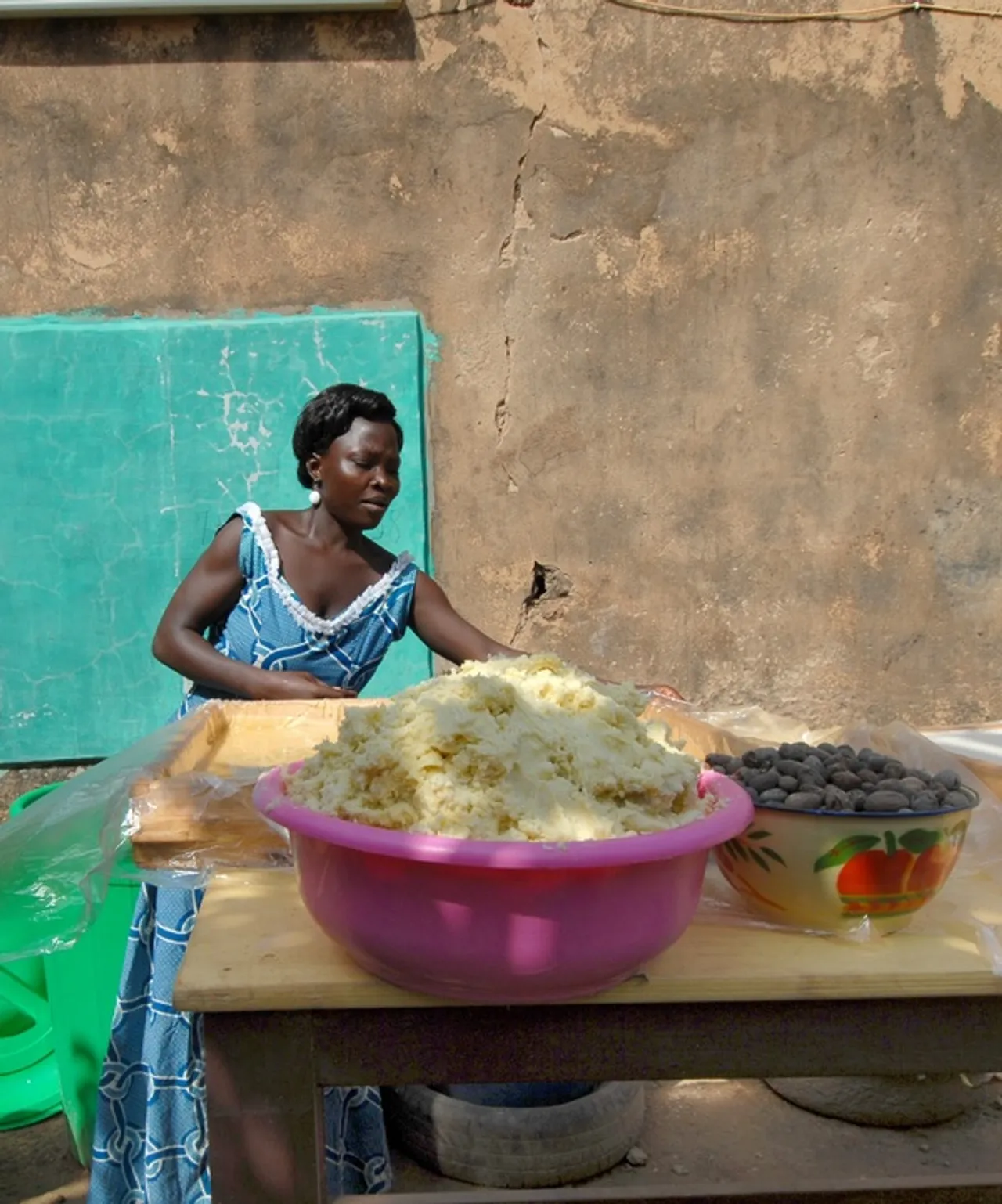
From afar, the subject may seem modest. Women processing shea nuts into butter. Cooperatives taking shape. Local networks supporting one another. Yet this is precisely where the political depth of the moment lies.
In areas exposed to the rise of terrorism, the decisive question is never solely about weapons. It is this: who provides a reason to stay, to work, and to believe that an ordinary life is still worth protecting? When that answer is slow to come, other actors step in. When it takes shape—even modestly—society builds its own antibodies.
A discreet front, but already very real
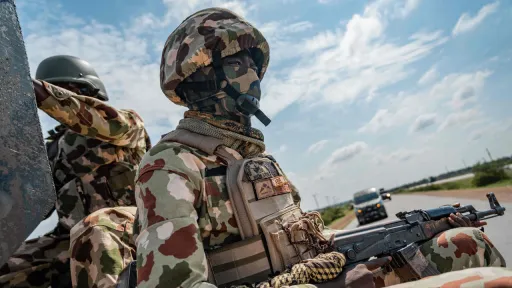
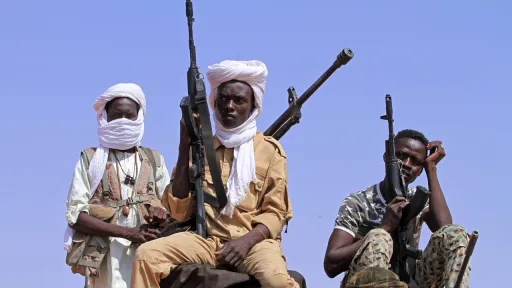
After the Kofounon attack, it became impossible to argue that Benin was merely experiencing peripheral tremors. In the Niger–Benin–Nigeria border zone, violence linked to terrorist groups increased by 90% between 2024 and 2025, with more than 1,000 deaths according to figures reported in various media outlets.
The issue is no longer the possibility of spillover. The spillover has already begun.
This expansion does not follow a spectacular logic of territorial conquest. It advances through infiltration, adaptation, and a fine reading of social margins. The Global Terrorism Index 2026 also highlights a rarely discussed fact: more than 40% of terrorist attacks recorded worldwide between 2007 and 2025 took place within 50 kilometers of a border.
In Benin’s case, this reality is even more striking, as the W–Arly–Pendjari complex serves as strategic depth for groups that have understood that in coastal West Africa, gaining influence does not necessarily begin with capitals. It begins with patient entrenchment in neglected peripheries—poorly served, poorly protected, and poorly connected to the state.
Perhaps the most worrying aspect lies elsewhere. This security surge is occurring while Benin’s public debate is shifting toward short-term responses. The presidential campaign has already highlighted the creation of municipal police forces in border towns.
The proposal reflects a belated awareness. It also reveals something deeper: the central state implicitly acknowledges that the national framework alone is no longer sufficient to reassure the north. It is an admission of strain, not yet a doctrine.
Shea as a social bulwark
This is where shea comes in—not as economic folklore, nor as a development anecdote. In northern Benin, 3,600 women organized into 120 cooperatives are building something far more important than supplementary income.
They are restoring predictability in territories where fear seeks to disrupt even the simplest rhythms of daily life. The fact that they now wait until daylight to go to the fields, for fear of encountering strangers, says it all. The threat first acts on time, on gestures, on movement. Producing, moving, selling, and gathering become political acts.
The merit of these cooperatives lies not only in the income generated. It resides in the social architecture they sustain. Access to credit, shared equipment, training, quality standardization, market expansion—all of this strengthens women’s autonomy and, in turn, the stability of households.
Across the West African shea sector represents up to 12% of household income and up to 32% of available cash flow during the lean season.
Such figures shed new light on the Beninese case. A society does not collapse merely because it is poor. It collapses when poverty combines with humiliation, isolation, and a lack of prospects.
In Banikoara, shea acts as a bond. It circulates a different promise from that offered by terrorist groups. Where those groups impose belonging through coercion, cooperatives offer recognized social usefulness. Where violence sows suspicion, they relearn cooperation.
This point must be taken very seriously. The IEP’s 2026 report notes that in sub-Saharan Africa, a large share of recruits cite either abuses by security forces or the absence of jobs as decisive factors in their shift toward violent extremism.
This dual reality changes how the problem must be understood. It means that no purely military response can endure if it leaves two wounds untouched: the brutalization of relations with the state and the economic void. In this context, shea is not an added bonus—it is already a grounded prevention policy.






What weapons do not create
States facing the rise of terrorism often make the same mistake. They believe that securing territory is enough to restore legitimacy. In reality, an area can be patrolled without being governed. It can be monitored without being integrated.
It can even be militarily defended while remaining socially empty. It is precisely in this gap that terrorist groups thrive.
Benin already knows this. Regional tensions, mutual suspicions, and the fragmentation of Sahelian cooperation complicate border control, while the entire region is entering a new phase of security reconfiguration.
In neighboring Nigeria, Washington has resumed intelligence and MQ-9 drone support for Nigerian forces. In the Sahel, AES states continue to pursue their own coordination logic.
Yet this security escalation does not answer the essential question: how to prevent a young person in northern Benin from eventually seeing a terrorist group as more understandable than the administration, more present than the school, and more useful than the formal market?
For Ankara as well—which for several years has promoted an approach combining security, local development, and African sovereignty—the Beninese case is a reminder that no regional architecture can endure without social anchoring.
The real response begins when the state ceases to appear as a distant silhouette that arrives after attacks to count the dead, promise reinforcements, and then return south.
It begins when the state becomes a visible actor in everyday life: passable roads, credible local radio, accessible credit, local justice, land mediation, outlets for local production, and protection without humiliation.
In this respect, the experiences in Banikoara matter more than they seem. They show that a well-organized local economy can build solidarity—and that in border areas, such solidarity can sometimes be worth as much as a forward operating base.

Northern Benin as a mirror of an African lesson
The most common Western mistake is to view these areas as spaces to be stabilized from the outside. The lesson from northern Benin says exactly the opposite.
What best resists the rise of terrorism is not always what strikes the hardest. It is what connects most durably. It is what keeps a society standing even before the enemy enters the village. It is what gives material form to dignity.
Shea alone will not defeat terrorist groups—no serious observer claims that. But it reveals a strategic truth that too many security approaches still ignore: in African peripheries exposed to extremism, resilience rarely begins in barracks.
It begins in fields, markets, workshops, cooperatives, radio stations, and circles of trust—in other words, where a community decides that fear will not govern alone.
If Cotonou wants to prevent the north of the country from becoming a mere extension of Sahelian disorder, it must understand this quickly.
The coming battle will not be only about controlling routes or neutralizing terrorist cells. It will be about the ability of the Beninese state to protect without crushing, to invest without abandoning, and to listen without waiting for the next attack.
In this struggle, shea butter matters less for its market value than for what it represents. It shows that a society can still build its own protective barriers.
The logical next step would be to integrate shea cooperatives into a national strategy for preventing violent extremism, so that the local economy is no longer seen as a secondary social issue but finally treated as a pillar of public security.
The author, Göktuğ Çalışkan, is a PhD candidate & International Relations specialist.