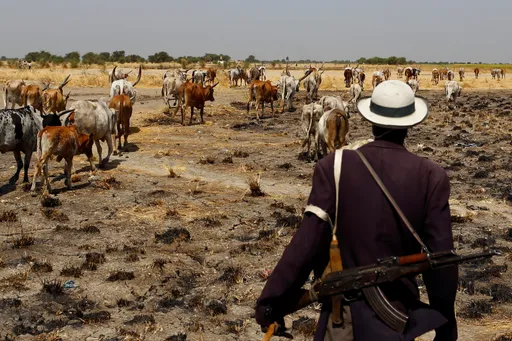
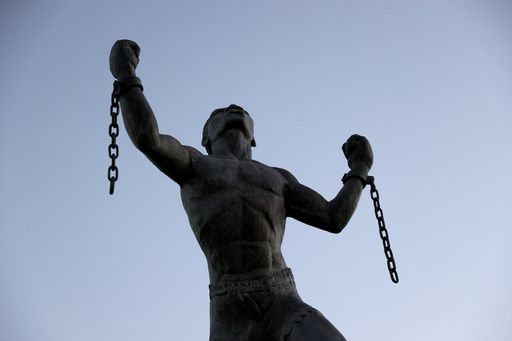
A historic vote took place at the United Nations General Assembly on 25 March 2026. The draft resolution, submitted by Ghana and recognising the Transatlantic Slave Trade as the gravest “crime against humanity”, was adopted with 123 votes in favour, whilst 52 countries abstained and 3 member states voted against.
One of the key principles of the historic resolution (A/80/L.48) is that it condemns the forced displacement and enslavement of millions of Africans over a period of 400 years as one of the greatest injustices in human history.
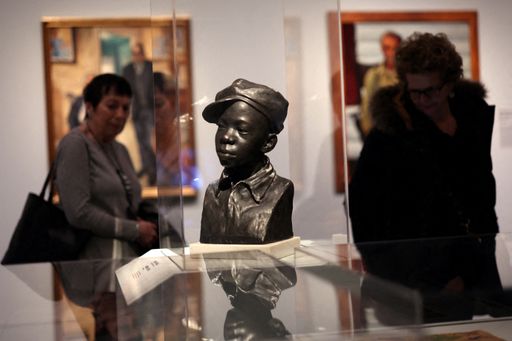
The resolution, which calls on UN member states to issue an official apology for their history of the slave trade and to contribute to a reparations fund to be established, also demands the return of African artefacts and national archive materials previously looted and held in Western institutions to their countries of origin.
This decision, which aims to condemn slavery in every respect before the judgment of history, carries immense political and moral weight in the eyes of the international public conscience.
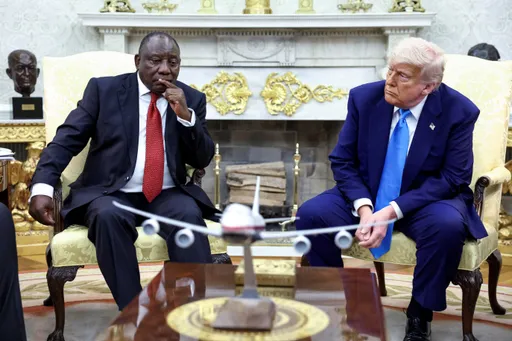
Rather than focusing on the content of the bill, the main debate at a popular level centred on the opposition to it from North America and Europe.
For it has once again become clear that the United States, the United Kingdom and other European states—which stood at the very heart of the historical backdrop to the global slave trade and, by institutionalising slavery, left a shameful legacy in the name of humanity—feel no remorse for this situation and have no intention of apologising.
Yet, for some 400 years, from the early 16th century to the late 19th century, the continents of Europe and America were at the very heart of the forced displacement of an estimated 13 million Africans as part of what is known as the “Triangular Trade”—the largest system of forced migration and human trafficking in history.
It is estimated that 2.5 million Africans lost their lives during this trade due to poor transport conditions, epidemics and mistreatment; this constitutes the most dramatic aspect of this historical tragedy, and it is particularly noteworthy that the states primarily responsible for this are the very same ones opposing the draft resolution in question today.

Triangular Trade
Indeed, the first of the main stages of the Triangular Trade was the leg from Europe to Africa. Here, Portuguese, British, Spanish and French merchants transported manufactured goods such as weapons, gunpowder, textiles and alcohol to Africa.
In the second phase, known as the “Middle Passage”, enslaved Africans—acquired from local tribal chiefs and indigenous traders in exchange for European manufactured goods transported to the continent—were transported to the Americas under inhumane conditions.
These slaves, brought to America across the Atlantic Ocean, were forced to work to the point of death on North American plantations producing sugar, cotton, coffee and tobacco. In the third and final stage, the raw materials produced through the forced labour of these slaves were shipped to Europe, fuelling industry there and generating enormous profits.
Thus, this trade cycle, which began in Europe, made its way through Africa and the Americas before returning to Europe in its final stage; Africa’s enslaved labour force was utilised as a resource for raw material production in the Americas and for industrial production in Europe.
There is no doubt that whilst this cycle consistently condemned Africa’s modern history to ruin from a sociological and economic perspective, it transformed the modern history of America and Europe, on the contrary, into an era of steady wealth accumulation.
Indeed, in his seminal work “Capitalism and Slavery” (1944), Eric Williams argues that the immense profits derived from the slave trade financed the Industrial Revolution in Britain.
In his book “Africans and the Industrial Revolution in England” (2002), Joseph Inikori puts forward a similar perspective in the context of the expansion of the Trans-Atlantic trade, arguing that the vast market created by goods produced using slave labour spurred the development of shipping and financial institutions such as banking and insurance.
The institutional development of the slave trade and its extraordinary contribution to the process of capital accumulation serve to support these arguments.
Indeed, the slave trade laid the groundwork for the emergence of the world’s oldest and largest insurance exchange, Lloyd’s of London (1688), due to the need for risk management.
Furthermore, the profits derived from the plantation economy were channelled into the construction of the physical and economic infrastructure of major cities in modern Europe.
To observe this first-hand, one need looks no further than Liverpool and Bristol, two major slave-trading port cities of the 18th century.
In Liverpool, where the world’s first commercial wet dock system was built in the 1750’s to facilitate the rapid loading of slave ships, the city’s famous buildings—including the customs houses—which are now listed as UNESCO World Heritage sites, were all constructed with donations from slave traders.
In Bristol, one can speak of modern architecture financed by profits from plantations reliant on slave labour.
Even Barclays, one of the key players in today’s British banking system, originated from the merger of local banks and insurance companies established to manage the high risks associated with the slave trade, such as Heywood’s and Colonial Bank.



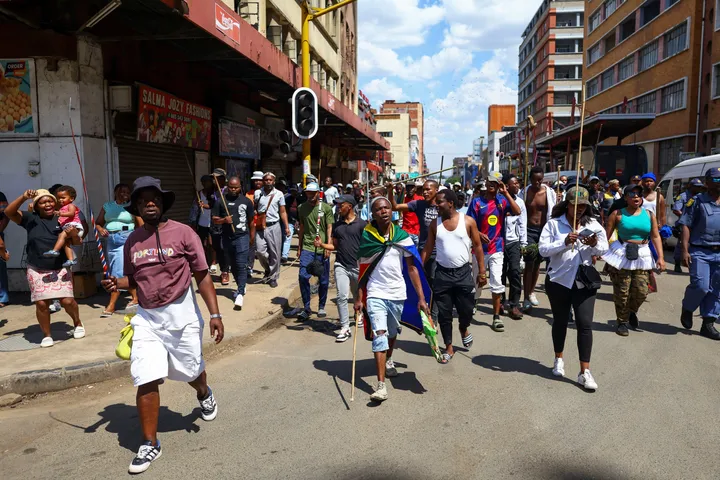




The founding of the universities of Liverpool and Bristol was also funded by donations from local families involved in the slave trade. Edward Colston, who was both one of the slave traders in 17th century England and a senior executive of the Royal African Company, is remembered as the founding father of modern Bristol thanks to his charitable donations; even today, his name can be found in many parts of the city.
When we look at the context of the United States, we do not actually encounter a very different situation. Indeed, it would not be an exaggeration to say that the early wealth of the United States was entirely based on slave labour.
Indeed, the plantation economy of the South, through the production of tobacco, rice and cotton in the 18th and 19th centuries, became a global power thanks to the forced labour of enslaved Africans.
In contrast, the factories and banks of the North grew using the profits derived from the slave labour of the South. This is among the key pieces of evidence demonstrating that modern American capitalism developed hand in hand with slavery.
How Europe Underdeveloped Africa
In his work “How Europe Underdeveloped Africa” (1972)—considered one of the key sources of dependency theory—Walter Rodney attributes Africa’s systematic impoverishment, loss of human capital and dependence on Europe entirely to the era of European colonialism.
Indeed, the systematic loss of the most productive age group—those aged 15 to 45—over the centuries has led to a shortage of people capable of agricultural production, continuing traditional crafts, and establishing families to ensure the continuity of generations.
This has caused the socio-economic collapse of the region. In fact, this factor has played a major role even in the causes of famines in Africa. The most notable study on this subject in recent years is by the economist Nathan Nunn.
In his widely-known article, “The Long-Term Effects of Africa’s Slave Trades” (2008), Nunn demonstrates that, within the context of modern economic research, Africa’s lowest-income regions are those that were historically subjected to the most intense slave trade; to this end, he draws on ship records and official trade documents from the Transatlantic slave trade.
According to Nunn’s model, the most concrete examples of the correlation between intensive slave trade and structural poverty can be seen in countries such as Benin and Nigeria—known as the Slave Coast—as well as in countries such as Angola, Congo and Sierra Leone.
Conversely, the author argues that there is a link between the fact that slave traders and their ships were unable to reach countries such as Botswana—which, due to geographical and topographical conditions, were more sheltered than the rest of the continent—and the fact that these countries are relatively more stable today.
When viewed in retrospect, it is an indisputable fact that the transatlantic slave trade, with its history spanning hundreds of years, constitutes a clear crime against humanity; that it has profoundly affected not only Africa’s past but also its present; and that it lies at the root of many of the region’s structural problems.
In the face of such a painful past that troubles the conscience of humanity, it is highly significant that the former slave-trading states, far from adopting a stance considering the historical weight of this painful experience, are instead making efforts to obstruct initiatives in this direction.
Just as the slave trade of the past has gone down in history, so too has today’s cautionary stance taken its place in history, to be laid bare before the eyes of future generations.
The author, Ali BİLGENOĞLU, is an Associate Professor at the Department of International Relations, Faculty of Political Sciences, Aydın Adnan Menderes University, Türkiye.