 Charles Mgbolu
For centuries, African artists have carved motherhood into wood, stone, and metal. For instance, in Central Africa, the Yombe people of the Congo created sculptures of bare-chested mothers breast-feeding their infants.
Similarly, in present-day Côte d’Ivoire, Baoulé artists fashioned wooden figures of women carrying children on their laps, in their arms, or on their backs.
In both series of carved maternity figures, a mother's exposed breast is a symbol of life, fertility, lineage, spiritual continuity, and the sacred bond between mother and child.
Today, however, these enduring symbols of African cultural identity face an unexpected threat — not from war, neglect, or colonial plunder, but from artificial intelligence.
Digital police
As social media platforms increasingly rely on automated moderation systems to police content, artists who depict traditional African cultural practices are finding themselves trapped in a digital paradox.
Works featuring bare-chested human images, often rooted in African heritage and history, are being flagged as explicit content as artificial intelligence bots struggle to distinguish between cultural expression and nudity.
Research published by the Association for Computing Machinery in 2024 illustrates the scale of automated enforcement.
According to the study, Facebook's AI moderation systems automatically removed 99.2% of content identified as adult nudity or sexual activity without any human intervention, creating the potential for historical and contemporary arts to be swept away alongside genuinely prohibited material.
This issue matters because social media has become the modern gallery. Artists increasingly depend on digital platforms to showcase their work, build audiences, connect with collectors, and generate income. However, what was once the responsibility of human moderators is now largely handled by machine-learning algorithms tasked with enforcing community standards across billions of posts.
Lacking cultural context
Art advocacy group Don't Delete Art argues that this shift has effectively turned algorithms into gatekeepers of artistic expression. Decisions once made through human judgement are increasingly delegated to AI bot systems that lack the ability to judge based on cultural context.
A few understand this reality better than 26-year-old Ghanaian artist Oscar Korbla Mawuli Awuku.
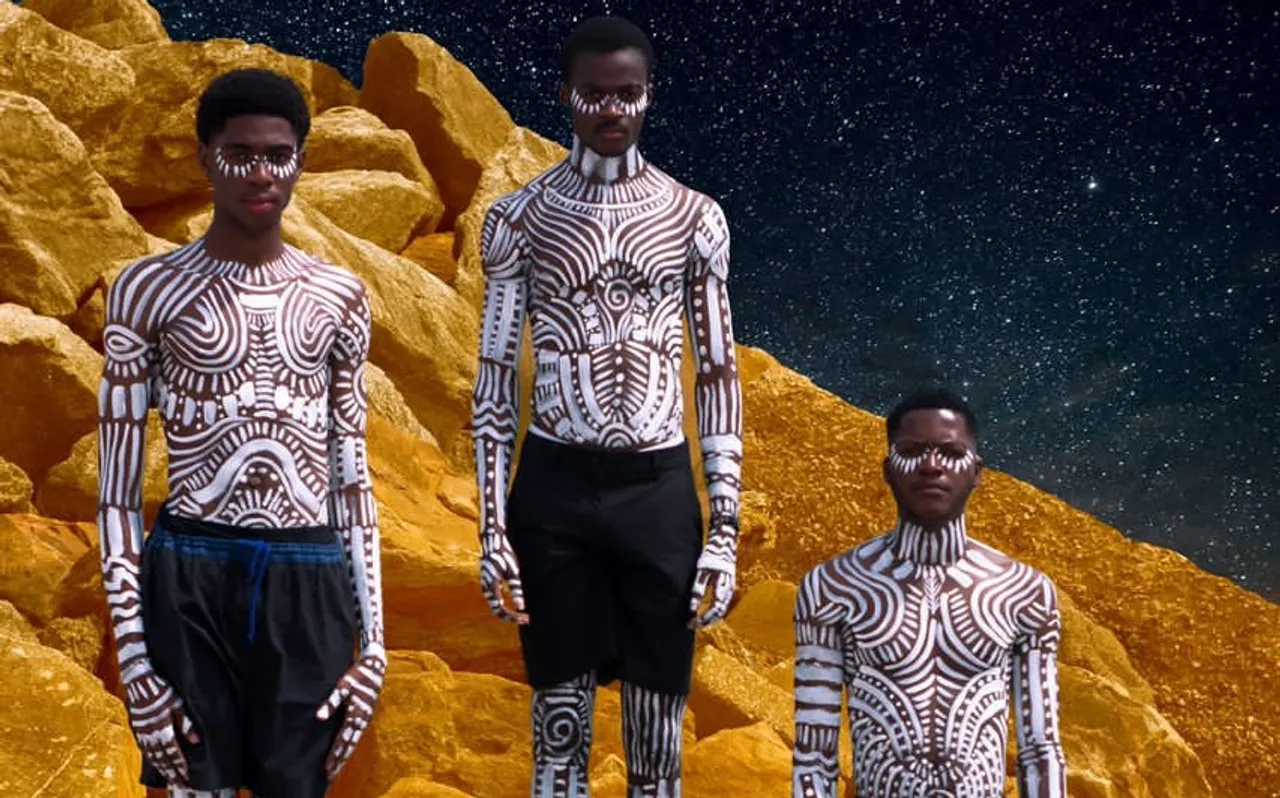
Oscar, a graduate of Takoradi Technical University, has spent more than five years creating intricate body art inspired by African traditions. His work has earned international recognition and has been exhibited at South Africa's Melrose Gallery alongside celebrated African artists including Esther Mahlangu, Professor Pitika Ntuli, Mam Noria Mabasa, and Willie Bester.
Yet despite the acclaim, Oscar says AI moderation has dealt devastating blows to his career.
"I lost my YouTube page with more than 100,000 subscribers in January (2026) because my content was flagged as nudity," he tells TRT Afrika. "Then I lost my Facebook page with over 140,000 followers. I woke up, and the page was simply gone."
For Oscar, the consequences extend far beyond lost followers. His social media accounts were monetised and provided a crucial source of income that allowed him to continue producing art full-time. Their removal has left him questioning not only his future online but also the sustainability of remaining true to his artistic vision.



Self doubt
"It is forcing my hand," he says. "It makes you ask yourself whether you should stay authentic or change your style to satisfy the algorithm. Most artists struggle to raise funds, and social media offers opportunities for monetisation. Without that, how do you continue?"
To understand what may be lost culturally, one must look at the deep roots of body art in African societies. According to Elijah Sofo, a lecturer in the Department of Industrial Art at Ghana’s Takoradi Technical University, body painting has long served purposes that extend beyond aesthetics.
"Body painting meant different things to different cultures," Sofo explains. "In Ghana, for example, it was used during Dipo rites to mark a young girl's transition into womanhood. The patterns embellished the body and were believed to provide spiritual protection. It was both artistic and metaphysical."
Across the continent, similar traditions flourished. Among Xhosa-speaking communities in Southern Africa, white body paint was used during hunting rituals and religious ceremonies. In southeastern Nigeria, women adorned their bodies with intricate black patterns using uli dye derived from local plants, transforming the human form into a living canvas.
These traditions continue to inspire contemporary artists like Oscar, who see themselves as custodians of cultural practices that might otherwise disappear.
Yet the digital landscape is becoming increasingly challenging. In March, Meta announced a years-long transition toward more advanced artificial intelligence systems to handle content-enforcement tasks, including the detection of scams and illegal content. While the move promises greater efficiency, artists fear that automated systems may become even less capable of recognising cultural nuance.
For Sofo, the issue reflects a broader struggle facing many societies with deep cultural expressions.
"This is the predicament of cultures in the global south," he says. "The internet and other forms of cultural imperialism have further divorced us from our roots and identity. It is hurting us."
However, social media companies defend their decisions to use AI for moderation.
‘‘Artificial intelligence (AI) technology is central to our content review process. AI can detect and remove content that goes against our Community Standards before anyone reports it. Other times, our technology sends content to human review teams to take a closer look and make a decision on it,’’ Facebook says in its community guidelines note.
Opaque systems
But some analysts say a lack of transparency surrounding moderation decisions only deepens artists' frustrations. When accounts are removed or content is flagged, creators often find themselves confronting opaque systems with limited avenues for appeal.
Without those social media platforms, Oscar now faces difficult questions about the future of his career and the preservation of the traditions that inspire it.
Should he adapt his work to suit algorithmic standards? Should he sacrifice authenticity for visibility? And if cultural expression cannot survive online, where will future generations encounter these traditions?
Oscar says he is now searching for allies and advocacy groups willing to challenge what he sees as a growing blind spot in the digital age.
"I don't want to give up on my dreams. I'm sure there are many creatives facing the same problem. We need our voices heard."