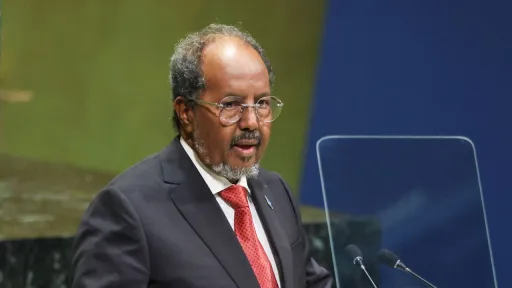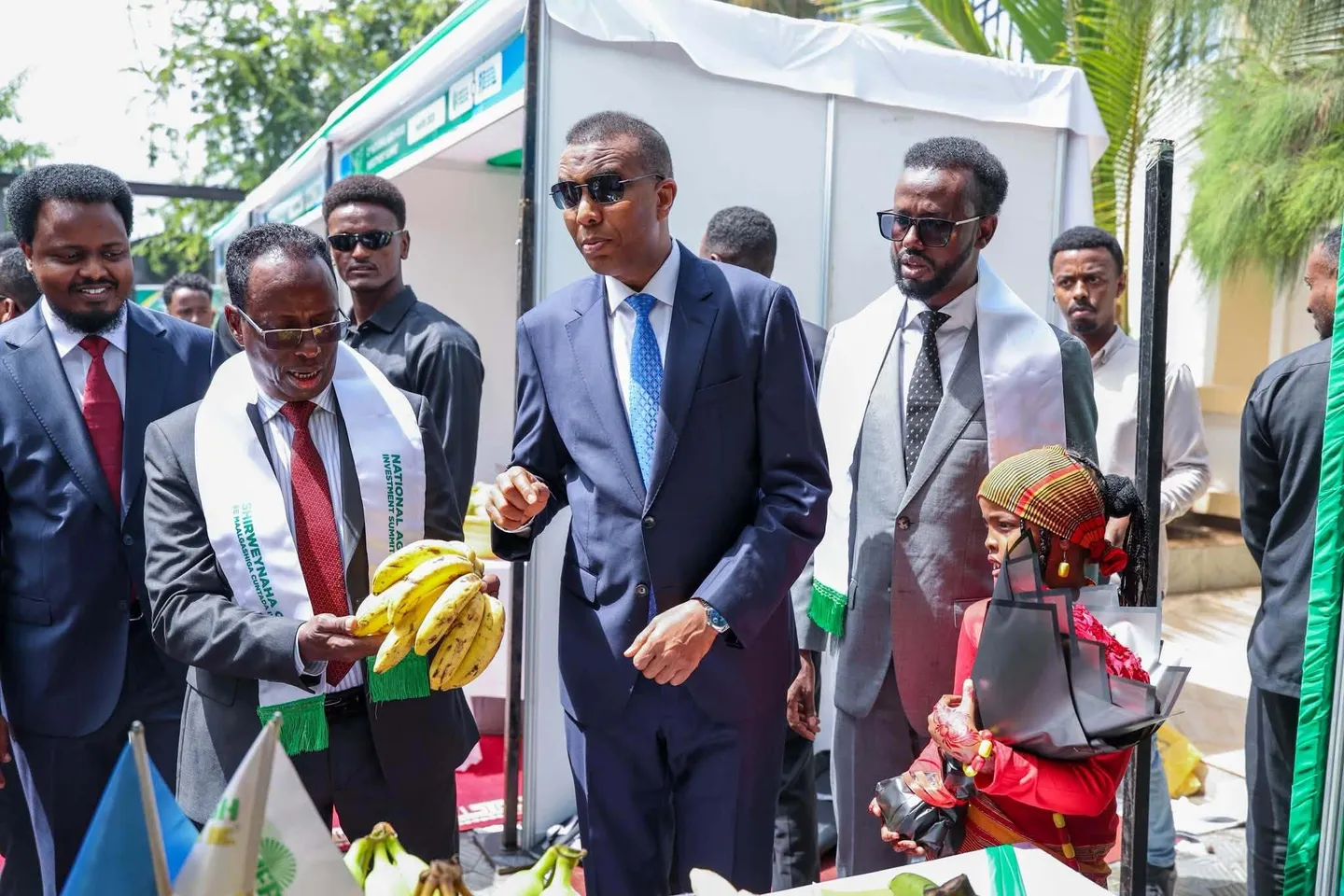
Somalia spent about $2.2 billion importing food in 2025, Prime Minister Hamza Abdi Barre said, warning that the figure exposes a deeply rooted culture of dependence on foreign food.
Speaking on 11 August at the opening of the National Food and Agriculture Investment Summit (NAFIS 2026) in Mogadishu, Barre said roughly 75% of Somalia's food needs are met through imports, while only about 25% is produced domestically.
The country has vast arable land, an extensive network of rivers and natural resources capable of supporting its food sovereignty.
But its low agricultural output reflects more than consumer habits, however: much of its most fertile land lies in the Lower Shabelle and Middle Juba valleys, areas heavily affected by the conflict with al-Shabaab terror group, and production is further constrained by recurrent drought, displacement and weak irrigation.
The prime minister said the scale of imports was not only a food security concern but also a major economic problem, as billions of dollars in foreign currency leave the country each year to pay for food that Somalia has the capacity to produce itself.
“It is not acceptable that in 2025 we imported food worth $2.2 billion from abroad,” he said.
Support domestic production
The prime minister said Somalia had become accustomed to importing food and essential items from abroad, even when similar products can be produced locally. That dependence, he said, has become a habit that must be broken.
For Barre, the contrast is stark: Somalia is spending billions of dollars buying food abroad while possessing significant natural resources that could support domestic production and generate employment. “We must plant what we currently import.”
The prime minister said changing the country’s food system would require more than government policy. Consumers would have to develop greater confidence in locally produced food, while businesses and investors would need to shift towards longer term investment in farms, machinery, infrastructure and processing.
He said the same culture of dependence had influenced how Somalia approaches other sectors of the economy, making the agricultural challenge part of a broader national effort to change attitudes toward production and self reliance.
Vegetables and imported milk
Imported goods, he noted, can become so familiar that consumers begin to assume they are better simply because they come from abroad. He cited vegetables that travel long distances to reach Somali households and imported milk that may be perceived as superior to locally produced alternatives.
The prime minister said Somalia must rebuild confidence in its own producers and resources.





“When we look at our rivers and our groundwater, Somalia is blessed with water resources. Our land is fertile and capable of producing. It should be producing.”
Barre also called for a change in the way Somalia’s international partners view the country.
He said some international organizations, donors and development partners continue to operate with an outdated image of Somalia as a transitional country with weak institutions, inadequate laws and limited capacity. That perception, he said, must change alongside Somalia itself.
‘New Somalia’
The prime minister urged international partners to adapt to what he called the “new Somalia”, including by bringing more of their operations and personnel to Mogadishu rather than continuing to rely on established regional hubs.
“Why have you not come to Mogadishu? This is where you are working. We are the people you are working for.”
Barre said the change in perception should extend across government, the private sector and international institutions. Somali businesses, he added, should increasingly go to areas where the country’s resources and production opportunities are located rather than concentrating their activity elsewhere.
He said agricultural investment remained attractive despite the risks and longer time horizons involved.
Somali investors, he said, are active but many remain hesitant to commit to agriculture and related industries. He called for greater courage from the private sector, alongside government action to provide technology, infrastructure, appropriate laws and regulations.
“There may be risks, but the potential for profit is also clear.”
Dangerously exposed
Barre also warned that Somalia’s dependence on foreign food supplies leaves it dangerously exposed to events beyond its borders.
Droughts and floods repeatedly disrupt domestic livelihoods, while wars and geopolitical shocks can disrupt international food markets. Heavy dependence on a small number of food producing countries can quickly turn a foreign conflict into a domestic food security crisis.
He said Somalia could no longer afford to wait for those crises before responding. “The worst thing in the world is management by reaction. We need a plan.”
Somalia is already facing severe food security pressures, with humanitarian agencies warning of rising needs and major funding shortfalls.
Barre argued that the answer must ultimately be greater domestic production and investment rather than permanent reliance on emergency assistance and imported food.
He urged Somali investors to see the country’s $2.2 billion food import bill as an opportunity. Redirecting even part of that spending into domestic agriculture and food processing, he said, would keep money circulating among Somali farmers, transporters, manufacturers, traders and households.
Support investment
The government, he said, would support investment by facilitating access to agricultural technology and reviewing taxes on essential equipment.
Barre also called for Somalia to stop exporting agricultural commodities as raw products and instead process them domestically, allowing the country to capture more value and create jobs.
The country has substantial agricultural land, water resources, fertile areas and a large domestic market. It also has a growing private sector and a population increasingly interested in agricultural investment.
The challenge, Barre said, is to turn those resources into production and replace a culture of importing with a culture of producing.
“We need confidence. We need to believe that we can produce our own.”