Rwanda on Tuesday began its annual week of marking 32 years since the 1994 genocide against the Tutsi ethnic group.
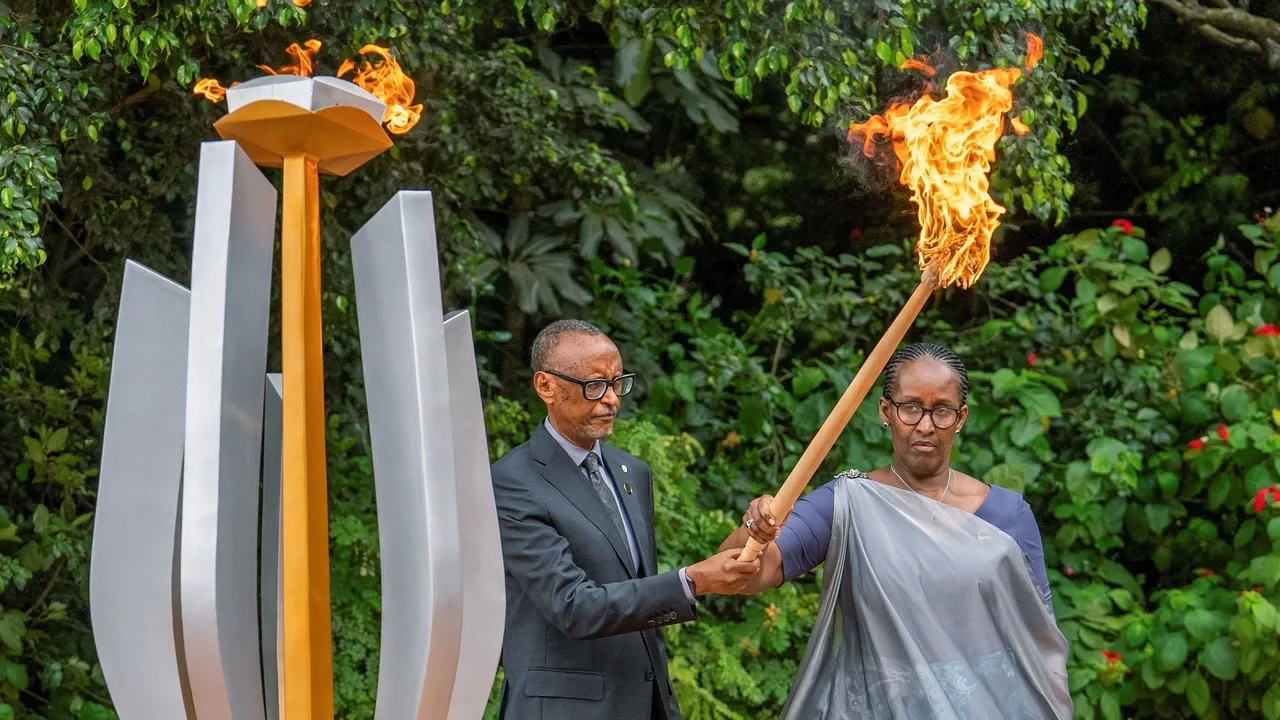
President Paul Kagame led attendees, including diplomats, victims’ families, and survivors, in laying wreaths at the Kigali Genocide Memorial in the capital, where more than 250,000 victims are buried.
He then lit the “Flame of Remembrance,” which will remain burning for 100 days in honour of the victims.
The site was added to UNESCO’s World Heritage List in 2023.
'Draw on the strength of survivors'
In his speech, Kagame said remembrance of the genocide, locally known as ‘Kwibuka,’ carries profound meaning for the nation.
“It is how we confront and overcome the divisions that nearly destroyed us. This day empowers us all. We draw on the strength of survivors, who provide the reservoir of humanity that feeds our nation’s soul. To all survivors, know that you are not alone. We stand with you always,” he said.
“Everything we have achieved was only possible, because all Rwandans decided to join hands in common purpose. We honour the role played by every Rwandan, in our country’s rebirth.”
About one million people, most of them members of the Tutsi community and moderate Hutus, were killed by Hutu extremists during a massacre that unfolded over 100 days.
'Real challenge on hands'
Kagame criticised genocide denial, saying it begins long before such crimes are committed.
“Whether here in the country, or outside, especially outside, there are those who have often distorted this history of ours for different reasons. They have a real challenge on their hands if they expect people to change history and tell it differently,” he said.
“Twisting facts about the 1994 genocide against the Tutsi is not just ignorance, denial and distortion continue to challenge the undeniable truth. There is a pattern of looking away from the warning signs, or taking them lightly. Hate speech turns into hate acts, dismissed as expressions of popular discontent,” he said.
On April 6, 1994, a plane carrying former Rwandan President Juvenal Habyarimana and Burundian President Cyprien Ntaryamira was shot down, killing everyone on board.
The crash triggered the massacres carried out by Hutu extremists.