 Sylvia Chebet
Why does Ebola keep returning to the Democratic Republic of Congo (DRC) more than anywhere else in the world? Scientists say the answer lies at the intersection of geography, conflict, fragile health systems, and a virus that is constantly evolving.
The DRC has faced 17 Ebola outbreaks — more than any other country. Each resurgence exposes the same painful truth: Ebola is not just a medical crisis in the DRC. It is a crisis shaped by ecology, insecurity, infrastructure, and inequality.
As the latest outbreak pushes suspected cases toward 750 suspected cases, with at least 177 probable deaths recorded by May 22, global health agencies are once again racing against time. The World Health Organization (WHO) has revised its risk assessment from high to very high in the country.
WHO chief Tedros Adhanom Ghebreyesus reckons the Ebola outbreak in Congo is “spreading rapidly” and now poses a “very high” risk at the national level.
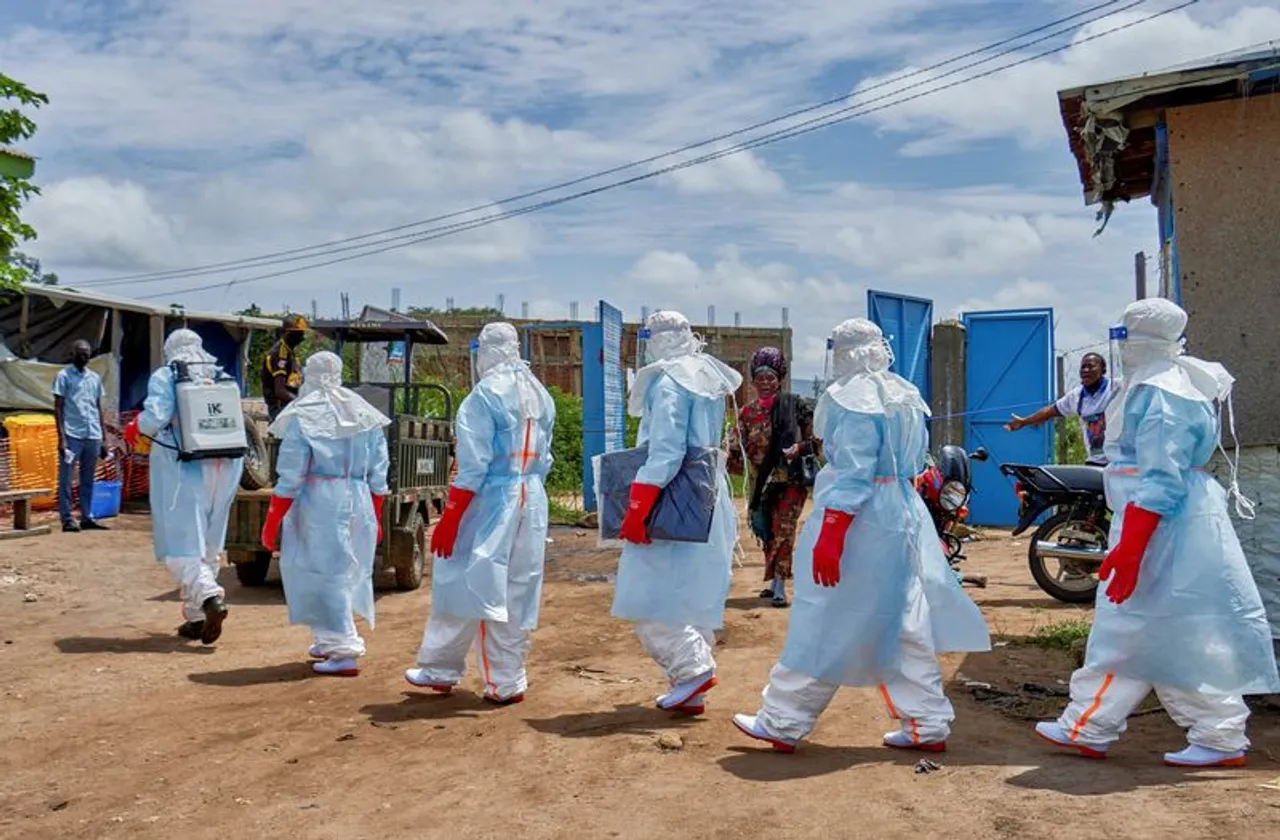
The global health body has deployed laboratory supplies, personal protective equipment, tents, and emergency response materials into affected areas, even amid severe global funding constraints.
Yet the deeper question remains: why does Ebola continue to hit the DRC so relentlessly?
The geography of danger
Unlike many countries that encounter Ebola sporadically, the DRC sits at the frontline of the virus’s ecological existence.
According to Dr Nicksy Gumede-Moeletsi, WHO Africa Regional Advisor and virologist, the DRC’s geography places it directly in Ebola’s natural habitat.
“The DRC remains the epicenter of Ebola outbreak, largely because it lies within the natural ecological niche of the virus, where the zoonotic spillover from the wildlife reservoirs such as bats occurs more frequently,” she tells TRT Afrika.
In vast forested regions where humans live in close proximity to wildlife, repeated spillover events become far more likely. Hunting, bushmeat consumption, deforestation, and daily human-animal interaction all increase exposure to infected animals carrying the virus.
The virus loves chaos
But geography alone does not explain why outbreaks spiral so dangerously.
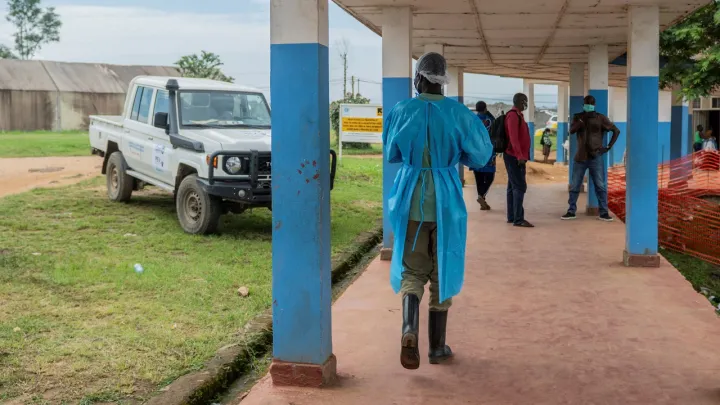
Many Ebola hotspots in the DRC are located in areas plagued by armed conflict and chronic insecurity. Health workers often operate under threat, while entire communities are displaced by violence. The consequences for outbreak control are devastating.
“The conflicts and insecurity severely complicate Ebola response efforts by restricting the access to affected communities, endangering healthcare workers, as well as disrupting whatever has been started in terms of the surveillance activities,” Gumede-Moeletsi says.
In conflict zones, even the most basic outbreak strategies — contact tracing, testing, isolation, vaccination campaigns, and community education — become extraordinarily difficult.
Population displacement further accelerates transmission as families flee unstable regions, potentially carrying the virus into new communities.
The infrastructure problem
The DRC’s immense size and limited infrastructure compound the challenge.
“One of the country’s greatest challenges is that it is lacking at an infrastructural level, because where the epicenter of the current outbreak is a hard to reach area,” Gumede-Moeletsi notes.
Remote villages connected by poor roads, limited telecommunications, and weak transport systems can delay the arrival of medical teams and supplies by days or even weeks. In Ebola outbreaks, such delays can prove deadly.
Health emergencies demand speed. But in many parts of the DRC, rapid response remains structurally difficult.

A fragile healthcare system
The recurring outbreaks also expose the fragility of healthcare systems in affected regions.


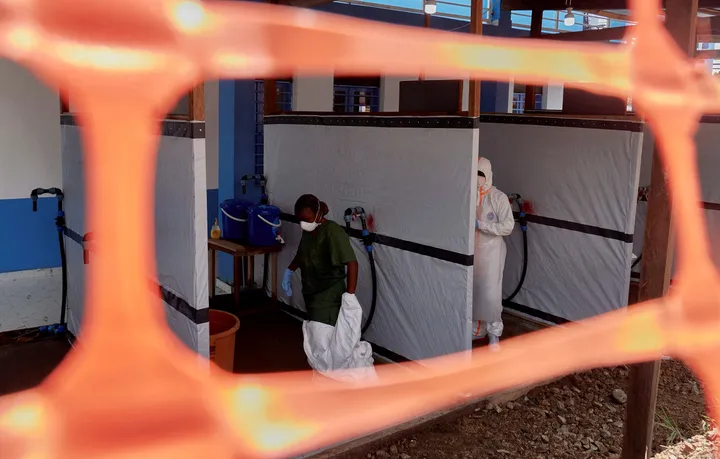




“Inadequate infection prevention and control measures tend to increase the likelihood of undetected transmission,” the virologist explains.
Without strong surveillance systems, outbreaks often spread silently before authorities can identify and contain them.
“So these gaps alone allow the outbreaks to grow before they are even recognized or effectively managed.”
Healthcare workers themselves are frequently among the most vulnerable. Limited protective equipment, overstretched clinics, and insufficient training can turn health facilities into transmission hubs rather than containment centers.
How West Africa broke the cycle
The DRC’s recurring outbreaks stand in contrast to West Africa, which suffered a catastrophic Ebola epidemic between 2014 and 2016 but has largely avoided repeated large-scale outbreaks since then.
The epidemic devastated Guinea, Liberia and Sierra Leone, with Sierra Leone recording the highest number of cases, while Liberia suffered the highest number of deaths. More than 11,000 people across the region lost their lives during the outbreak, making it the deadliest Ebola epidemic in history.
“West Africa has largely avoided recurring large-scale outbreak due to the strengthened regional coordination, improved surveillance system, as well as sustained investment in preparedness,” Gumede-Moeletsi says.
The region learned hard lessons from the epidemic, and governments moved to strengthen cross-border coordination, invest in preparedness, improve disease surveillance, and train rapid-response teams.
“West Africa has demonstrated that investing in surveillance and networks, training the health workers and maintaining rapid response capacity can significantly reduce outbreak impact.”
But Gumede-Moeletsi cautions that solutions cannot simply be copied and pasted onto the DRC, citing its unique context, particularly in areas affected by the conflict.
A mutating virus
The current outbreak presents another complication: the strain involved has no approved vaccine.
“For this type of a strain of Ebola (Bundibugyo), unfortunately, there is no existing vaccine,” Gumede-Moeletsi says.
While vaccines exist for the Zaire strain of Ebola, newer strains and variants continue to emerge as the virus mutates. As the virus changes genetically, older vaccines may become less effective.
“Unfortunately, this is how the virus survived,” the virologist reckons.
This evolutionary arms race is one reason Ebola remains such a persistent threat.
Community engagement
Despite scientific advances, one of the most powerful weapons against Ebola remains community engagement.
People living in outbreak areas are urged to avoid direct contact with symptomatic individuals, seek testing quickly, and cooperate with health authorities.
Gumede-Moeletsi emphasizes that community engagement is crucial, noting that distrust, misinformation, and fear have undermined previous Ebola responses in the DRC. Without public trust, even the best medical interventions can fail.
Beyond emergency response
The DRC’s Ebola crisis reveals a broader reality about global health security: outbreaks flourish where systems are weakest.
Ebola continues to strike the DRC not because the country lacks experience with the disease, but because the conditions that enable transmission — ecological exposure, insecurity, poverty, weak infrastructure, and fragile healthcare systems — remain deeply entrenched.
Until those structural vulnerabilities are addressed, the country may continue fighting the same deadly battle again and again.