 Pauline Odhiambo
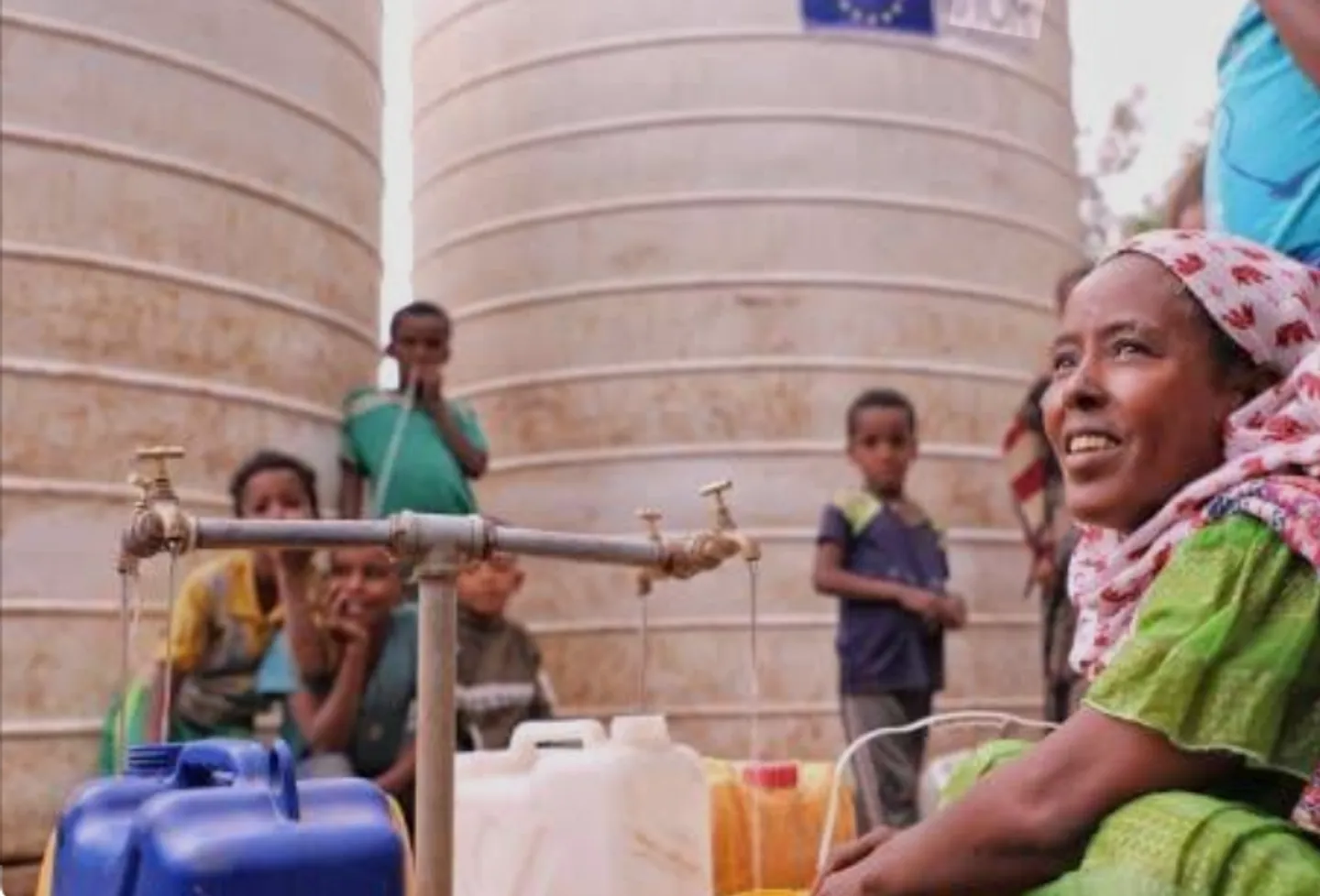
In the dusty outskirts of Dollow, a town straddling the Somali-Ethiopian border, the morning ritual for Fatima used to be one of desperate calculation.
As the sun rose, she would wake her children not for school, but for the long walk to the nearest water point. It was a journey fraught with uncertainty. Would there be water today? If there was, would the price have doubled overnight?
In a region where the climate has become a relentless enemy—bringing droughts that crack the earth and floods that wash away the meagre roads—access to clean water was a gamble. Fatima, a mother of four living in a displacement-affected community, recalls the year when water interruptions lasted for 24 hours or more, crippling their daily life and forcing families to rely on expensive, and often unsafe, vendors.
"We used to wake up not knowing if we would find water that day," 34-year old Fatima tells TRT Afrika, her voice carrying the weight of those memories. "It was like gambling with our children's health. Some days we went without so they could have a little. The vendors knew we had no choice, so they charged whatever they wanted. Every drop felt like it was bleeding us dry."
Water wars
The burden fell hardest on the women and children, consuming their time, draining their meagre incomes, and threatening their health. For Fatima, the water crisis was not just an inconvenience; it was a constant, gnawing source of anxiety. It was a barrier to any hope of stability.
One thousand kilometres away, in the sprawling camps of Gambella, Ethiopia, a similar story unfolded for 24-year old Deng.
A refugee who had fled conflict in South Sudan, Deng found himself in a camp where survival seemed to hinge on the rumble of water trucks. The water they delivered was expensive, and never enough. Host communities and refugees often found themselves in tense standoffs over the precious resource, a conflict that threatened the fragile peace of the region.
"The trucks would come, and everyone would rush," Deng recalls, shaking his head at the memory. "There was always pushing, shouting, sometimes fighting. The host community saw us as a burden taking their water. We saw them as obstacles to our survival. The water trucking was a constant reminder that we were temporary, unwanted guests. It made us feel like we didn't belong anywhere."
The water trucking, a temporary emergency measure, had become a semi-permanent and costly reality for years. It was a system that was "extremely expensive" and utterly unsustainable, leaving everyone feeling vulnerable and trapped in a cycle of dependence and scarcity.
But a new analysis of the Regional Programme on Water and Sanitation (R-WASH), a joint effort by UNICEF and UNHCR with support from the German government and other partners, paints a radically different picture. It is a story of progress, of communities slowly turning the tide on a crisis.

‘A miracle of economics’



For Fatima in Somalia, the change has been tangible.
The R-WASH evaluation found that in programme locations, the number of households facing 24-hour water interruptions plummeted from a staggering 83 per cent to just 38 per cent. This reliability, coupled with a 16 per cent drop in water production costs, is more than a statistic. It means Fatima can send her children to school instead of to the water queue. It means the little money they have is spent on food and medicine, not on overpriced water from a truck.
"Now the water comes, and it comes every day," Fatima says, a hint of wonder still in her voice. "I don't have to choose between buying water and buying medicine. The children don't miss school to walk for hours. The price is fair, and the water is clean. It sounds like such a small thing, but when you have lived without it, you understand that water is everything. It is health, it is time, it is hope."
For Deng in Ethiopia, the transformation is even more profound. The programme has spearheaded a shift from emergency water trucking to a utility-managed piped water system. The result is a miracle of economics and engineering: water production costs have plummeted by more than 90 per cent.
In Gambella, where the Itang project now delivers clean water to over 260,000 refugees and host community members, the old tensions are beginning to dissolve. The piped water system serves everyone—refugee and host alike—transforming a once-fragile situation into a model of social cohesion.
‘Shared dignity’
"When the pipes came, something changed between us and our hosts," Deng explains. "We were sharing the same water, from the same system, at the same price. Suddenly, we weren't enemies competing for a scarce resource. We were neighbours with a common resource. It gave us a shared dignity. For the first time, I felt like I was part of the community, not just a burden on it."
This is the heart of the R-WASH strategy. It moves beyond the short-term charity of water trucking, investing instead in climate-resilient infrastructure like solar-powered systems that are cheaper and more sustainable. By strengthening local utilities and integrating services for both displaced and host communities, the programme is not just delivering water; it is building peace and resilience against future shocks. It is a practical, approach that proves the old way of doing things—treating displacement as a temporary crisis—is both inefficient and expensive. As one analysis noted, shifting from trucked water to a piped supply can reduce service costs by more than 65 per cent.
The programme is a testament to the power of partnership, and a holistic approach that is "laying the foundations for sustainable services that can last well beyond humanitarian crises," as UNICEF Regional Director Etleva Kadilli puts it.
As the African Union marks 2026 as the Year of Water and Sanitation, the R-WASH programme is a beacon of hope, showing that investment in sustainable water systems is not just a moral imperative but a smart, cost-effective path to stability and prosperity.
"When you don't have to spend your whole life fighting for water," Fatima reflects, "you finally have the time to start building your future. That is what this programme gave us—not just water, but the freedom to dream again."