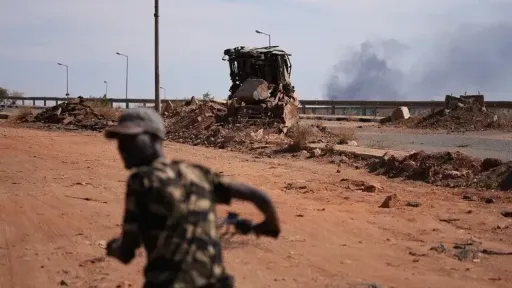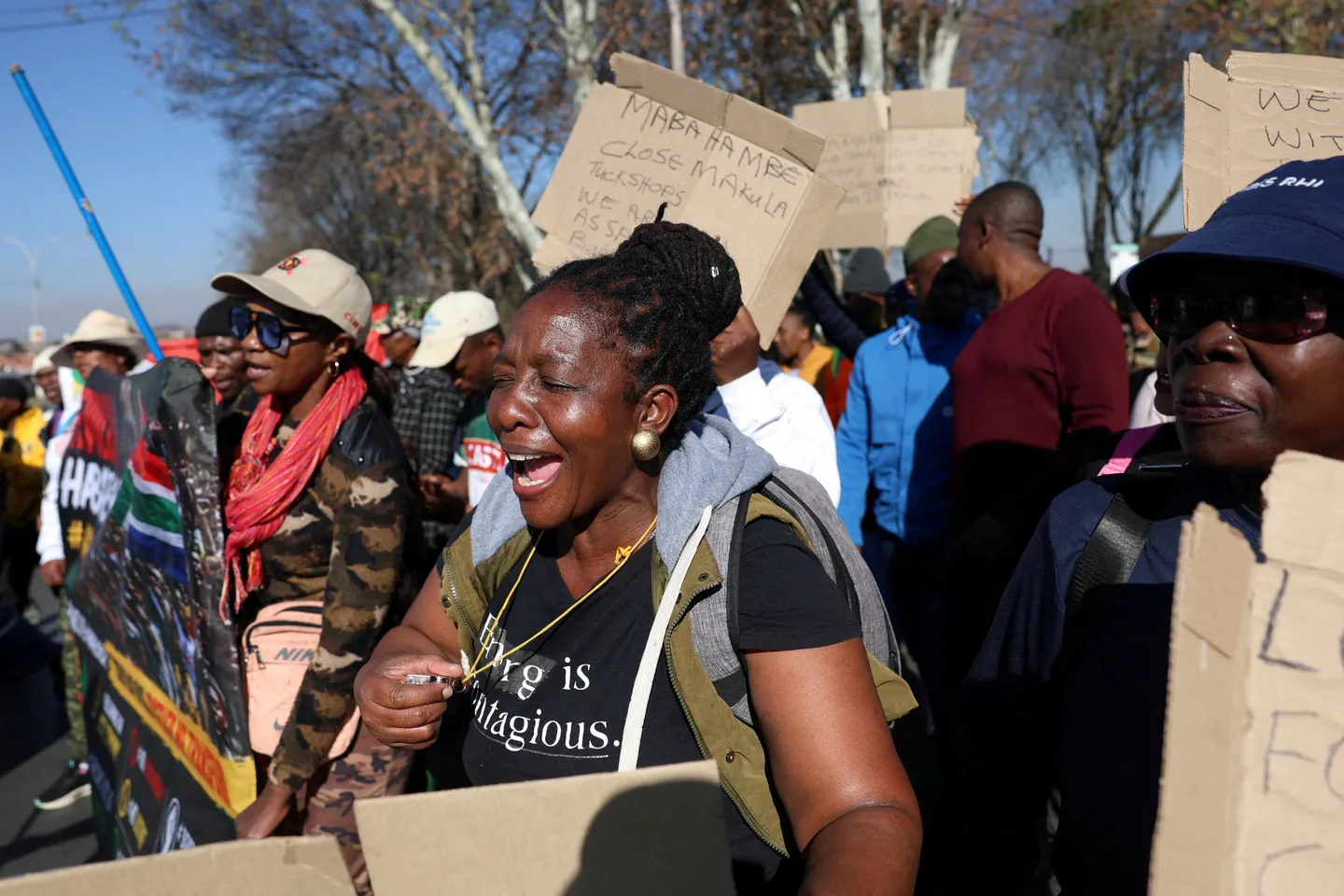
Anti-migrant protests in South Africa turned violent on Thursday, one in the coastal city of Durban and another in Johannesburg's Soweto township, with cars torched at both and gunshots fired in Soweto, according to media reports.
Tensions over migration have been reignited by a court order that government must restart processing asylum applications.
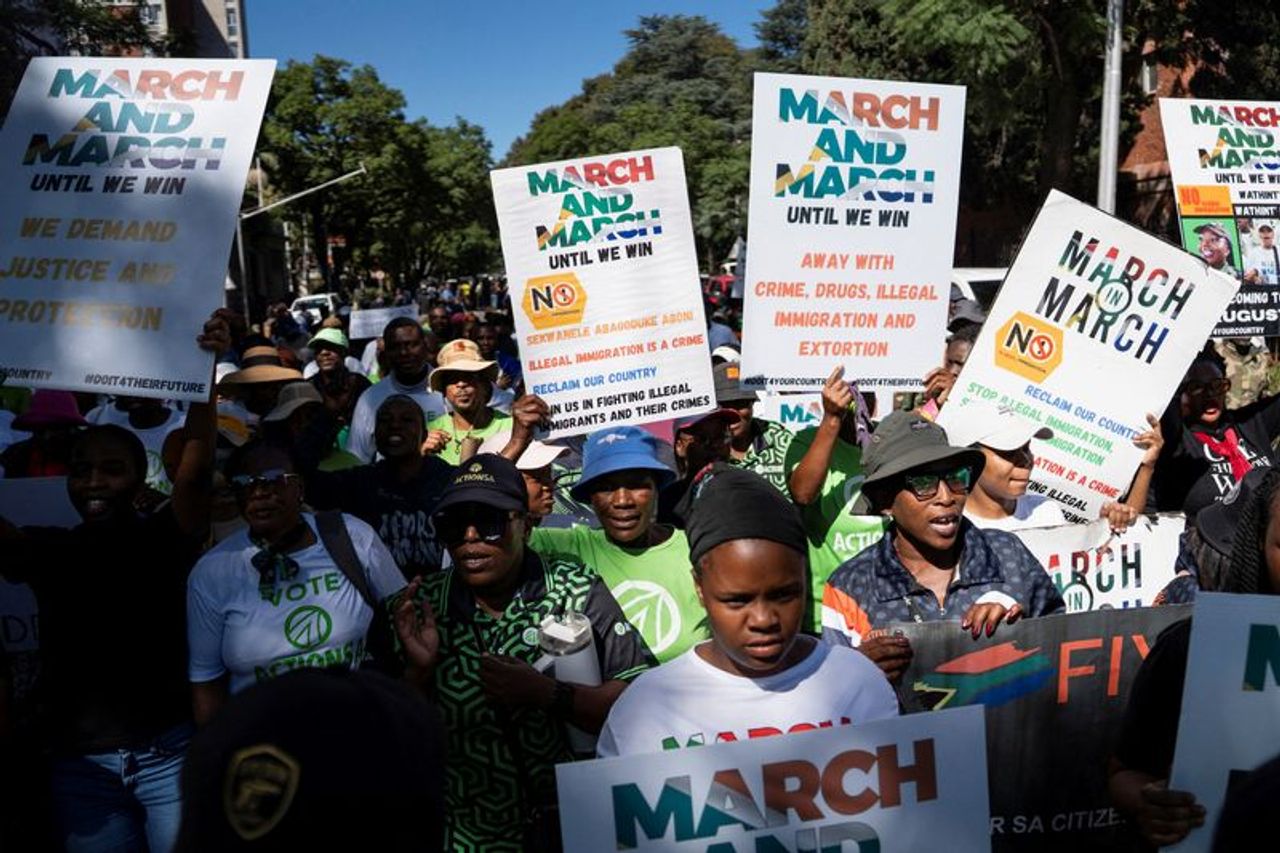
The latest round of protests were called by movements targeting undocumented migrants that were behind waves of demonstrations earlier this year, AFP reports.
In Durban, about 10 vehicles were overturned and set alight, while shops owned by foreign nationals were looted, news website News24 said.
At least nine vehicles were torched in Soweto, Johannesburg Metropolitan Police Department spokesman Superintendent Xolani Fihla told SABC television.
"It's reported that there were clashes between foreign nationals in the area and South African nationals," he said.



International criticism
South Africa has seen months of anti-migrant marches this year that have drawn international criticism.
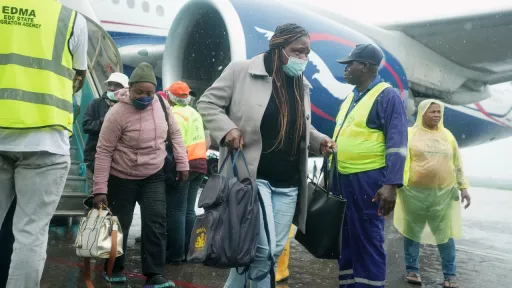
Some of the marches have descended into violence and looting, and thousands of African foreign nationals have fled the country.
Migrants are often blamed for taking jobs, fuelling crime and straining public services, claims that social scientists say are not supported by evidence.
Three decades since apartheid ended, South Africa remains deeply unequal and about a third of people are out of work.
Despite this, it remains Africa's largest economy and continues to draw migrants.