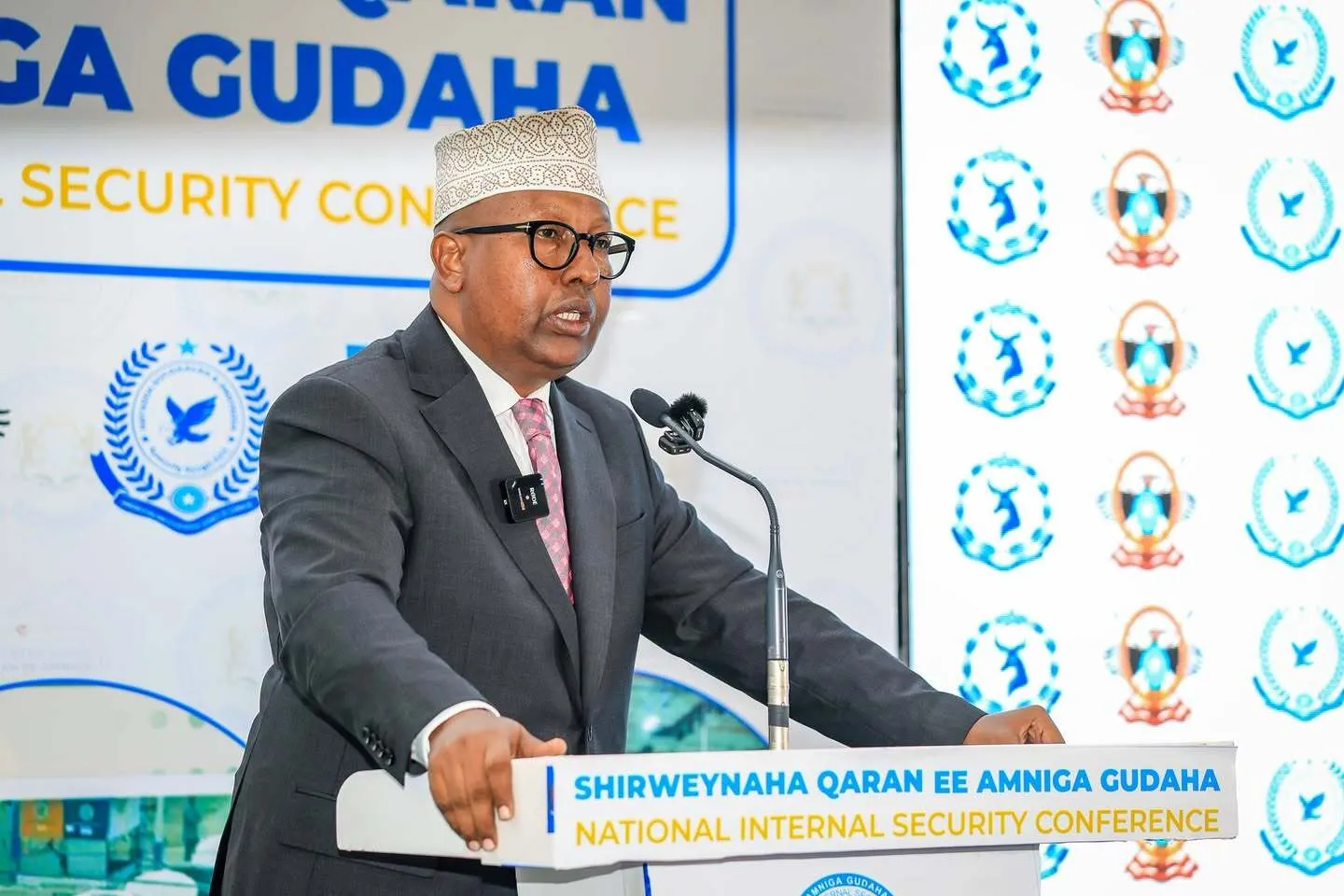
Somalia’s Defence Minister Ahmed Moallim Fiqi on Tuesday urged governments not to pay ransoms to pirates holding vessels off the country’s coast, warning that such payments would finance further criminal activity and encourage more ship seizures.
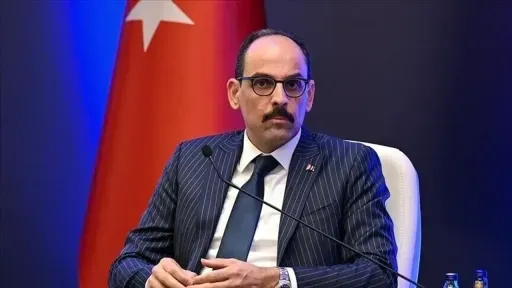
Fiqi was speaking at Somalia’s National Internal Security Conference, which opened in Mogadishu on Tuesday and is focused on strengthening the country’s security institutions and preparing them to assume greater responsibility for national security.
“Piracy is indeed one of the challenges facing Somalia, and it has increased in recent times,” Fiqi said.
“Every payment you make to pirates will continue to finance that criminal activity. It encourages them to continue such acts and to seize other vessels,” he added.
He said Somali forces, working with Türkiye, particularly its naval forces, had recently rescued a vessel that had been held by pirates in the coastal district of Eyl.
‘Pirates defeated’
“The vessel was freed and the pirates were defeated,” he said.
He acknowledged that crew members of some vessels are still being held aboard , but said Somalia will not negotiate with their abductors.
“We know that there are crews being held on vessels and boats, but we cannot finance the pirates,” he said. “Piracy cannot be solved through policing alone.”
Fiqi said Somalia had reached an important stage in its efforts to take greater responsibility for its own security.
“We have come through an important period. The world has been helping us, but it can only help us for a limited period,” he said. “Today, the world is facing a number of different crises.”
Practical national plan
He said the conference should produce a practical national plan bringing together Somalia’s government and security institutions to address the country’s difficult security environment.
“It is essential that when this conference concludes, it produces a plan through which our country and its institutions can work together; a plan that addresses the difficult situation facing our country,” Fiqi said.
He said Somalia also needed to respond to growing pressure on the international community, which had supported the country for years but was now facing demands to address crises elsewhere.




“The world that has been helping us is now raising its voice and saying: enough is enough,” he said.
Fiqi also highlighted the length of the international military presence in Somalia, noting that the African Union Transition Mission in Somalia (ATMIS) and missions that preceded it had been in the country for nearly two decades.
“ATMIS and those who came before it have been in the country for nearly 20 years,” he said. “In 20 years, a child grows into an adult.”
He praised the Somali National Army for its efforts to expand and improve its capabilities.
“We should not allow short-term thinking to divide us,” he said. “We truly commend the Somali National Army for its efforts. It is preparing itself, and its numbers are increasing day by day.”
Nearly 3,000 troops had recently been recruited and begun training, while several hundred more were undergoing training in Mogadishu, he said.
A large number of Somali troops trained by Türkiye, including members of the Gorgor special forces, had also completed their training, Fiqi said.
“These and other forces are now being prepared,” he said. “We are preparing ourselves to become capable of providing our own security.”
Lasting security gains
Fiqi said Somalia wanted to avoid a situation in which years of international support and investment failed to produce lasting security gains.
“We are preparing ourselves to be self-sufficient in providing our security, and we do not want to leave the world that has supported us so well with a situation similar to what happened in Afghanistan,” he said.
“The assets and investment that have been committed to this country must not end without results. We must take responsibility for the security of our country and thank the governments that have supported us and continue to support us.”
He said Somali forces were moving towards assuming greater responsibility and called for close coordination between the country’s security institutions.
“Our forces are moving in that direction,” he said.
Fiqi also called on the Ministry of Internal Security and other security institutions to take over areas vacated by military forces to prevent security gaps.