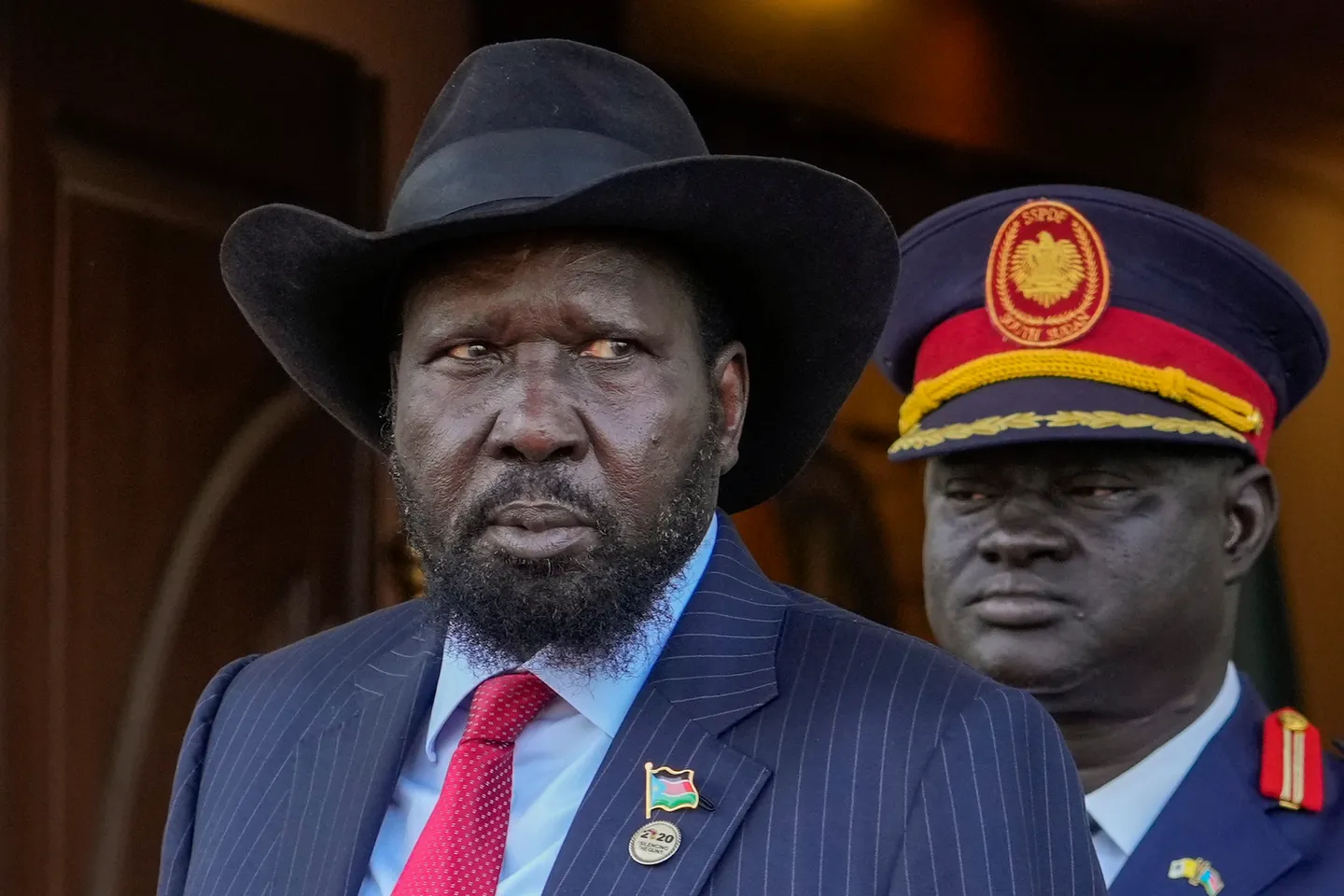
South Sudan's President Salva Kiir is confident the country will hold elections on December 22, 2026 amid doubts raised by different quarters.
President Kiir announced on Tuesday, September 22 that administrative and logistical arrangements, as well as security preparations and political buy-in had been pursued to facilitate the exercise.
The world's youngest nation, which got independence from Sudan in July 2011, is yet to hold its first-ever general election, with previous attempts, including in 2024, failing due to political divisions, legal hurdles, and a lack of funds.
But this time around, President Kiir, who has served since independence, is almost certain that the long elusive elections will be held.
Hurdles
His government has, in recent times, moved to remove so-called barriers that had made it difficult to hold elections. For instance, the country's transitional legislation demanded that a population census must be conducted before polls, while a permanent constitution put in place as a precursor to elections.
These hurdles were removed by parliament in July 2026. President Kiir's party, the Sudan People's Liberation Movement (SPLM), enjoys significant influence in the country's National Assembly, which has 550 members.
Besides removing the pre-election requirements, parliament also passed a law that grants President Kiir full executive powers during South Sudan's electioneering period, while empowering the head of state to sack the country's five vice-presidents.
South Sudan's 2018 peace agreement, which ended five years of a devastating civil war, protects First Vice-President Riek Machar's tenure, and does not have provisions for his sacking by the president. It also established five vice-president positions, aimed at power-sharing and ensuring peace in the ethnically-diverse country.
Vice-presidents' sackings
Kiir, 75, announced on September 22 that the five vice-presidents — Riek Machar, James Wani Igga, Taban Deng Gai, Rebecca Nyandeng De Mabior, and Hussein Abdelbagi Akol — had been dismissed from office and the government dissolved ahead of elections. A caretaker team was subsequently appointed to run government.
Dissolution of the substantive government, including South Sudan's cabinet, parliament, and state administrations, was a prerequisite for elections, according to the newly enacted law, which the opposition, led by Machar's party, views as breaching the country's 2018 peace deal.
Currently, Machar, 74, is under house arrest and is facing treason charges for violence that rocked South Sudan's northeastern state of Upper Nile in February and March 2025. Authorities accuse him of fanning the violence, allegations the first vice-president denies.
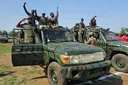
Machar's detention has heightened tensions in South Sudan, with pockets of armed conflict witnessed in volatile areas, including the central Jonglei state. The clashes involve government and opposition forces, and have disrupted daily life and humanitarian efforts.
Heavy security deployment
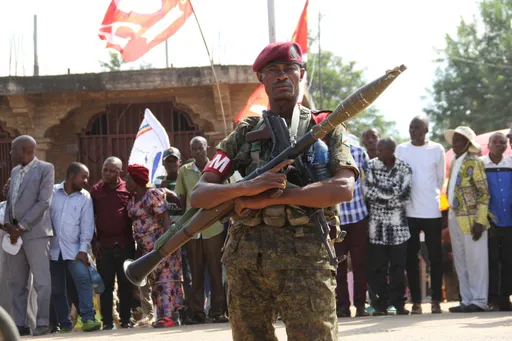
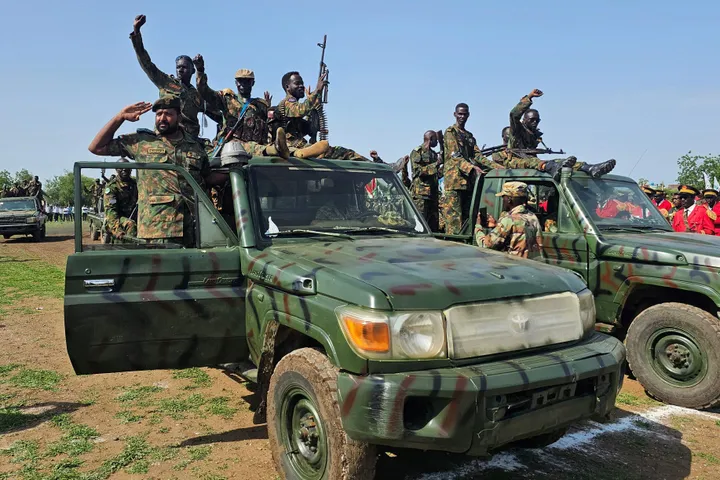
Political tensions also mounted in the capital Juba, where the government deployed heavy security on September 22 following President Kiir's declaration of the end of transitional governance.
While the government exudes confidence in its preparedness for elections, pointers suggest that significant work is yet to be done. For instance, the country's planned election is estimated to cost $250 million, but the electoral board has so far received $27 million in funding, leaving a nearly 90% budget deficit.
The total funding is intended for voter registration, logistics, security deployment, civic education, and election administration. The country of around 12 million people is yet to enroll voters and complete civic education, with three months left to the general election. Time appears to be running out, observers say.
"South Sudan may not hold its elections later this year," Gordon Odhiambo, a Kenyan international relations expert, told TRT Afrika. "If you look at what remains undone, then we can safely speculate that registering voters, completing civic education within the few months left, and procuring election materials on time would be challenging," Odhiambo added.
'Staggered' election
Abraham Nyuon, a professor of political science at South Sudan's University of Juba, echoes Odhiambo's sentiments, suggesting that a staggered election offers a realistic pathway to successful December polls.
"South Sudan recently changed the head of its electoral commission, meaning the new office-holder, Gabriel Bol Deng, will need time to acclimatise. Therefore, to give the country a realistic chance of holding elections in December, the commission should consider staggering the vote. For instance, presidential and state governor elections could take place in December, with legislative elections held the following year," Prof. Nyuon told TRT Afrika.
While timeline constraints are widely acknowledged, Odhiambo notes that political tensions within South Sudan provide an unfavourable environment to hold free and fair elections.
"South Sudan is yet to fully recover from the divisions that fuelled the 2013 to 2018 civil war. Compounding this challenge, Riek Machar, a principal architect of the 2018 peace agreement, remains detained. Given Machar's enduring political clout, holding peaceful and credible elections will require handling his situation carefully and defusing ethnic tensions," Odhiambo said, emphasising the importance of directly including Machar's political faction in the electoral process.
'Reset button'
Prof. Nyuon, however, views the upcoming election as an opportunity for South Sudan to finally hit the reset button. "The country needs to forge ahead," he said.



"For far too long, individual interests have held back South Sudan's development potential. I believe that even with Machar's case active in court, the nation can rely on the justice system to resolve it, while finding a way to build beyond years of repeated conflict."
Machar's party, the Sudan People's Liberation Movement-in-Opposition (SPLM-IO), is pushing to halt the December 2026 elections, arguing that a legitimate vote requires a fully inclusive process. SPLM-IO recently rejected the declared election schedule, saying President Kiir's administration "unilaterally" set the polling date without consulting all parties to the 2018 peace accord.
"SPLM-IO formally declares its unequivocal rejection of the unilateral elections proposed by the government in Juba, as well as the unilateral amendments imposed on the Revitalised Agreement on the Resolution of the Conflict in the Republic of South Sudan," Regina Joseph Kaba, the interim deputy chairperson of SPLM-IO, said in a statement on Wednesday, September 23. Kaba added that the recent legislative changes in South Sudan amounted to "deliberate dismantling" of critical pre-election prerequisites established as safeguards for free, fair, and inclusive elections.
'Negotiate for a peaceful transition'
With a political impasse appearing to be imminent, Odhiambo proposes that senior politicians, including President Kiir and First Vice-President Machar, should "negotiate for a peaceful transition" into a new constitutional order and democracy, centred on the people's wishes.
"When both leaders speak with one voice on governance, they can inspire national turnout for a vote that is both credible and genuinely inclusive," Odhiambo said.
To some observers, this suggestion may be a tall order to implement, given the protracted and intense rivalry between Kiir and Machar, culminating in the first vice-president's recent detention, suspension from office, and subsequent arraignment.
"Holding elections in South Sudan under the current tense environment risks plunging the nation back into civil war, a danger driven primarily by competing communal interests, deep-seated political suspicions, and rigid loyalties to Kiir and Machar," Odhiambo said.
'Political shield'
Prof. Nyuon observes that the risk of renewed fighting is slim, provided the elections are handled properly.
"For years, leaders have used the 2018 peace agreement as a political shield to avoid facing voters at the ballot box," he said. "That agreement was extended several times with minimal progress in South Sudan's national security and political processes. True liberation in South Sudan starts with dissolving the previous government, as the president has done, and then holding elections. If voting is fairly conducted, there will be little room for renewed conflict," Nyuon said.
According to President Kiir, the upcoming general election provides an opportunity to end the perennial renewal of South Sudan transitional government's mandate, and also reduce the total number of National Assembly members from 550 to 332. Other structural reforms include cutting state assembly seats from 100 to 58, and limiting administrative area legislative councils to 20 members each.
However, the opposition claims the head of state has engaged in a series of "unilateral" actions, including sacking the vice-presidents without consulting the 2018 peace accord parties. SPLM-IO says Kiir's actions suggest he intends to consolidate power and appoint loyalists to government.
'Echo chambers'
"True state-building requires engaging political adversaries, not convening echo chambers. Gathering allied factions in Juba is merely an exercise in political theatre, not conflict resolution," SPLM-IO said in a statement on September 23.
Whether South Sudan will ultimately proceed with elections in December remains to be seen. However, key international stakeholders, including the United Nations (UN) and the African Union (AU), are championing an inclusive process anchored in a genuine commitment to deliver a revamped government for its citizens.
Path toward elections
South Sudan's journey toward its planned elections in December 2026 is built on a turbulent history.
After attaining independence, the nation witnessed a devastating civil war in 2013, sparked by frictions between President Kiir and Vice-President Machar. The conflict led to nearly 400,000 deaths, according to official estimates.
Although the principals' 2018 peace agreement ended active fighting and established a power-sharing government, unresolved communal differences and repeated delays pushed back democratic polls for years.
The country had, most recently, planned to hold elections in December 2024, but due to a lack of political goodwill and funds, the scheduled polls were postponed by two years, to 2026. This added to the past series of postponements in 2018, 2021, and 2023.
Careful diplomacy urged
Recently, election preparations have gained momentum. President Kiir assented to constitutional amendments clearing legal hurdles by delinking the polls from a population census and constitution-making process.
However, major challenges persist, with international bodies like the UN and the AU warning that holding a rushed vote without broad consensus risks reigniting conflict.
With Machar's faction demanding inclusive participation and lingering political suspicions threatening stability, stakeholders stress that safeguarding the democratic process requires careful diplomacy to prevent South Sudan from sliding back into violence.