Archaeologists excavating a Byzantine-era cemetery near the site of an ancient Roman theatre in northwestern Türkiye have found evidence of what researchers describe as the earliest known case of plague in Anatolia.
The skeletal remains of nearly 20 people, including men, women and children, were uncovered last months at a necropolis south of the Roman theater in Iznik, a historic town in Bursa province that was an important settlement in antiquity and during the Byzantine era.
“Previous examinations of the bones found evidence of the earliest known case of plague in Anatolia. This is a very important finding,” said Aygun Ekin Meric, head of the excavation team and an archaeology professor at Dokuz Eylul University in Izmir, on the Turkish Aegean.
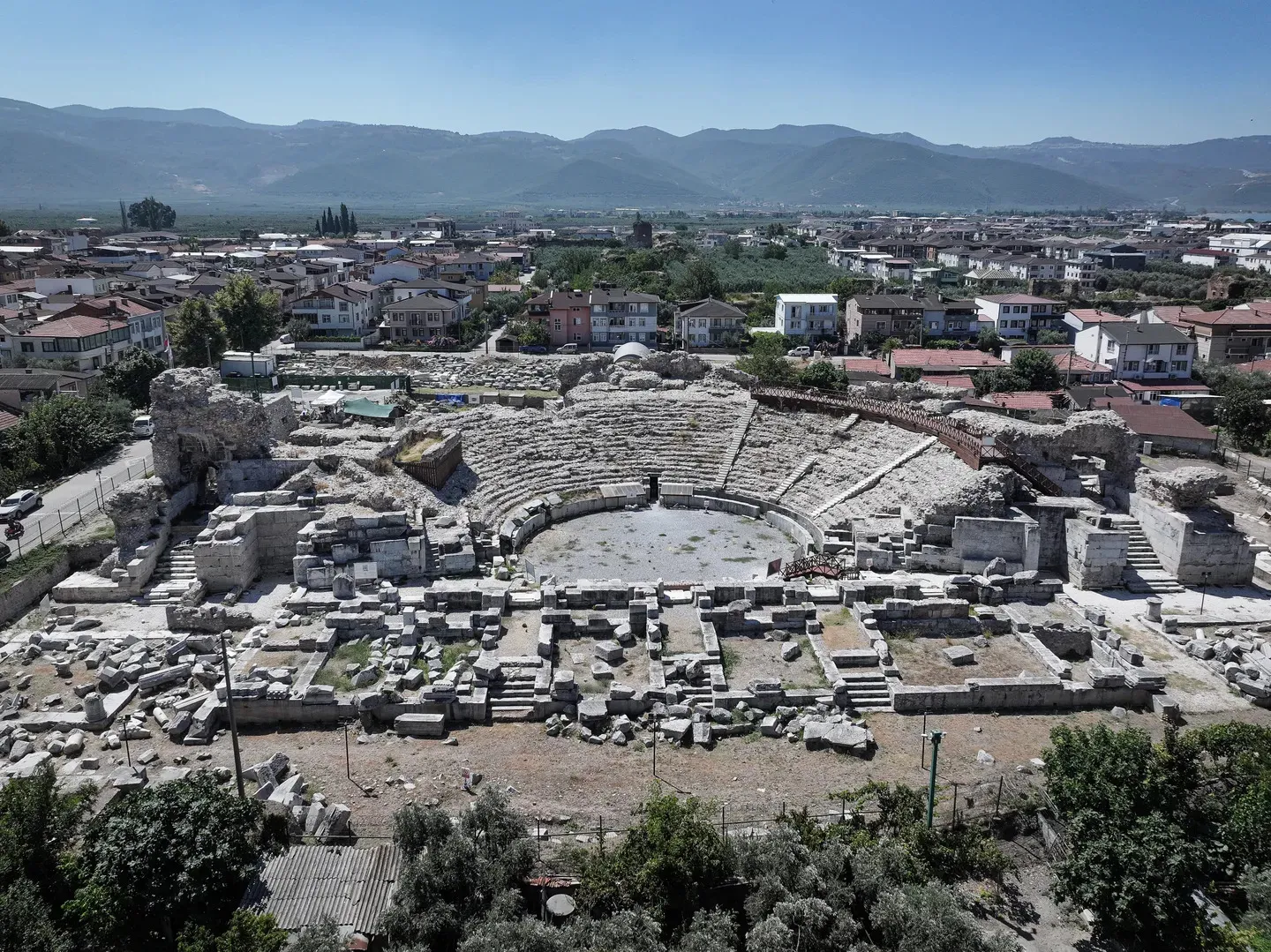
The finding comes from excavations being carried out around the theatre, one of the most significant surviving ancient structures in Iznik. The site was built during the Roman era and later used for different purposes as the settlement evolved, including religious and burial activities during the Byzantine era.
Multiple uses over the millennia
Excavations at the theatre began in the 1980s and have been conducted by a team from Dokuz Eylul University since 2016. The work has shown that the site was not used solely as a performance venue.
Archaeologists have identified evidence of later religious buildings, churches, burial grounds, and tile kilns around the theatre.
In an interview with Anadolu, Meric said the burials appeared to be individual graves dating mainly to the Byzantine era.
The bodies were generally buried facing east, with their hands placed over their stomachs, a pattern consistent with Christian burial practices, she said. The graves were found about one metre below the surface, with some located above another grave and others alone.
Researchers found few objects buried with the individuals, including several beads, she said.








The bones were documented and transferred to an excavation facility for cleaning, analysis, and further study. Specialists from McMaster University in Canada, Rutgers University in the US, and universities in Türkiye are also involved in research at the site.
Evidence of early plague outbreak
The plague finding was made during earlier examinations of bones from the area, according to Meric, who described it as particularly significant for understanding the history of disease in Anatolia.
The discovery adds a new dimension to the archaeological record of Iznik, whose location in northwestern Anatolia made it an important settlement and crossroads for centuries.
The Roman theatre itself was built during the Roman era and continued to be used and modified over time. After its original function ended, parts of the surrounding area were repurposed for religious, residential, production and burial activities.
The theatre’s main areas were opened to visitors in 2024 after excavation and restoration work was completed.
Meric said excavations will continue through the end of the current season, with researchers planning to expand work into other parts of the site.
She estimated that the remaining archaeological work at the theatre complex could take about four more years to complete.