The arrival of Türkiye’s offshore drilling vessel marks a defining moment in Somalia’s long pursuit of economic renewal, with President Hassan Sheikh Mohamud praising the development as both an energy breakthrough and a broader shift in global confidence in his country.
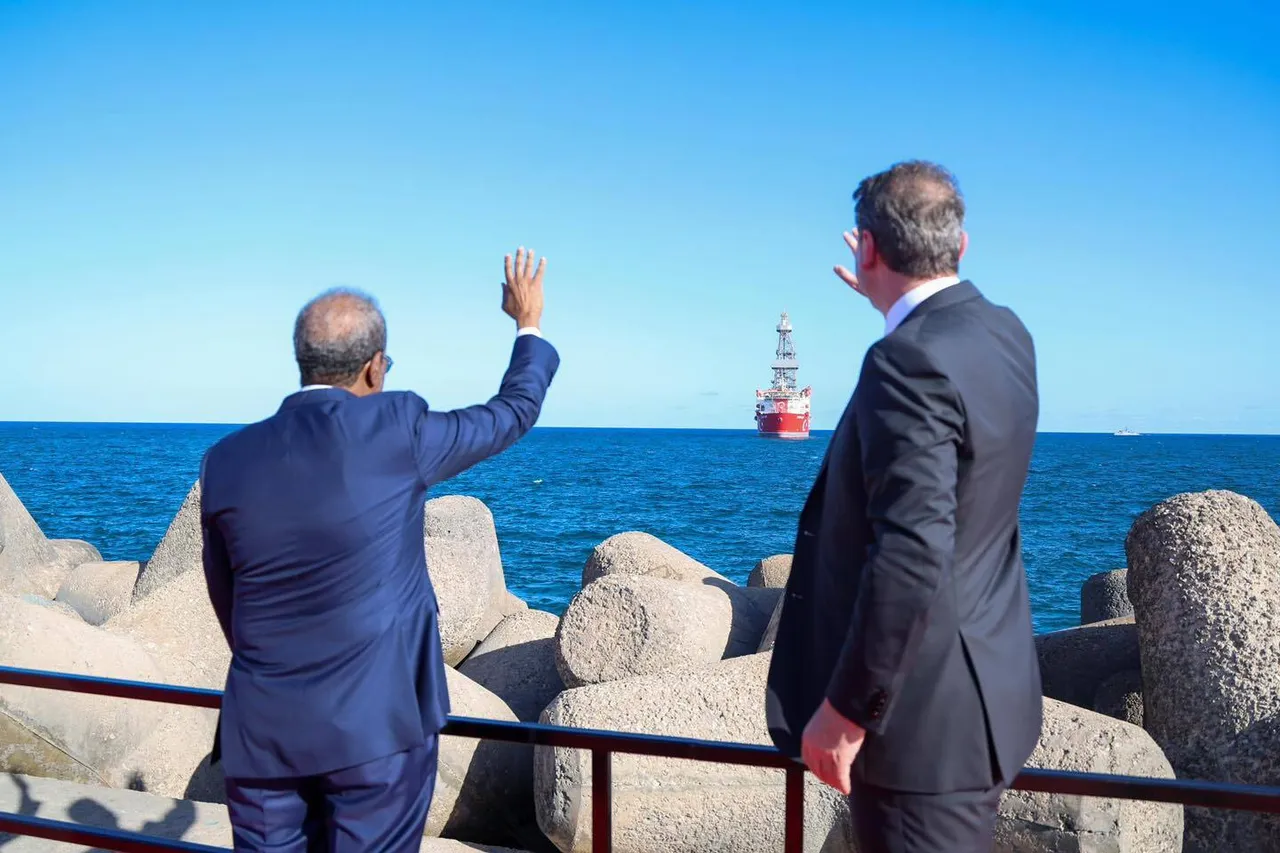
Speaking at the Port of Mogadishu during the launch of the drilling ship Çağrı Bey, Mohamud framed the moment as the culmination of a decade-long partnership with Türkiye, rooted in early engagement when Somalia remained largely isolated from the international system.
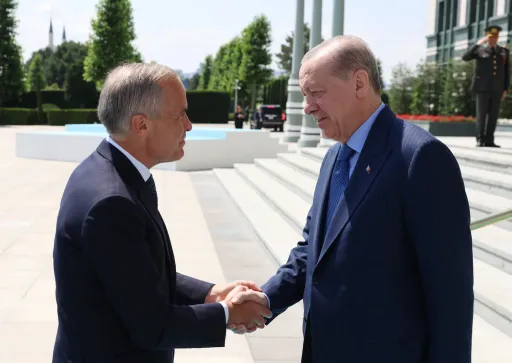
“Not every country is like Türkiye, and not every leader is like Recep Tayyip Erdogan,” Mohamud said, blending diplomacy with a pointed reflection on how different partners have approached Somalia over the years.
The Somali president recalled Erdogan’s historic visit to Somalia in 2011, at a time when famine, conflict, and insecurity had pushed the country to the margins of global engagement.
That visit, widely seen as symbolic at the time, marked the beginning of a stronger relationship that has since evolved into one of the most visible partnerships on the African continent.
Over the past decade, Türkiye has expanded its role across humanitarian assistance, infrastructure development, education, and security cooperation.
‘Unlocking resources’
Turkish firms have helped manage key assets, while government institutions have supported state building efforts.
The move into offshore energy exploration represents a new and more commercially driven phase of that relationship.
The deployment of the Çağrı Bey follows years of seismic exploration aimed at mapping Somalia’s offshore hydrocarbon potential.
Somali officials now describe the effort as entering the second phase of a three-stage process: exploration, drilling, and eventual production.
“We began oil exploration in 2013,” Mohamud said. “Since then, we have faced pressure, discouragement, and attempts to derail the process through corruption and improper agreements.”
Those setbacks slowed progress in a country long believed to hold significant untapped reserves.
Renewed momentum, supported in part by Türkiye’s investment and technical capacity, has revived expectations that Somalia could join the ranks of energy producing nations.
“The results of earlier surveys have brought us here today,” the president said. “The arrival of the Çağrı Bey marks the beginning of drilling and the unlocking of Somalia’s resources, God willing.”
Officials suggest that if operations proceed as planned, the transition to production could follow within months, completing what Mohamud described as a long and difficult journey.
The scale of the project is considerable, involving hundreds of millions of dollars in investment, advanced offshore technology, and complex logistics.
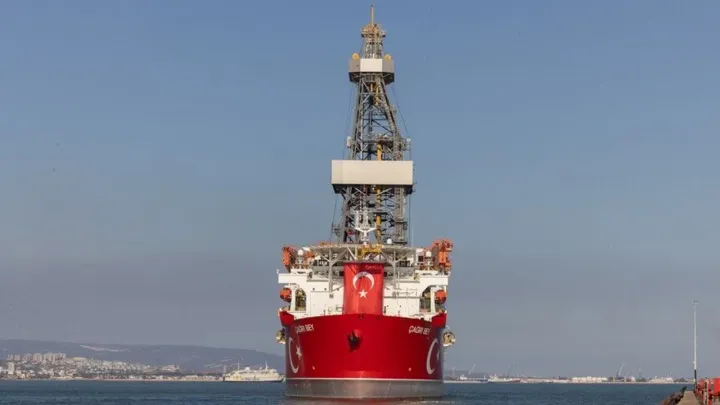
It also reflects a willingness by Türkiye to operate in an environment that many international investors still view as high risk.
“Türkiye has chosen to proceed with major investment, advanced technology, and high-risk operations in an environment some describe as uncertain,” Mohamud said.


‘We are grateful’
Somalia continues to navigate security challenges and institutional rebuilding, though the government points to progress in weakening terrorist groups and expanding state authority. For investors, these dynamics present both opportunity and risk.
The president acknowledged that oil development itself carries inherent dangers, describing it as a double-edged sword.
“Oil can bring prosperity, but it can also bring instability if mismanaged,” he said, pledging that the federal government would ensure transparency, accountability, and equitable distribution of benefits.
At the heart of Mohamud’s message was a shift in Somalia’s national trajectory, from dependency on external aid to self-determination driven by resource development.
“Many countries have supported us during times of crisis, and we are grateful,” he said. “But the undeniable truth remains: no one else will develop Somalia’s oil resources for us.”
He spoke candidly about the human cost of delayed development, noting that decades of poverty, hunger, and insecurity have persisted even as natural resources remained untapped.
‘Somalia open for business’
“What we are exploring today has been in the ground for millions of years,” he said. “And yet our people have suffered in its absence.”
The president also addressed skepticism surrounding the project, warning against misinformation and resistance rooted in fear of change.
“Throughout history, when societies move toward progress, some resist,” he said, urging citizens to judge developments based on visible outcomes rather than competing narratives.
In a direct appeal to the international business community, Mohamud positioned Somalia as an emerging destination for investment, emphasising ongoing efforts to build legal and institutional frameworks capable of supporting long term partnerships.
“Somalia is open for business,” he said. “We are building systems to protect and support investment.”
He stressed that the country’s natural resources would be treated as a national asset, with benefits shared across regions and communities. “These resources will not divide us. They will uplift us.”
During the occasion, leaders noted that Somalia’s strategic location along key global shipping routes, combined with its resource potential, could strengthen its position within regional and international markets if stability continues to improve.
‘We will contribute to global economy’
Beyond economics, the Somalia-Türkiye partnership reflects shifting dynamics in global diplomacy, where emerging powers are playing a more prominent role in regions once dominated by traditional actors.
Türkiye’s approach, combining state engagement with commercial investment, has helped it secure influence in the Horn of Africa.
For Somalia, the partnership offers both practical benefits and symbolic value, signaling renewed international trust after years of marginalization.
“We are not joining the global economy to receive,” Mohamud said. “We are joining to contribute.”
As drilling begins off Somalia’s coast, expectations are rising not only for commercial success but for a broader transformation of the country’s fortunes. The coming months will test whether early optimism can translate into sustained progress.
“The third step will be a celebration,” Mohamud said. “When we gather again to witness production, we will know that this journey has truly delivered.”
For a nation long defined by conflict and hardship, the success of this venture could mark the beginning of a new chapter, one in which resource wealth supports stability, growth, and a more confident role on the global stage.