 Pauline Odhiambo
The cassava field that once fed Marie Kavira’s five children now lies fallow, a patch of cracked earth bordered by the blackened husks of a village she no longer recognizes.
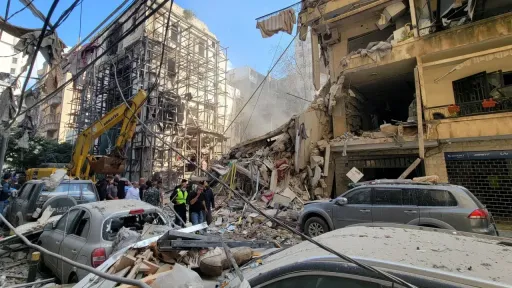
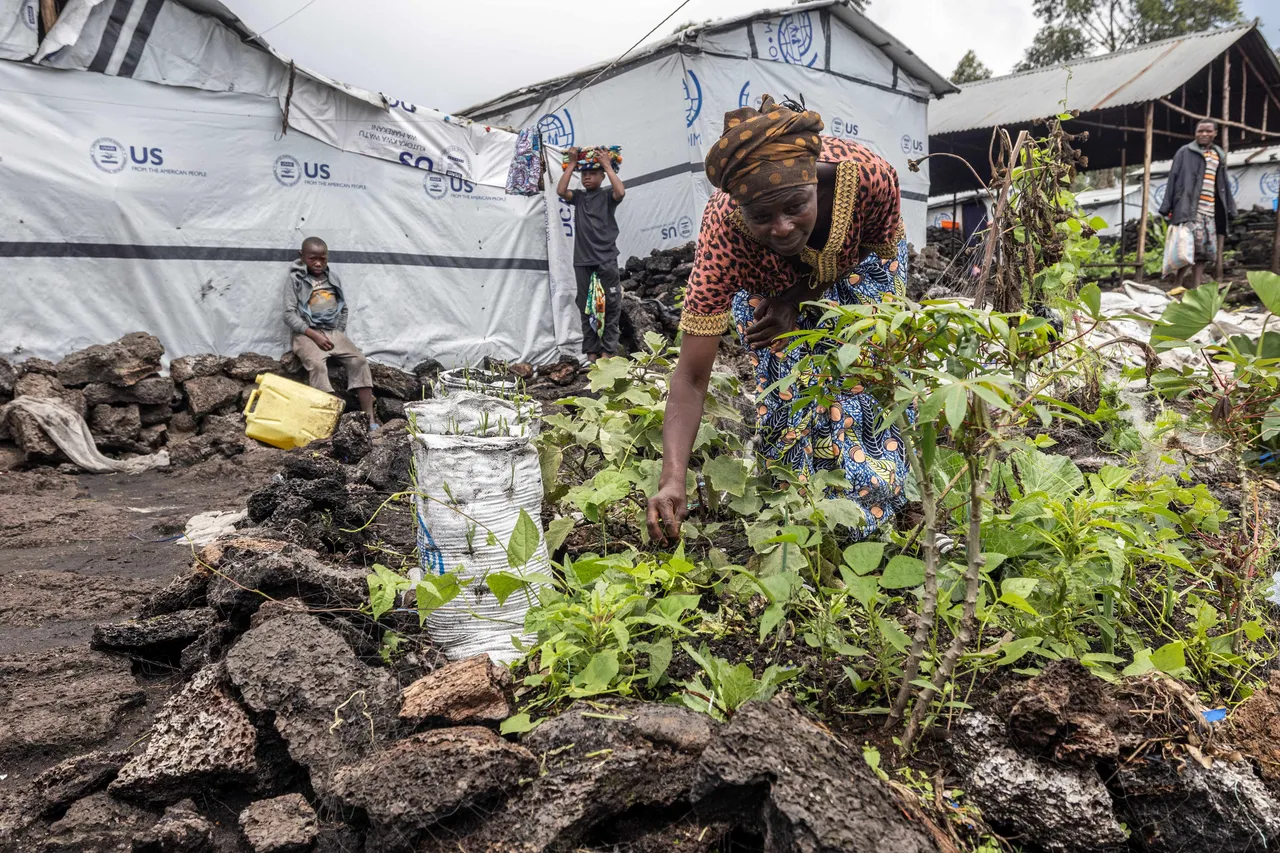
On a humid morning in late May, the 34-year-old widow knelt in the dirt, not to plant but to search. Using a dull machete, she dug where her family’s cassava sprouts used to rise. She found nothing. The tubers had long since rotted underground, abandoned during a night of gunfire and screaming last October, when armed men poured into her village in Ituri’s Djugu territory in the Democratic Republic of Congo (DRC).
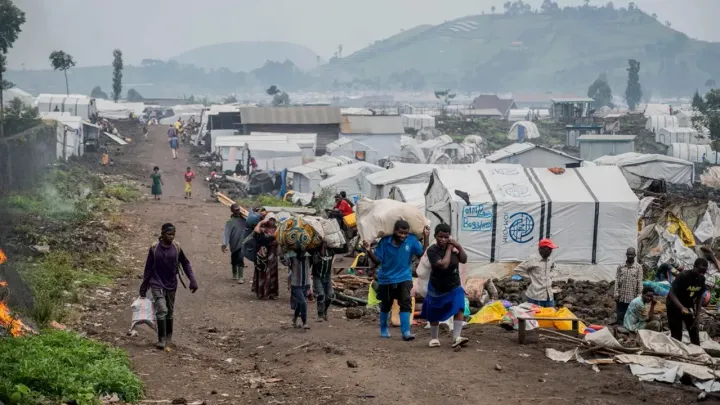
“We ran with only the clothes we were sleeping in,” Kavira tells TRT Afrika, her voice a dry whisper. She now lives in a displacement site on the outskirts of Bunia, a sprawling settlement of tarpaulins and plastic sheeting. “I had saved seeds for the next season. I had them in a sack behind the cooking stones. There was no time.”
That sack—containing cassava cuttings, bean seeds, and a small stash of maize—represented not just a garden but a calendar. In eastern DRC, planting windows are narrow and unforgiving. Miss one, and a family eats air for six months. Miss two, and malnutrition becomes an inheritance.
Kavira has now missed three.
She is not alone. According to a new alert from the Food and Agriculture Organization (FAO) and the World Food Programme (WFP), more than 26.5 million Congolese—nearly one in four—are struggling to meet their most basic food needs. Among them, over 3.6 million are in emergency conditions, a classification just one step removed from famine.
A mother’s math
In the eastern provinces of North Kivu, South Kivu, Ituri, and Tanganyika, conflict has become a grinding, perpetual machine that uproots families, torches farmland, strangles markets, and leaves behind only hunger as a permanent resident.
Kavira’s youngest child, a two-year-old boy named Baraka, sits on her lap as she speaks. The name means “blessing,” but the boy’s body tells a different story. His arms are thin as kindling. His hair has taken on a reddish tint—a classic sign of protein deficiency. His eyes, large and watchful, track a butterfly as it flies over the weeds nearby.
Baraka is among the 4.18 million children under five across DRC who require treatment for acute malnutrition. More than 1.3 million of them, including Baraka, are suffering from severe acute malnutrition—a condition that can kill within weeks if untreated. For pregnant and breastfeeding women, the picture is no less dire: over 1.5 million are projected to be acutely malnourished, a crisis that perpetuates itself as malnourished mothers give birth to underweight infants who lack the strength to nurse.
“Last month, I watched a neighbor’s baby die,” Kavira said quietly. “The mother had no milk. There is no formula here. The baby was seven months old and weighed less than when he was born. We buried him under the mango tree.”
She paused, her hand resting on Baraka’s head. “I look at my son and I wonder: whose turn is it next?”
‘Famine food’
At the displacement site, families receive a monthly ration from WFP—when supplies last. This month, the ration arrived three weeks late and was half the usual size. WFP reports that between January and March 2026, just 389,000 children and mothers received nutrition assistance in the eastern provinces, a fraction of those in need. The agency faces a $214 million funding shortfall through October, forcing what officials describe as “difficult prioritization decisions”—a diplomatic way of saying that some families will receive nothing.
Kavira has learned to stretch a cup of maize flour across three days. She boils water with wild leaves she gathers from the roadside, leaves that her grandmother would have called “famine food.” They cause diarrhea in the children, but diarrhea is preferable to the hollow ache of an empty stomach.
“I used to be a farmer,” she said. “I understood the land. I knew when to plant, when to weed, when to harvest. Now I know only how to wait.”
Two hundred kilometers south, in the hills of Tanganyika province, a different kind of waiting unfolds.
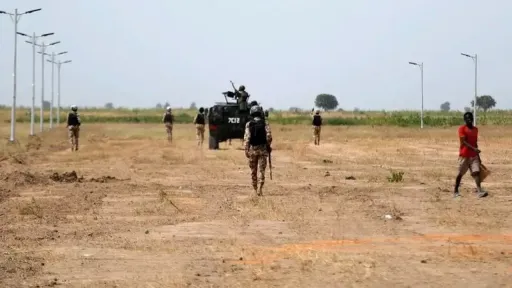
Justin Mwabila, 47, still has his fields—barely. His village, a cluster of mud-brick homes near the shores of Lake Tanganyika, has been raided four times in the past year by militias fighting over grazing land and mineral rights. Each time, Mwabila gathered his family and fled into the bush for days or weeks. Each time, he returned to find his goats gone, his chicken coop empty, and his cassava plants trampled.
But he keeps planting. It is an act of defiance, or perhaps desperation.
“The last time I returned, I found that the fighting had come through during the germination period,” he said, standing in a field where stunted cassava plants struggle to reach knee height. “The soldiers marched right through the middle. What they didn’t crush, they ate. They pulled up the young tubers like carrots and ate them raw.”







Planting season
Mwabila is one of the more fortunate ones: he still has access to land, even if the land is increasingly uncooperative. Across DRC, more than 7.8 million people are internally displaced, many of whom have lost everything—homes, fields, livestock, and the accumulated knowledge of generations. For them, farming is not a choice but a memory.
For those who remain on their land, the challenges multiply. Persistently high food prices have made basic staples unaffordable. A basket of cassava flour that cost 5,000 Congolese francs six months ago now sells for 12,000 francs—when it is available at all. Supply chains, already fragile, have been severed by roadblocks, checkpoints, and insecurity. Cholera has swept through displacement camps. Measles has returned to villages where vaccination campaigns were interrupted. Mpox, once a rare zoonotic spillover, is now a recurring threat.
“Every missed agricultural season increases dependence on humanitarian assistance,” states Athman Mravili, a representative with the Food and Agriculture Organisation (FAO). “When families receive seeds, tools, and timely livelihood support, they can produce food within weeks, protect their dignity, and avoid falling deeper into hunger. But this support must arrive before planting windows close.”
Mwabila knows the window intimately. In Tanganyika, the main planting season for maize and beans begins in September and closes by November. The secondary season, for cassava and sweet potatoes, opens in February and shuts in April. Miss those windows—by fleeing violence, by waiting for seeds that never arrive, by saving money for a bribe at a militia checkpoint instead of buying inputs—and the entire year is lost.
This year, Mwabila almost missed the February window. He had no seeds. The local market was empty because the road from Kalemie had been cut by fighting. For three weeks, he watched the rain fall on his empty field and felt something inside him break.
Then a local aid group arrived with a distribution from FAO. Using a $10 million allocation from the DRC Humanitarian Fund, FAO has so far reached 55,500 crisis-affected families in North Kivu, South Kivu, Ituri, and Tanganyika with seeds, tools, and cash-based assistance. Mwabila received a small sack of maize seed, three hoes, and a cash transfer of 40,000 francs—about $15.
Life-saving seeds
“I fell to my knees when they gave me the seeds,” he said. “I am not a religious man, but I wept. My wife thought I had been hurt. I told her: ‘No. I have been saved.’”
He planted two weeks late, and the yield will be poor—perhaps a third of what it should be. But it will be something. His children will eat. His youngest, a girl named Neema who turned three last month, will not develop the hollow cheeks that have become the signature of this crisis.
“If the seeds had arrived two weeks later, I would have waited until September,” Mwabila said. “That is six more months of hunger. Six more months of watching my children fade. Two weeks. That is the difference between life and death here.”

Since January 2026, the World Food Programme’s emergency food and cash assistance has reached nearly 1.3 million people in the most affected eastern provinces. That number sounds large until it is placed against the scale of the crisis: 26.5 million people facing crisis-level hunger or worse. Less than 5 percent of those in need are receiving assistance.
“Far from easing, the crisis has become entrenched and increasingly complex, trapping millions of vulnerable households in a cycle of persistent need,” says David Stevenson, WFP Representative. “Humanitarian assistance is a lifeline, but it must be scaled up urgently to match the magnitude of needs. Beyond emergency support, sustained investment in resilient food systems and integrated solutions is essential to help communities withstand shocks and move toward recovery.”
But recovery, in the eastern DRC, feels like a word from another language. The conflict that drives this crisis shows no sign of abating. Armed groups proliferate, fragment, and reform with dizzying speed. Peace talks stall. Ceasefires collapse. And through it all, the planting windows open and close with the cold indifference of the seasons.
Back in Bunia, Marie Kavira has not yet given up. She heard about a seed distribution happening next week, organized by a local partner of FAO. She has walked three hours to register her name. She will walk three hours back. If she receives seeds—cassava cuttings, bean seeds, a few hoes—she will find a small plot of land near the displacement camp and plant them. The camp authorities have allowed families to use marginal land along the perimeter. It is not good soil. It has been exhausted by repeated planting. But it is something.
“I dream of cassava,” she says. “I dream of pulling a tuber from the ground, washing it in the river, roasting it over a fire, and feeding my children until they say ‘Mama, I am full.’ Do you know how long it has been since I heard those words?”
She looked down at Baraka, who had fallen asleep against her chest. His breathing was shallow. His ribs rose and fell like a small, fragile bellows.
“I will plant whatever they give me,” she said. “I will guard it with my life. And if the soldiers come again, I will run with the seeds in my hands. Because as long as I have seeds, I have a reason to live.”