 Pauline Odhiambo
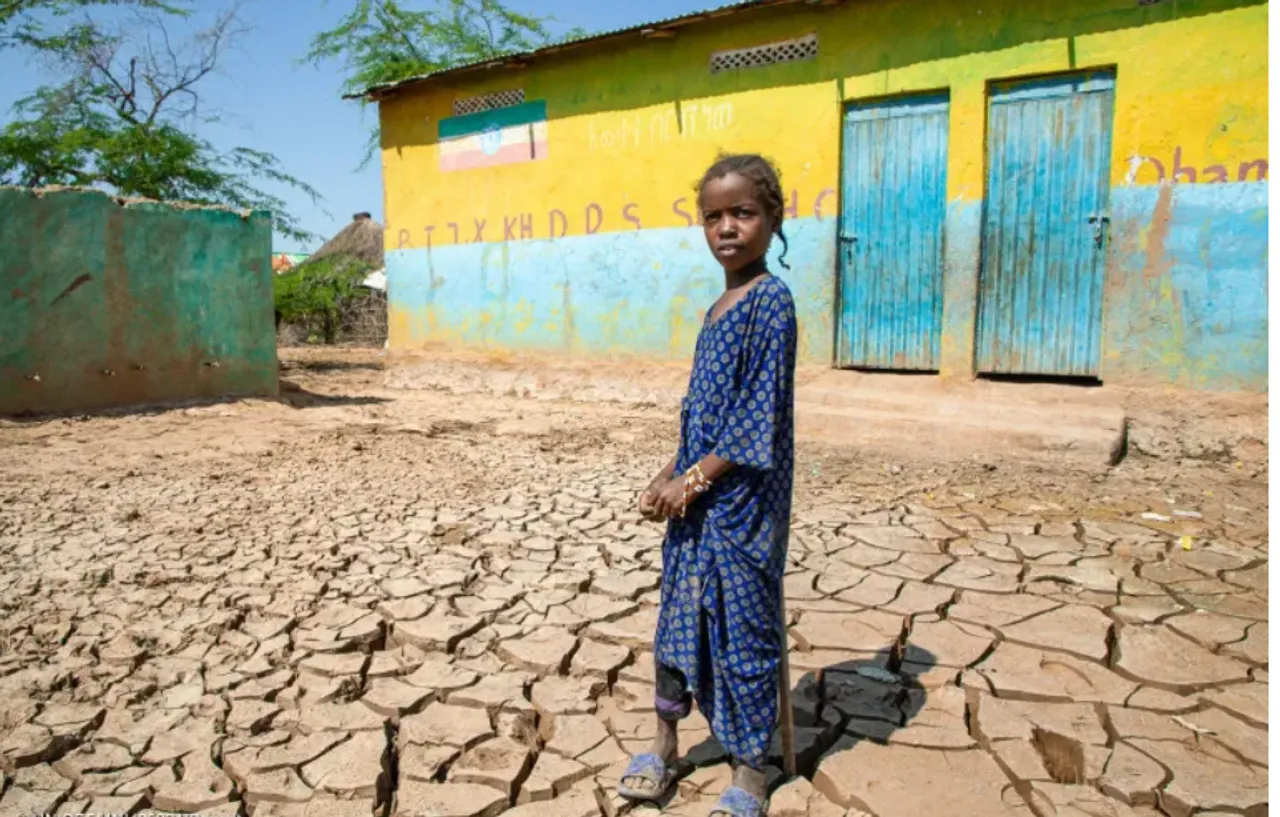
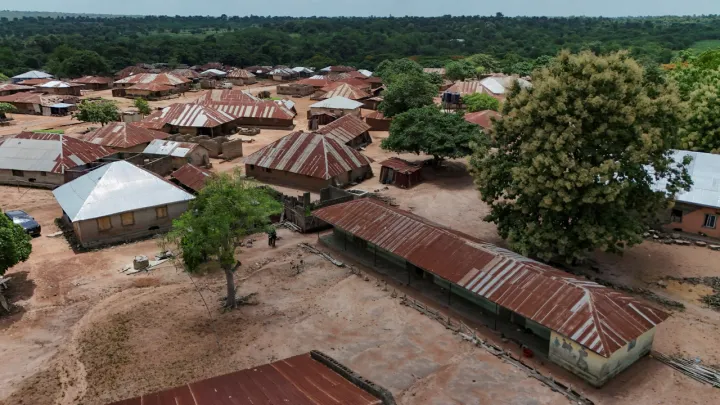
In the village of Baidoa, Somalia, 13-year-old Amina Hassan remembers when the rains used to come like clockwork. Her grandmother would point to the sky and predict the seasons with uncanny accuracy—when to plant, when to harvest, when to celebrate. But those predictions have faded into folklore.
Last year, Amina watched her family's livestock—their entire savings—perish during the worst drought in 40 years. Then came the floods, washing away what little remained of their crops and contaminating the only well within walking distance. Her younger brother, only four, spent three weeks in a makeshift clinic battling waterborne disease.
"When the water is gone, we walk for hours," Amina quietly tells TRT Afrika, her voice barely carrying over the dry wind. "When the water comes, it brings sickness. Either way, we lose."
Amina is not alone. According to UNICEF's Children's Climate Risk Report 2026, released on June 16, the Day of the African Child, she is one of over 65 million children across Eastern and Southern Africa—nearly one in four—exposed to three or more overlapping climate hazards.
In Somalia, children face some of the highest overall exposure to multiple climate threats globally: droughts, fires, floods, and tropical storms all converging on communities already stretched to breaking point.
Overlapping hazards
Six hundred kilometres to the south, across the Mozambique Channel, a different story unfolds in the coastal village of Anakao, Madagascar. Fifteen-year-old Tantely Rakotoarimanana loves school—specifically, mathematics. His dream is to become an engineer and build bridges that won't wash away.
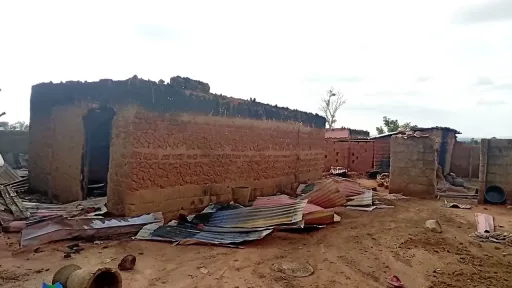
But his classroom’s roof is still leaky in several spots after Cyclone Batsirai, which made landfall in 2022, tore through the coastal community with winds exceeding 200 kilometres per hour. The storm destroyed not only the school but also the health clinic and the village's only desalination plant. Six months later, Tantely studies under a baobab tree, his textbooks carefully wrapped in plastic to protect them from the unpredictable rains.
"Sometimes I read by moonlight because we have no electricity," Tantely explains. "I try to remember everything the teacher says because I never know when the school will be fixed. Or when the next storm will come."
Madagascar, like Somalia, ranks among the countries with the highest exposure to multiple climate hazards. Children here face a relentless cycle of drought, cyclones, and flooding. The report's advanced geospatial analysis, mapping hazards at resolutions as small as 100 square metres, reveals the intensity of overlapping threats that are overwhelming essential services.


Child rights crises
The patterns across both countries reveal a devastating truth. When climate disasters strike, the impact multiplies. Water systems fail. Schools close. Clinics are damaged. In 2024, one in three people across the region still lacked at least basic drinking water, while two in three lacked basic sanitation and hygiene services. These are not mere statistics—they are the foundations of childhood erased.
Etleva Kadilli, UNICEF Regional Director for Eastern and Southern Africa, puts it bluntly: "On the Day of the African Child, this report is a timely reminder that the climate crisis is increasingly becoming a child rights crisis. When climate disasters strike, the impact multiplies. Water systems fail. Schools close. Clinics are damaged. This is how inequality deepens and children's futures are put at risk."
The stakes are clear. Without urgent reductions in greenhouse gas emissions, climate hazards will become more frequent and severe, placing even greater strain on public budgets and threatening children's survival, development, and future opportunities.
But as the African Union marks 2026 as the Year of Water and Sanitation, there are pathways forward.
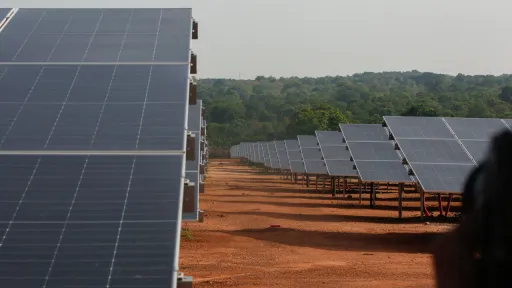
The report underscores that climate-resilient water and sanitation services—flood-protected infrastructure, diversified water sources, and solar-powered pumping—can keep schools, health facilities, and communities functioning during climate shocks. These are not luxuries, Kadilli insists: "They are a lifeline for children's health, learning and future opportunities."
‘We can survive’
Back in Baidoa, Amina now attends a UNICEF-supported temporary learning space equipped with a solar-powered water purification system. It's not a permanent solution, but it's a start. She has become something of an activist among her peers, teaching younger children about climate adaptation—how to conserve water, plant drought-resistant crops, and recognise early warning signs of extreme weather.
"We cannot stop the storms or the heat," she admits. "But we can prepare. We can survive. And maybe one day, the world will listen."
As the report calls for collective action—prioritising children in climate adaptation, directing climate finance to where risks are highest, and leveraging emerging mechanisms like the Fund for Responding to Loss and Damage—the voices of those most affected remain the most compelling.
Perhaps Tantely, studying under his baobab tree, offers the clearest vision. "I still want to be an engineer," he says, looking towards the ocean. "But now I know what kind. I will build things that last. Things that protect. Because if we don't build for the future, who will?"