By Ahmet Bayram
IZMIR, Türkiye — Long before the Tuskegee Airmen took to the skies during World War II, an Ottoman officer of African descent was already flying military aircraft.
Widely regarded as history's first Black military pilot, Ahmet Ali Celikten fought in World War I, joined Türkiye's War of Independence and became one of the country's earliest military aviators.
More than half a century after his death, his family says the decorated officer deserves greater recognition in his hometown of Izmir.
Born in Izmir in 1883 to a family of Nigerian descent, Celikten enrolled at the Haddehane School, a naval technical school, in 1904 with the goal of becoming a naval captain. He graduated in 1908 with the rank of first lieutenant and joined the Ottoman Navy.
Recognized for his aptitude in aviation, he began training at the Naval Aviation School established in Istanbul's Yesilkoy district in 1914. Two years later, he earned his pilot's diploma and became a military aviator.
During World War I, Celikten carried out missions over Gallipoli, Konya and Istanbul. In recognition of his achievements, the Ottoman government sent him to Germany in 1917 to further develop his aviation expertise.
Türkiye's War of Independence
Following the end of World War I, Celikten joined the National Struggle led by Mustafa Kemal Ataturk, founder of the modern-day Turkish Republic.
Flying from Amasya, he joined the nationalist movement based in Ankara and later volunteered for duty at the Konya Military Air Base, contributing to the country's fight for independence.
After the founding of the Republic, he was appointed as a flight instructor at the Izmir Air School in 1924 before taking up a post at the Air Undersecretariat in 1928.
For his bravery during Türkiye's War of Independence, Celikten was awarded the Independence Medal. He retired with the rank of colonel in 1948 and died in Izmir on June 24, 1969.
Legacy




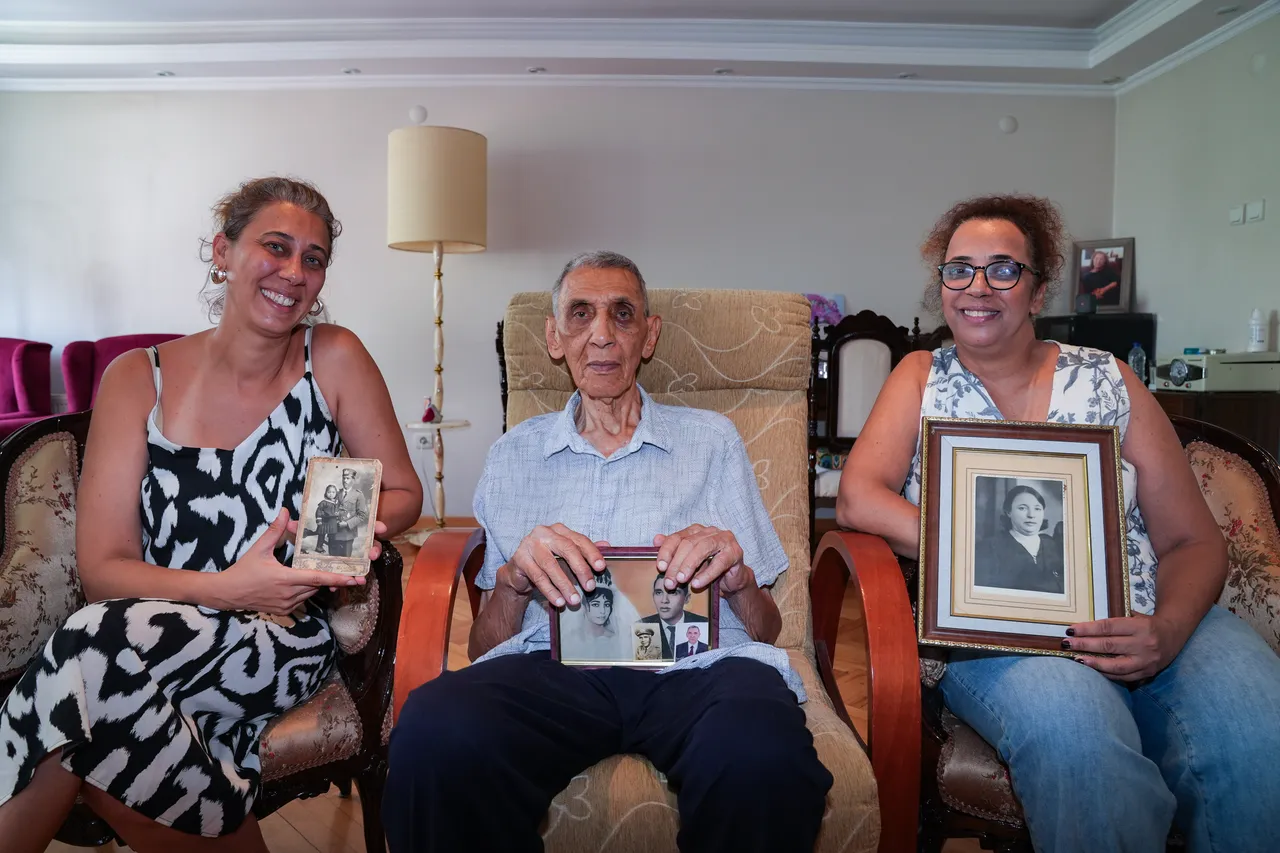
In an interview with Anadolu, Celikten's 91-year-old son, retired air force noncommissioned officer Yilmaz Celikten, described his father as a disciplined and authoritative soldier who remained humble despite his achievements.
He said his father was respected wherever he served, never sought public recognition and remained deeply loyal to the Turkish nation.
Remembering his father's passion for aviation, Yilmaz Celikten said he always took pride in his accomplishments in Germany and in the critical missions he carried out during Türkiye's War of Independence and the defense of Izmir.
He also recalled that his parents' marriage became possible because of his father's wartime heroism.
"At the time, military officers had to meet rank requirements before they could marry. My father wanted to marry my mother, Hatice Hanım, whose family had migrated from Preveza, but his rank was not high enough."
"After Ahmet Ali Bey shot down a Greek aircraft that had been harassing the skies over Izmir, he became a hero among the public. People carried him on their shoulders. Thanks to that public support, the obstacle was removed and he was able to marry my mother. We hope my father's name will continue to live on in this city," he said.
Celikten's granddaughter, Anda Ulku Celikten, said she wanted future generations to know about her grandfather's achievements.
"We want the generations that come after us to know him as well. I would love to see a street named after him or a bust erected in his honor so that he will always be remembered," she said.
Celikten’s story to the world
Associate Professor Halim Gencoglu of the Faculty of Political Science at the University of the Witwatersrand in South Africa, who has researched Celikten's life, said he first encountered the pilot while studying the history of colonialism.
He described Celikten as a significant figure in global military aviation history, adding that his career demonstrated the Ottoman Empire's willingness to promote people based on merit rather than race.
"In South Africa, students struggle to comprehend that a Black pilot was trained in the late Ottoman military. They ask whether there could really have been an African Black military pilot at that time because it does not fit the history they know."
"His story should first be told in his hometown of Izmir and across Türkiye, as well as through Turkish embassies in Africa and other diplomatic initiatives. A statue of him should definitely be erected in Izmir," he said.