The French Parliament has passed a bill on the repatriation of the remains of indigenous peoples, which were brought from the Americas to France in the late 19th century to be exhibited in ethnographic gardens, but who subsequently died due to poor conditions and have since been held in museums in Paris.
Under this historic decision, six bodies and eight casts belonging to the Kalina and Arawak peoples of the Americas, currently held at the National Museum of Natural History in Paris, will be returned to French Guiana, their country of origin.
These individuals, who were forcibly brought to Europe at the end of the 19th century, lost their lives whilst on display in human zoos, and their remains were incorporated into scientific collections and held in France for many years.
Human zoos were ethnological exhibitions that were popular in the Western world from the late 19th century to the mid 20th century and constitute one of the greatest racist shameful episodes in the history of colonialism.
In this practice, indigenous peoples from Africa, Asia and the Americas were abducted or forcibly brought to European and American cities, where they were exhibited to the public in cages like those in zoos or in fenced-off artificial villages.
Manufacturing racial superiority
Human zoos were, in fact, a propaganda tool used by Western colonial powers to consolidate their economic, cultural and ideological dominance.
Through these exhibitions, Western society contrasted its own ‘civilised’ world with the ‘primitive’ or ‘savage’ way of life of the peoples on display, thereby perpetuating the myth of the superiority of the White Man.
This situation also laid the groundwork for morally legitimising colonialism. For example, it enabled the massacres and plundering of resources in Africa to be presented to the Western public as ‘humanitarian aid’ and ‘modernisation’.
The famous poem “The White Man’s Burden” (1899) of Rudyard Kipling was a summary of this ideological propaganda. According to Kipling, it was a sacred duty, entrusted to the white man by God, to save the natives from savagery by educating them.
Some 19th century anthropologists and scientists, such as Samuel George Morton and Ernst Haeckel, studied these people by labelling them the ‘missing link in evolution’ or an ‘inferior race’, and sought to fabricate pseudo-scientific evidence to support their racist theories.
When propaganda became “science”
Black people, Native Americans and Asians, on the other hand, were positioned on the lower rungs of this evolutionary ladder, as “a transitional form between man and ape” or “children in adult bodies”. This was precisely the sordid ‘logic’ behind the practice of placing Black people in the same cages as apes in human zoos.
Just as the minerals plundered from the colonies, the people of those regions were also turned into commodities, generating enormous ticket revenues.
Indeed, the owners of the human zoos established in Paris, Hamburg, Stuttgart, Munich, the Bronx, St Louis, Antwerp, Barcelona, London, Milan, Warsaw, Basel and New York became millionaires. Human traffickers engaged in the trade of human beings continue to do so today through various means.
Carl Hagenback, a wildlife trader in Hamburg, was one of the first to organise ‘savage human’ exhibitions, bringing in Nubians, Eskimos and Patagonians from the 1870’s onwards.
He was historically credited with inventing the modern human zoo—known in Germany as Völkerschauen ("ethnological expositions" or "ethnic shows"). His legacy is deeply intertwined with the institutionalization of scientific racism and colonial propaganda.
Empire, entertainment and profit








The 1889 Paris World’s Fair (Exposition Universelle) was one of the greatest exhibitions of colonialist propaganda and mass ethnology in human history.
Set up at the very heart of a celebration themed around ‘liberty and equality’—marking the centenary of the French Revolution—the ‘human zoos’ laid bare the colonialist identity of the European powers of the time.
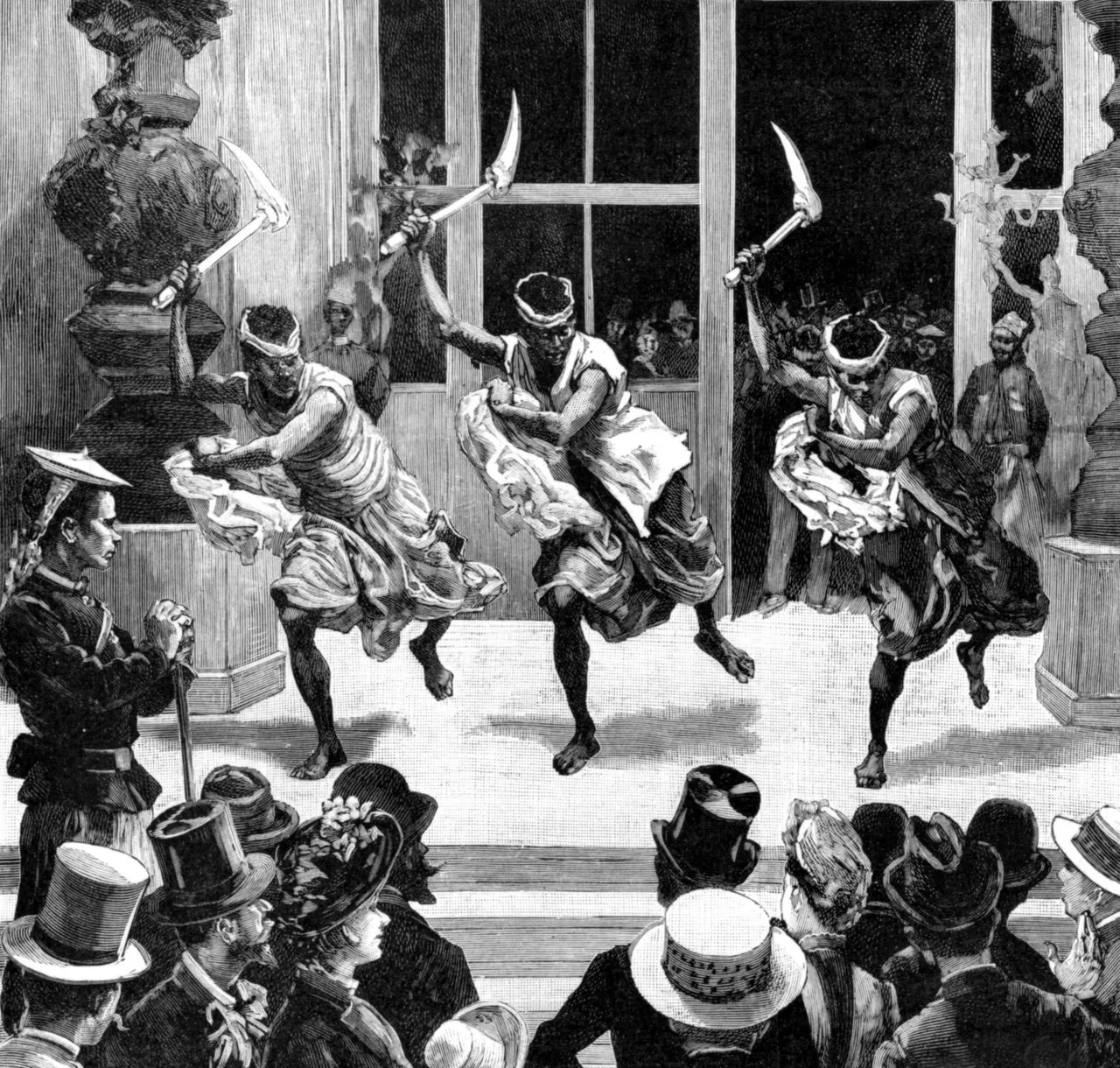
At this colossal exhibition, a ‘Negro Village’ (Village Nègre) was set up in the shadow of the Eiffel Tower. Here, over 400 indigenous people brought from the colonies were displayed to millions of visitors, half-naked and confined in cage-like enclosures.
As part of the 1907 Paris Colonial Exhibition, six different ‘indigenous villages’ were temporarily constructed in the Forest of Vincennes, east of Paris, to demonstrate the power of the colonial empire.
People brought from regions such as Madagascar, Indochina, the Congo and Sudan were forced to live in these artificial villages and perform staged ceremonies.
Dozens of indigenous people, who had no protection against the autumnal cold of Paris or the foreign diseases they had contracted in Europe (such as tuberculosis and smallpox), lost their lives during the exhibition. Some of the deceased were buried directly in this garden.
The exhibition perfected the concept of ‘displaying humans and animals in the same natural setting’, developed by the wildlife trader Carl Hagenbeck. The addition of ten Indian elephants and camels, brought from the colonies, further reinforced the perception of ‘wild nature’.
The emerging cinema technology of the time depicted these people as colonial savages. Visitors to Vincennes were able to watch these ‘exotic creatures’ live on screen and even throw food at them.
The 1931 International Colonial Exhibition, meanwhile, marked the high point of the ‘human zoos’ in France.
The exhibition, which lasted six months, was visited by approximately 33 million people. To satisfy visitors’ desire to see ‘savage people’, the organisers forced the Kanaks, indigenous people of New Caledonia, to eat raw meat whilst confined in cages.
The beginning of resistance
Whilst the 1931 exhibition was underway, intellectuals and artists in France, including figures such as Louis Aragon, André Breton and Paul Éluard, launched a major campaign against this barbarity. They distributed leaflets entitled “Ne visitez pas l’Exposition Coloniale” (Do Not Visit the Colonial Exhibition).
It was precisely at this stage—when these pseudo-scientific theories were being brought to the public—that ‘human zoos’ played a very important role.
When an ordinary European saw a native, half-naked behind a cage, forced to eat raw meat and performing primitive dances, they believed with their own eyes in the truth of the propaganda they had read in the newspapers: ‘We are superior; we must civilise them’.
These exhibitions served as an excellent form of mass opium, silencing the voices of Western dissidents who questioned the legitimacy of the wealth derived from the colonies and the military expenditure incurred.
Human zoos lost their popularity after the 1930’s, with the gradual awakening of anti-racist consciousness and the start of the colonies’ struggles for independence. However, the last vestige of this shame extends as far as the final ‘Congo village’ exhibition set up at the 1958 Brussels World Fair. Today, modern anthropology and historical studies regard this period as one of colonialism’s darkest cultural legacies.
The author, Ali BİLGENOĞLU is an Associate Professor at theDepartment of International Relations, Faculty of Political Sciences, Aydın Adnan Menderes University, Türkiye.
Disclaimer: The views expressed by the author do not necessarily reflect the opinions, viewpoints and editorial policies of TRT Afrika.