 Eddie Akatch
For any footballer, pulling on their country's jersey is the greatest honour. A sense of pride, accomplishment, and community, representing something bigger than yourself on the world stage.
But for many, that decision is not as easy as it seems.
We've all seen the headlines. We've all had the debate. France 98, how many of those players could have worn an African shirt? France 2018 trophy win, same conversation, but louder.
At least fifteen players in that World Cup winning squad with African roots. Zidane - Algerian descent. Patrick Vieira - born in Senegal. Pogba - Guinean roots. Kanté - Malian. Mbappé - Cameroonian and Algerian roots.
Germany lift the trophy in 2014 and Jérôme Boateng was in that squad — Ghanaian father. His own brother Kevin-Prince Boateng made the opposite call and suited up for Ghana’s Black Stars. Same family. Different flags.
European trophy cabinets
Africa has been helping to build European trophy cabinets for decades. And for a long time, that was just the way it was.
So how does this actually work? FIFA's eligibility rules — Articles 6 and 7 — state that if you hold more than one nationality, or if a parent or grandparent was born in a country, you can represent that nation at international level. One grandparent is enough to open that door.
The one condition? Once you play a competitive match for a country, you are locked in. That is your flag. But until that moment, the choice is yours.
And a new generation of players is making a very different choice.
Iñaki Williams, born in Bilbao, played Spanish youth football his entire career. In 2022 he looked at his heritage and chose to represent Ghana.
AFCON title




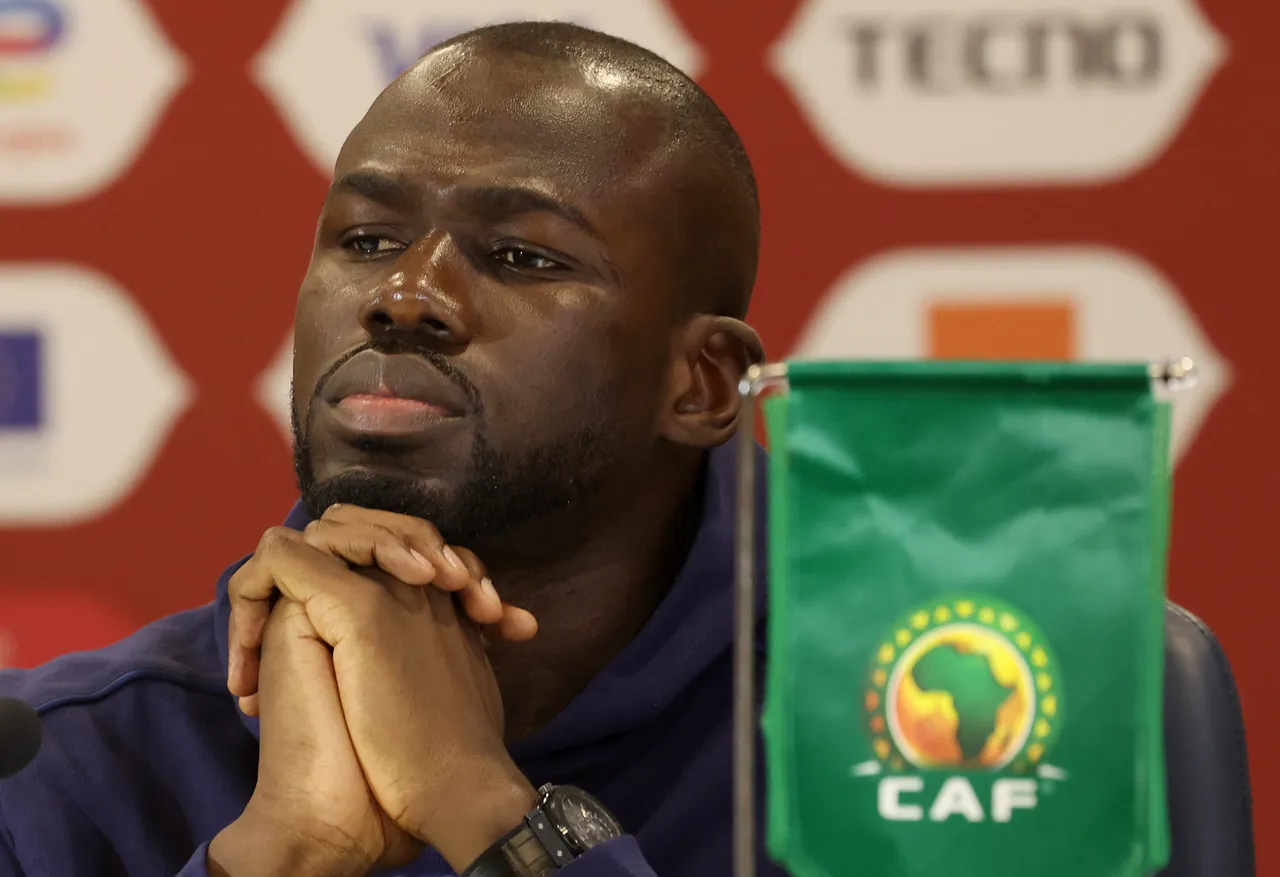
Kalidou Koulibaly, born in France, represented France at Under-20 level. Didier Deschamps, the French football manager himself, came calling for the senior squad. Koulibaly said no, and went on to captain Senegal to an AFCON title instead.
Then there's Brahim Díaz, Real Madrid midfielder. Born in Málaga, full Spanish youth international. Morocco's federation president visited him personally five times in a single season.
In March 2024, Díaz made it official. He chose his grandfather's country, Morocco. Since then, 19 appearances, 12 goals and one of the most exciting players on the continent.
These are not isolated cases. At AFCON 2025, nearly one in three players grew up outside Africa. France alone produced over a hundred of them.
This is bigger than football. A generation that grew up between two worlds is choosing a side. And they are choosing Africa.
Players coming home
Part of it is the football. African teams are stronger than they have ever been. Morocco reached a World Cup semi-final. Ten African nations qualified for 2026, the most in history.
African football is on the rise. But beyond the results African players are not just chasing trophies, they’re coming home.
For years, the story was Africa losing its talent to the world. But that story is being rewritten. And Africa is holding the pen.
In 2026, on the biggest stage in football, you will see players who grew up in Lyon, London, and Amsterdam — pulling on the jerseys of Senegal, Morocco, Ghana and Côte d'Ivoire among others. They had a choice. And they chose Africa.