The sound of gunfire once shaped Somalia’s story. For Iman Elman, it also shaped her family’s destiny.
At just five years old, she lost her father to political violence in Mogadishu. Many years later, instead of staying safely abroad, she returned to the same country and chose a path few expected: she joined the Somali National Army.
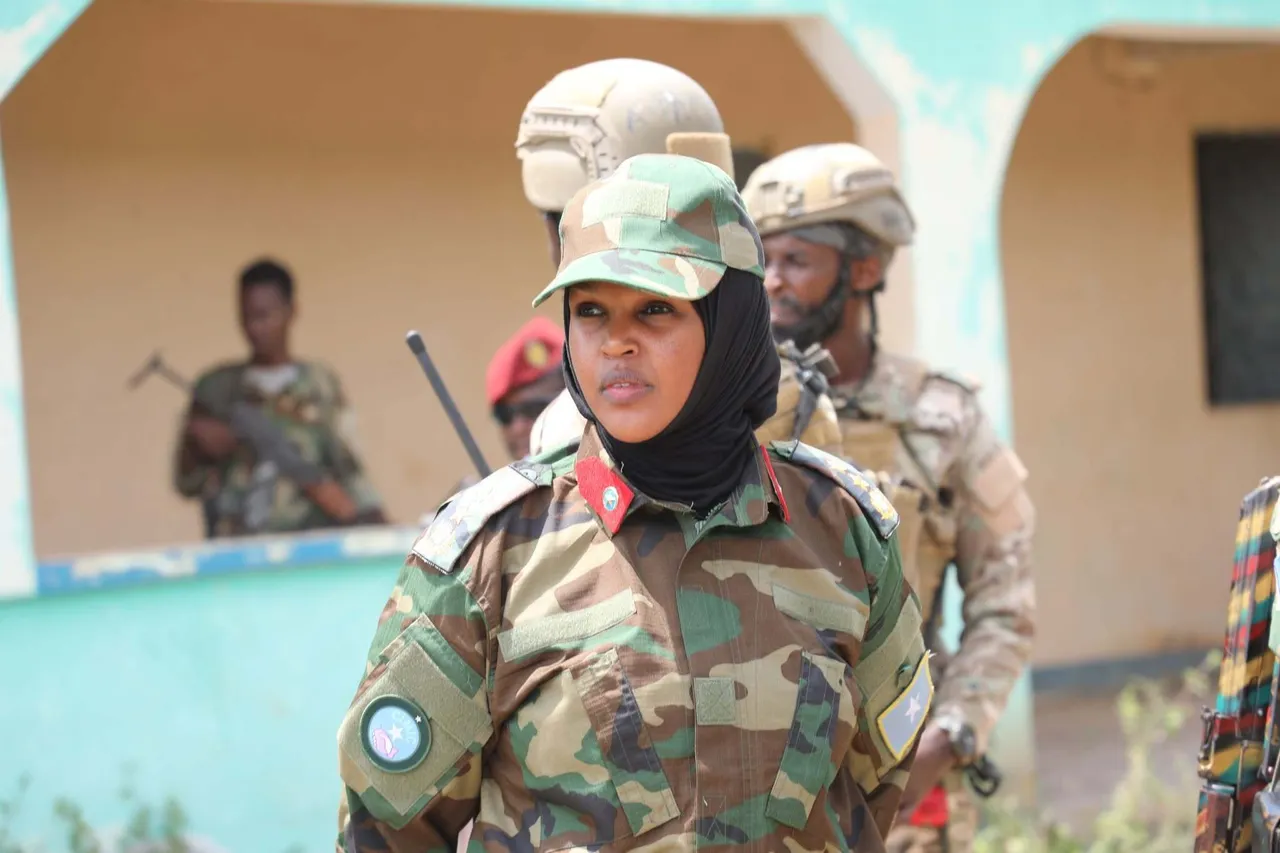
Today, the 34-year-old is one of Somalia’s highest-ranking female military officers and the youngest woman to lead a major department within the armed forces. As head of the Civil-Military Coordination (CIMIC) Directorate, she works at the intersection of security, peacebuilding and community engagement, helping strengthen trust between the military and civilians.
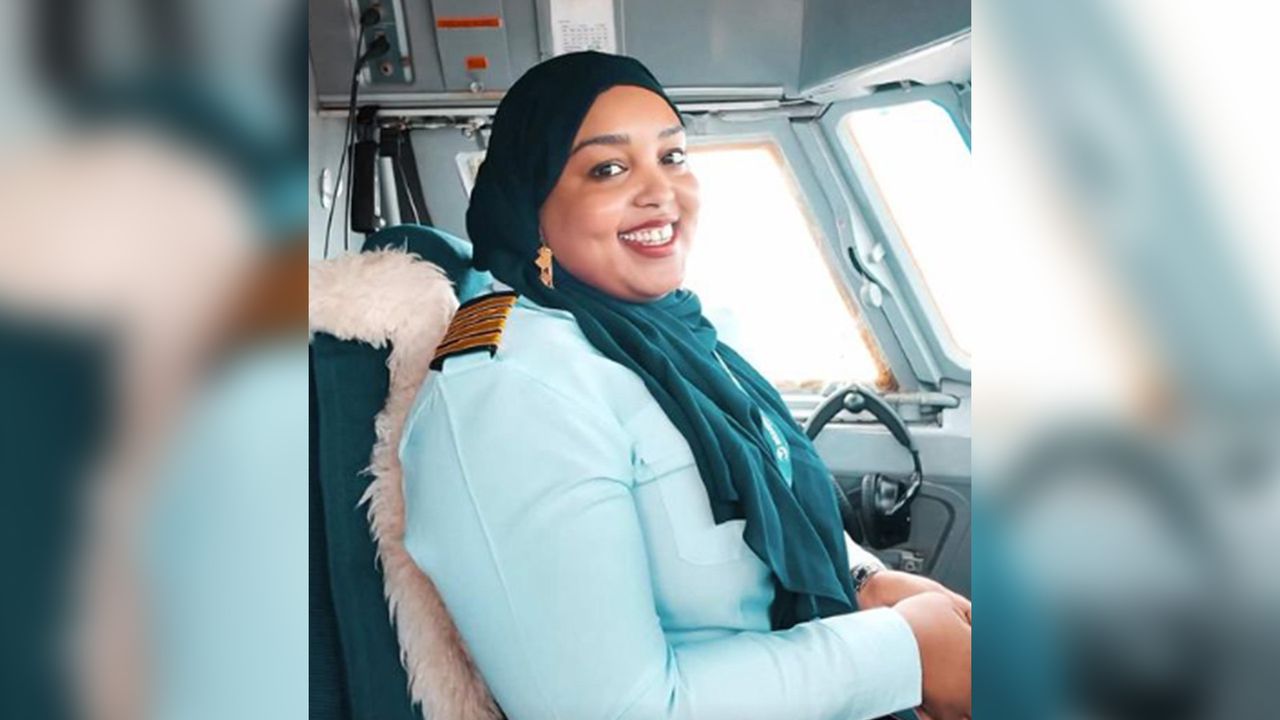
Her journey from refugee child to military commander is not only a personal story of resilience, but also a challenge to long-held assumptions about the role of women in Somalia’s security sector.
“I know many people wonder why I decided to join the army for a country that I had left at such a young age,” she has said.
For Iman, the answer begins with her father.
Carrying an unfinished mission
Iman is the youngest daughter of Elman Ali Ahmed, one of Somalia’s most prominent peace activists.
During the civil war, he campaigned to remove children from armed groups and promoted education, sports and rehabilitation programmes under the slogan: “Put down the gun, pick up the pen.”
His work made him a target. In 1996, he was assassinated in Mogadishu.
After his death, Iman’s mother, Fartuun Adan, raised her and her sisters in Canada, teaching them that courage was not defined by gender.
“She always raised us to know that this isn’t a man’s world,” Iman recalled. “You should never allow someone to lower you or belittle you based on your gender.”
In 2007, Fartuun returned to Somalia and revived her husband’s legacy through the Elman Peace and Human Rights Centre, expanding programmes focused on human rights, youth empowerment and support for survivors of violence.
From volunteer to soldier
While studying at university, Iman began volunteering with the centre, teaching girls and women affected by conflict.
What she saw troubled her. Many had lost confidence after years of insecurity and discrimination.
For Iman, helping them required more than responding to violence after it happened. She wanted to help prevent violence itself.
That conviction led her toward the security sector. In 2011, she made a decision that surprised many around her: she joined the Somali National Army.
At the time, women were a tiny minority in the military, and Somalia was widely regarded as one of the world’s most dangerous places for women.
Friends urged her to join the Canadian military instead. Others suggested she choose a safer desk job. But she insisted on serving Somalia.
“This is my way of giving back to my country,” she said.






Breaking the uniform barrier
Her first battle was not against Al-Shabaab. It was against expectations. When she arrived for military training, she was given two pairs of trousers and told to sew them together into a skirt.
The assumption was that a woman could not wear the same uniform as male soldiers. Iman refused.
She explained that a skirt would be impractical in military operations, especially in armoured vehicles and difficult terrain.
“One pair of trousers will do just fine,” she replied.
It was a small act of defiance, but it symbolised a much larger struggle: proving that women could serve not only behind the scenes, but also as soldiers and leaders.

On the frontline
Iman went on to serve in some of Somalia’s toughest security operations. She spent months deployed alongside hundreds of male soldiers, often as the only woman in her unit.
Resources were limited, conditions were harsh, and she frequently operated in remote conflict-affected areas. She endured cold nights, scarce facilities and long periods without even a change of uniform. Yet the greatest challenge was not only confronting an armed enemy.
“I wasn’t only fighting Al-Shabaab,” she said. “I was also fighting for my own respect within my forces and to be recognised as a female serving her country.”
At first, some soldiers doubted her. Over time, those attitudes began to shift. One commander reportedly told male troops that they should be ashamed because “a girl is moving forward faster than you men.”
Gradually, colleagues who once questioned her presence began defending her as one of their own.
A symbol of change
Iman eventually rose through the ranks and became one of the most senior women in Somalia’s security sector.
Today, she leads the Civil-Military Coordination Directorate, focusing on strategic planning, community relations and cooperation between security institutions and civilians.
Her rise has encouraged more Somali women to consider careers in the armed forces.
When she first joined, women in uniform were rare. Today, a growing number are entering Somalia’s security institutions, inspired by seeing someone like Iman occupy a leadership position.
For her, however, military service has never been only about carrying a weapon. Her father believed education could defeat violence. Her mother turned grief into activism. Iman chose to combine security with peacebuilding.
When she walks through Mogadishu wearing her military uniform and hijab, she is recognised not simply as a woman in the army, but as a commander who helped redefine what leadership can look like in Somalia.
“I feel like I have done my part in paving the way for them,” she says of the young women who followed her into military service.
After decades of conflict, Somalia is still rebuilding. Iman Elman’s story offers a different vision of strength: the courage to serve, the determination to challenge tradition, and the belief that peace can be built from within the very institutions once defined by war.
“Everyone should do their part,” she says. “This is my way of giving back to Somalia.”