Abdirahman Jeylani
For many young Somalis, the dream is remarkably simple: to find meaningful work, support their families and build a future through their own abilities.
Despite the country’s enormous challenges, Somalia’s young population represents one of its greatest sources of potential.
Nearly three-quarters of Somalis are under the age of 30, while around 400,000 young people enter the labour force each year.
This makes skills development and access to decent work not simply economic priorities, but important investments in the country’s long-term stability and prosperity.
Development programmes can make a tangible difference when they connect training with real opportunities in local economies.
The United Nations Development Programme (UNDP), for example, has supported vocational education, employment pathways and livelihoods across Somalia. In one recent initiative, nearly 1,000 young people completed vocational training, with more than 200 subsequently securing employment.

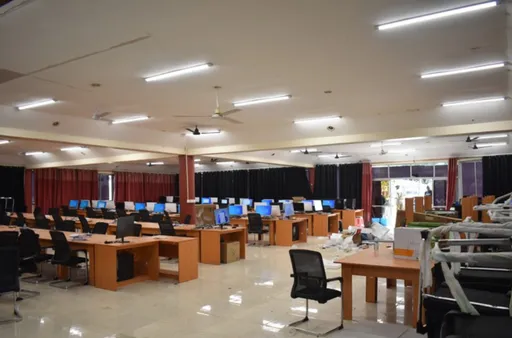
International partners are also contributing to this effort. Türkiye’s development agency, TİKA, has strengthened vocational education in Mogadishu by equipping carpentry and plumbing workshops at the National Skills Development and Vocational Training Institute, helping expand practical training and the skills available to young Somalis.
Against this wider backdrop, Maxamed Cabdirisaaq’s journey offers a particularly human example of what such opportunities can mean.
For Maxamed Cabdirisaaq, work began on the streets of Bosaso with a cloth, a brush and the shoes of passing customers.
He was a teenager who had arrived in the northeastern Somali port city after leaving Mogadishu because of insecurity. He needed an income, and shining shoes was the work he could find.
At the time, Maxamed earned between $3 and $5 a day. Three years later, his working life looks very different.
Now 18, he repairs boats in Bosaso and manages a boat-repair garage. His daily earnings have risen to between $15 and $20, money that helps him support a household of more than seven people.
“I used to earn between $3 and $5 a day as a shoe shiner,” Maxamed said. “Now I earn between $15 and $20 a day.” The change began when he was 15.
Learning a trade
Maxamed was among more than 100 people who received vocational training through a program supported by the United Nations Development Programme in Somalia. The participants were taught practical skills linked to the fishing economy, including fishing, fish trading and boat repair.
For Maxamed, the training offered an alternative to the informal work he had relied on since arriving in Bosaso.
He learned a trade that was closely connected to the city's economy and began working as a boat repairer. Over time, he gained enough experience to take on more responsibility.
The opportunity came when the manager of the garage was away because of illness. Maxamed was asked to take charge temporarily. What happened next surprised the owner.
Nadiifo Saciid Saytuun, one of the trainers who taught Maxamed, said the owner told them the garage had previously generated about $100 a month. While Maxamed was managing it, the monthly income increased to between $200 and $300.
“The owner told us that the garage used to make only $100 a month,” Nadiifo said. “But during the days Maxamed was managing it, it generated between $200 and $300.”
When the former manager returned from illness, he was not given his old position back, Nadiifo said. The owner had come to trust Maxamed and believed he was more honest in managing the business.
For Maxamed, the promotion was another step away from the life he had known as a displaced teenager.




The impact goes beyond one worker
Nadiifo said Maxamed's experience also illustrates how vocational training can have effects beyond its original participants.
The program initially trained about 100 people. Some of those trainees later passed their knowledge to others, expanding the number of people who could benefit from the skills.
Nadiifo estimates that about 300 people have now benefited directly or indirectly from the training.
“We trained 100 people. Those we trained went on to teach others,” she said. “Now the number of people benefiting has reached around 300. This is a major and tangible success.”
The numbers are modest compared with Somalia's broader economic challenges. But behind them are people trying to find ways to work in a country where conflict, displacement and poverty have made stable employment difficult for many young people.
Somalia continues to rely heavily on humanitarian assistance to help people affected by drought, conflict and poverty. Such assistance can be essential during emergencies. But for young people like Maxamed, a different kind of support can have a lasting effect: the chance to learn a skill and use it to earn an income.

A livelihood, not just a paycheck
Maxamed's earnings now carry responsibilities beyond his own needs.
He helps provide for more than seven people, making the difference between $3 a day and as much as $20 a day significant for his household.
His story is not a story of Somalia's economic problems being solved. Nor does one training program erase the obstacles facing millions of young Somalis.
It is instead a story about what can happen when a young person who has been displaced is given a practical skill and an opportunity to use it.
Maxamed came to Bosaso looking for work. His first job was shining shoes.
A few years later, he is repairing boats, managing a garage and helping support a large household.
The change has been measured in dollars, but also in something harder to quantify: the confidence that comes from having a trade, the responsibility of managing other people's work and the possibility of building a future in a city that was once simply a place he came to survive.
A Small Story with a Larger Meaning
Maxamed’s journey is ultimately about more than the difference between earning $3 and $20 a day. It demonstrates how practical skills, trust and opportunity can transform the prospects of a young person who once arrived in Bosaso simply looking for a way to survive.
His progression from shoe shining to boat repair and management also shows the wider value of vocational education: skills can create income, strengthen households and generate knowledge that is passed on to others.
His story does not diminish Somalia’s wider economic and social challenges. Rather, it offers a hopeful reminder that investing in young people can turn potential into livelihoods—and livelihoods into a foundation for a more resilient future.
Disclaimer: The views expressed by the author do not necessarily reflect the opinions, viewpoints and editorial policies of TRT Afrika.