 Emmanuel Oduor
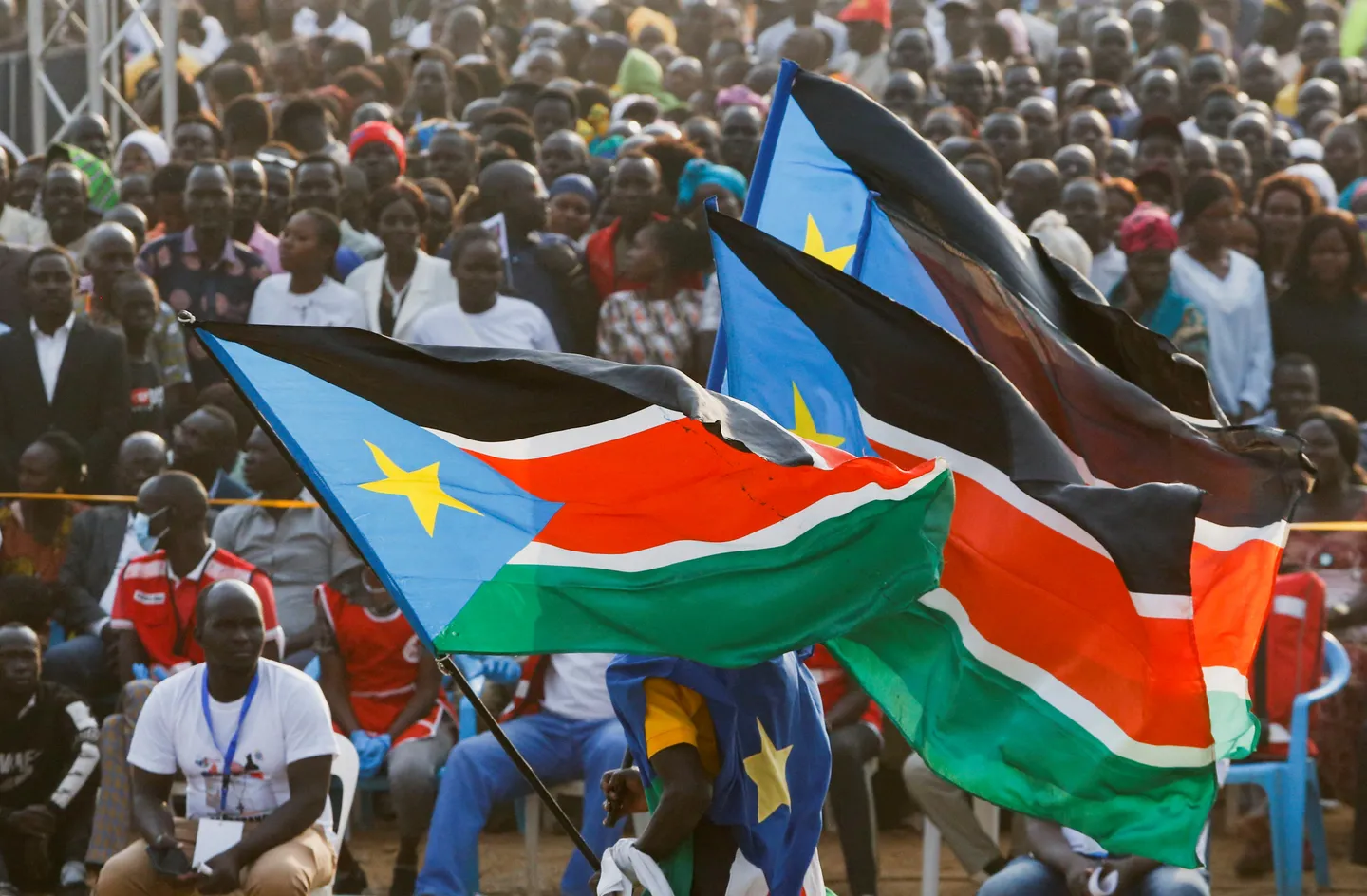
It is 15 years since South Sudan gained independence from Sudan, but the spillover from a bloody civil war has locked the world's youngest country in a stalemate that has seen its first-ever election delayed four times.
The polls are due to take place in December 2026, although concerns about electoral readiness persist, while progress towards a new constitution has stalled.
President Salva Kiir has been in power since independence. He is locked in a long-standing power struggle with his rival and suspended deputy, Riek Machar. This has made pursuit of an election a tense affair.
The two men are signatories to a 2018 peace agreement following a civil war that broke out in 2013, killing nearly 400,000 people and displacing millions of others, according to aid agencies.
The peace deal allowed Kiir to remain in charge with Machar as First Vice-President under a unity government. However, growing distrust between their factions saw Machar suspended from his role by President Kiir last year.
Machar was then put under house arrest and charged with treason and crimes against humanity. He denies the charges.
Many in the country feel the December vote would bestow a new government with a popular mandate to allow for state-building and enable citizens to demand accountability.
“We want to move out of the peace agreement. Only with elections can we create new legitimacy in government because what we have now are people who are accountable only to parties to the peace agreement. We want a government that is accountable to us,” Prof Abraham Kuol Nyuon, a political analyst at the University of Juba, tells TRT Afrika.
Huge swathes of the country are marred by continued armed conflict and mass displacement.
Government forces retain control over most state capitals and major towns, while opposition forces hold rural areas in the oil-rich eastern and northern parts of the country.
Machar's group, the Sudan People's Liberation Movement-in-Opposition (SPLM-IO), has warned against voter registration and campaigning in territories under its control, saying the “country is at war”.
South Sudan’s elections have been repeatedly postponed. Previously set dates include 2015, 2018, 2021, 2023, and late 2024.
Even with the latest date of 22 December 2026, there have been warnings, including from the UN, that the current volatile situation may take the country to the brink of another civil war and delay the vote further.
“To proceed with elections without consensus among the parties who were in conflict that generated the transitional period may give us a hard time in creating peace and stability in the country for the election,” rights activist Edmond Yakani, the executive director of the Community Empowerment for Progress Organization (CEPO), tells TRT Afrika.
Legal and financial hurdles
When announcing the date for the election, electoral boss Abednego Akok Kacuol acknowledged concerns about the legal framework and financial constraints ahead of the vote. He said funding for the elections lies with the government.
Of the $250 million required to organize the elections, the electoral commission had received $21 million with $15 million from international partners while the remaining $6 million provided by the government.

“There are many challenges facing the commission and we strongly request the government to speed up amending the existing legal gaps and provide all basic needs within a short period,” he was quoted as saying by local media outlets.
Parliament last week cleared some of the legal hurdles by approving an amendment to the peace agreement on clauses affecting terms for elections.
It removed the requirement that a population census must be conducted and a permanent constitution adopted before elections could be held.
The government said the move was aimed at expediting preparations for the elections.
“All the required essential activities for creating good enough conditions for holding elections are not yet in place… It is a complex situation that needs to be resolved. Financially we are not prepared, logistically we are not prepared and politically there are pockets of instability,” Yakani observes.
Will the elections be held?
Analysts argue that overcoming the challenges facing the elections rests with President Kiir and his government.
In a statement last month, the presidency said the government was keen on "ensuring that South Sudan remains on course toward democratic elections."
President Kiir said preparations for inter-party dialogue on election-related matters were progressing and would provide a platform for building consensus among political stakeholders.
He also noted progress in the integration and deployment of unified forces — one of the sticking points of the peace agreement.
The African Union High Representative for the Horn of Africa, Jakaya Kikwete, met with President Kiir last month and praised efforts to register political parties, conduct civic education and draft a new constitution.
Analysts say the elections are crucial for South Sudan in entrenching democracy and political participation by citizens as well as stabilizing state institutions.
However, some observers still have doubts about electoral readiness. They warn against the attitude of “even bad elections are better than none”, saying an election should not be held just for the sake of it.
“Yes we need elections, yes it’s a popular call from citizens, yes it’s a good process for ending the transitional period, but we need to have elections that are not taking the country back to war,” argues Yakani.
“We should come out of this transition period in a better state rather than ending it in a fragile manner. The elections should harmonize political divides among the parties that signed the peace agreement.”