 Sylvia Chebet
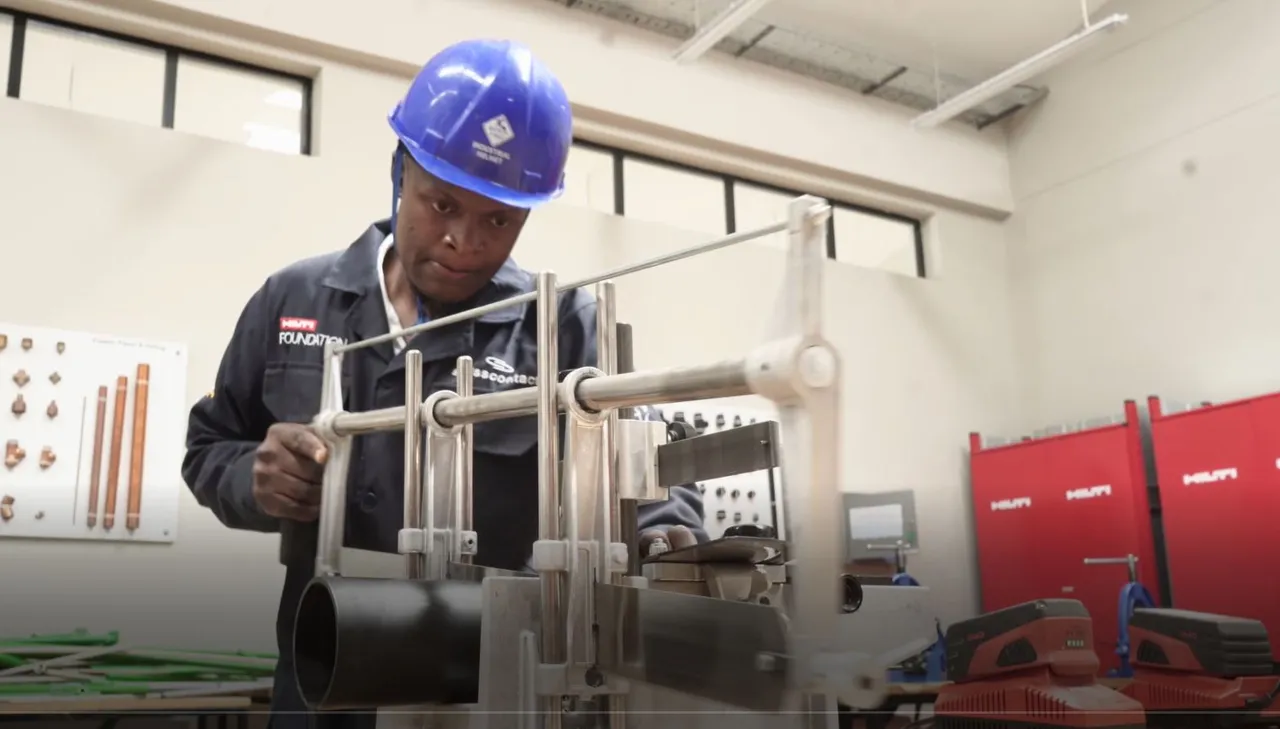
Shadrack Ombati grips his tools with the easy confidence of a seasoned plumber, his hands moving with practiced assurance across the workshop floor. Yet just a year ago, he was a novice. Today, he is an apprentice in Kenya’s fast-rising construction training initiative, PropelA—a programme designed to fast-track a new generation of skilled workers into the industry.
Each year in Kenya, roughly one million young people pour into an already overcrowded job market. Armed with little more than a secondary school certificate, Shadrack Ombati—who was orphaned at a young age—stood little chance against the fierce competition for a shrinking pool of jobs.
“I couldn’t manage to go beyond high school because my grandmother couldn’t afford it,” the 26-year-old tells TRT Afrika.
With few options, he turned to casual labour on construction sites in his hometown of Vihiga, in western Kenya—taking on whatever work he could find to support his grandmother and cover his own basic needs.
Turning point
Despite the hardship, Ombati never let go of a quiet, stubborn ambition to make something of himself. The turning point came in the most unlikely of places: a dusty construction site.
There, amid the clang of metal and the churn of cement, a manager took notice of the young labourer’s drive and discipline—seeing not just a casual worker, but untapped potential.
“He told me, ‘One day, if you come to Nairobi, look for me.’”
Months later, with a small sum he hoped would sustain him, Ombati took a leap of faith. He packed up and set off for Nairobi, chasing a promise—and the possibility of a different life.
Today, Ombati is part of an apprenticeship programme known as PropelA, which blends classroom instruction with hands-on experience. “We attend classes for one week and spend three weeks in the field,” he explains.
He is currently enrolled at the Don Bosco Boys Technical Training Institute in Nairobi’s Karen area, while completing his apprenticeship at Rope Engineering, a civil engineering firm. There, under the guidance of a mentor, he is steadily learning the trade. Back in the classroom, he brings real-world challenges to his instructors—turning daily hurdles into lessons that sharpen his skills.
Another student, Michael Olum, also at Don Bosco, says his first taste of hands-on work quickly humbled him. When he began his apprenticeship at Patronics Ltd, an electrical contracting firm, he realised he was far “greener” than he had imagined.
“The first task I was allocated—we were to do lighting conduiting—and I remember that small saddle, the 20mm saddle, almost made me cry,” he says. “I thought it was easy, but when I was given the screwdrivers, I couldn’t even open it.”
Since those early struggles, they have both made steady progress. With the two-year programme underway, they are confident that by the end of it, they will be able to “perform perfectly” the tasks in the plumbing and electrical fields.
Beyond technical training, the apprentices say the blend of classroom learning and fieldwork has reshaped how they approach their craft.
Soft skills
“Previously, I was just focused on working, but the programme has shown me that there’s a procedure to be followed,” Ombati says. “You might be skilled, but if you lack even a bit of soft skills, it can cost you a lot.”








At first, he admits, his focus was purely on mastering the technical side. But the classroom training has broadened his perspective. “There’s also a whole component on soft skills—how to deal with customers, how to conduct yourself in the company and how to communicate effectively,” he adds.
PropelA—a private sector-led dual training model that places 75% of learning in the workplace and 25% in the classroom—has emerged as a potential game changer in the fight against youth unemployment, a national crisis.
Developed in collaboration with the National Industrial Training Authority (NITA), the programme seeks to bridge the long-standing gap between training and industry needs.
Its growing prominence was underscored in March, when Labour and Skills Development Principal Secretary Shadrack Mwadime, alongside his Technical and Vocational Education and Training (TVET) counterpart Esther Muoria, officially launched the initiative in Nairobi—signalling a broader shift in how Kenya prepares its young workforce for the job market.
Since its inception in 2022, the programme—implemented by Swisscontact Development Programme—has attracted the support of around 40 private sector companies, all sponsoring apprentices and helping to shape a more industry-responsive training pipeline.
The project is designed to bridge the long-standing divide between education and employment, by ensuring young people leave training with the skills, experience and industry exposure employers are actually looking for.
This will help address the disconnect, where employers consistently report difficulty finding job-ready candidates, while graduates struggle to find work.
The disconnect is especially stark in fast-growing industries such as construction, where employers report a persistent shortage of job-ready talent—even as thousands of young people remain shut out of the workforce.
Impact
For Amos Oluoch, an electronic engineer at Patronics Ltd, the world of electricity is about far more than simply “let there be lights”—it involves a complex web of skills, standards, and safety considerations.
“It means we’ll have a larger pool of skilled professionals entering the job market,” he says. “And that’s a win for everyone—it will raise the standards of workmanship, improve communication and teamwork, instill discipline, and ensure adherence to industry codes. Whether it is transmission lines, substations, or electricity in general, a more skilled workforce will enhance safety and efficiency across the board.”
In countries like Kenya, where missing out on university often traps young people in a cycle of poverty—and where unemployment remains stubbornly high even among graduates—programmes like PropelA offer a vital alternative: a direct bridge from training to employment.
“This mirrors systems in Switzerland and parts of Asia, where industry-led apprenticeships produce work-ready talent, reduce youth unemployment, and raise productivity at scale,” Erick Mokaya, a financial analyst reckons, adding: “The result is a more efficient labour market where skills translate immediately into income, rather than years of delayed or unrealized returns."
Ombati can now handle a full spectrum of plumbing installations, from piping to all types of water closets (WCs). As he counts down to his graduation later this year, he is certain that his long-held dream of success and financial independence is within reach. “The dream is coming true for sure. I can promise you that the dream is coming true.”
With skills, experience, and determination in hand, Ombati is no longer just dreaming—he is stepping confidently into the future he has worked so hard to build.