A bill has been introduced in South Sudan's parliament seeking to bring to a formal end the existence of five vice-president posts ahead of the country's general election planned for December 22, 2026.
The National Elections Act, 2012 (Amendment) Bill proposes that all the vice-presidents vacate office three months to the country's polls.
"Within three months to the election date, the president of the republic shall relieve from office the first vice-president and (other) vice presidents," Oliver Mori, the spokesperson of South Sudan's parliament, said after the bill's introduction on Wednesday.
President Salva Kiir would, however, retain all his executive powers during the electioneering period, according to Mori.
Transitional constitution
South Sudan's Justice and Constitutional Affairs Minister Wek Mamer Kuol said the proposed law seeks to amend a transitional legislation, which would have made it legally challenging for South Sudan to hold elections in December.
According to the country's transitional agreement, the five vice-presidents "exist for the duration of the transition" and only cease to hold office at the conclusion of the transitional period.
President Kiir, 75, is yet to formally declare an end of the transitional period, although in early September 2026 he signed a transitional constitution amendment bill which lifts the requirement of a permanent constitution as a prerequisite for elections.



The bill that proposes the discontinuation of South Sudan's five vice-presidents is currently with the country's parliamentary committee on legislation and justice ahead of its consideration by the plenary within two weeks from the date of its introduction.
Number of members of parliament reduced
The bill also caps the number of members of parliament at 332, from the current 550.
"There will be 332 members in the coming elected parliament, of which 50 percent will be for geographical constituencies, 35 percent for women, and 15 percent to party lists," parliament's spokesperson, Mori, said.
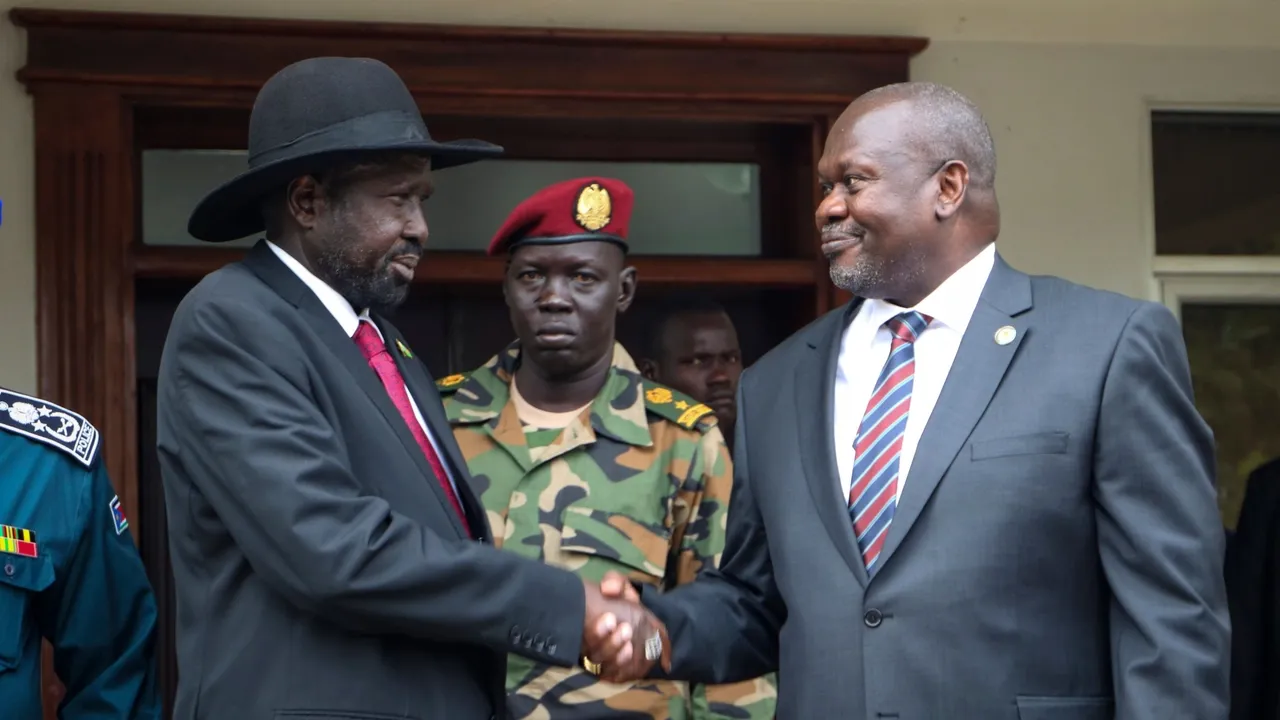
South Sudan, an ethnically diverse country which got independence in July 2011, has had five-presidents as a delicate measure to maintain peace after it witnessed a deadly civil war from 2013 to 2018 following the fallout between President Kiir and First Vice-President Riek Machar. More than 380,000 people died in that conflict, according to official estimates.
Machar, 73, is currently under arrest, and is facing treason charges after the government accused him of fanning violence in the country's northeastern state of Upper Nile in March 2025. Machar denies the charges.
The other vice-presidents, in charge of different government portfolios, are James Wani Igga (economy), Taban Deng Gai (infrastructure), Rebecca Nyandeng De Mabior (gender and youth), and Hussein Abdelbagi Akol (service).