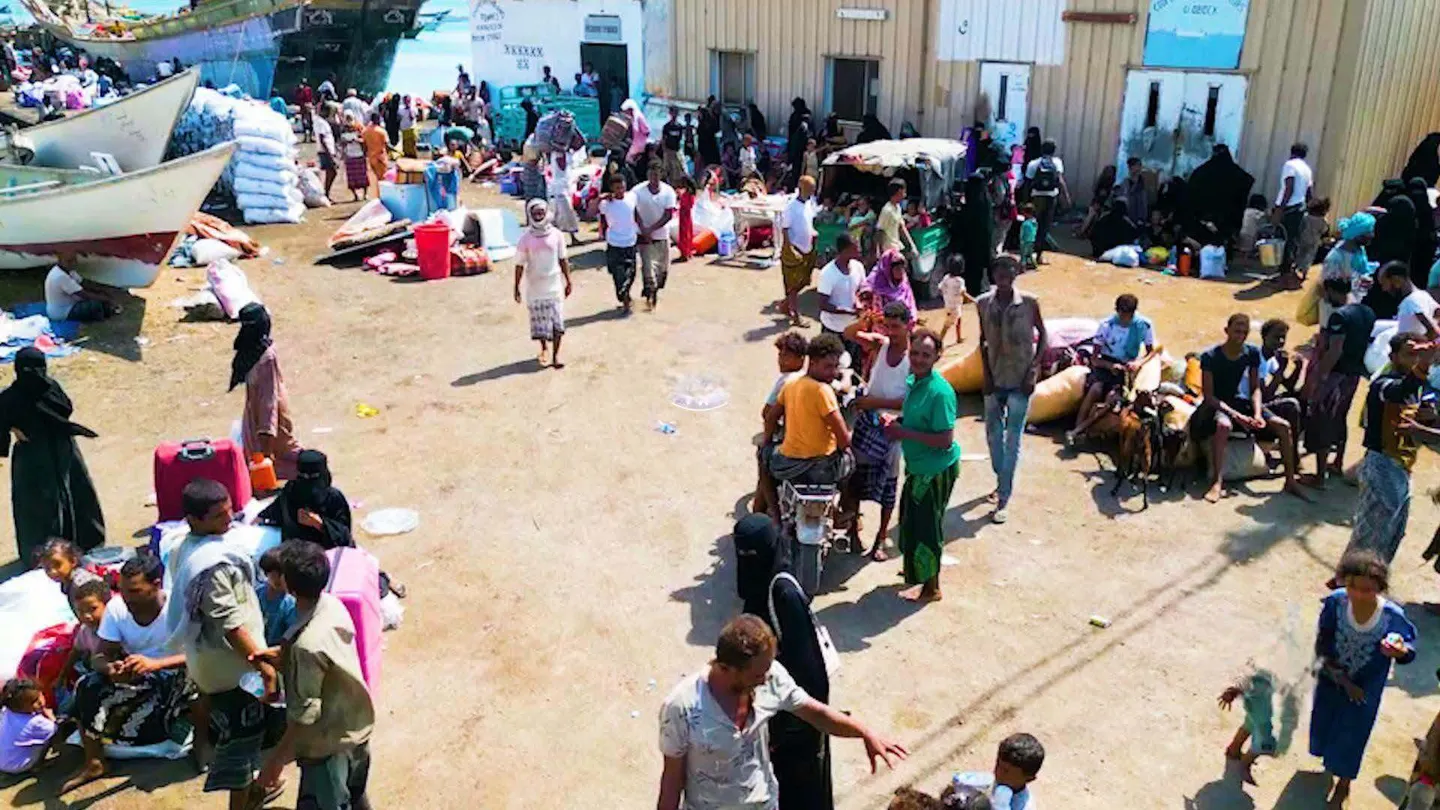
More than 2,000 people have fled Yemen for Djibouti in recent days due to worsening insecurity on Yemen’s western coast, with the displaced crossing the Bab al-Mandab Strait, Djiboutian authorities and humanitarian officials said.
The influx into Djibouti’s northern Obock region began accelerating on 10 September, according to the International Federation of Red Cross and Red Crescent Societies (IFRC).
Estimates shared by the National Office for Assistance to Refugees and Disaster Victims (ONARS) initially put the number of Yemeni refugees at about 1,600, most of them women and children.
Djibouti’s Minister of Economy and Finance Ilyas Dawaleh said in a social media post that as of Sunday, 13 September, the figure had risen to 2,084.
Displaced Yemenis
Prime Minister Abdoulkader Kamil Mohamed, accompanied by Foreign Minister Abdoulkader Houssein Omar, Interior Minister Omar Abdi Said and other senior officials, visited Obock on Sunday to monitor the situation of the displaced Yemenis.
Obock lies on Djibouti’s northern coast overlooking the Bab al-Mandab Strait, one of the world’s most strategically important maritime passages separating the Horn of Africa from the Arabian Peninsula.
Those arriving are fleeing violence and deteriorating conditions along Yemen’s western coast, where clashes between Yemeni government forces and the Houthi group are intensifying with air strikes and ground fighting inflicting heavy casualties on both sides.
The International Organization for Migration (IOM) has said that more than 82,000 civilians have been displaced since the beginning of September, including more than 2,000 who have reached Djibouti.








Dangerous sea rescues
Some people were reportedly rescued at sea by Djiboutian authorities after their boats ran out of fuel during the crossing.
The coastal areas of Khor Angar, Moulhoul and Ras Siyan are other arrival points according to humanitarian officials. Groups arriving at those locations have been awaiting transfers to Obock town.
Djiboutian authorities have mobilised national agencies to provide security protection, healthcare and food for the fleeing Yemenis as part of Djibouti’s longstanding humanitarian policy.
“Djibouti has always remained a safe haven for its brothers and sisters from neighbouring countries in times of hardship and crisis, despite the growing security, economic, and humanitarian pressures these influxes place on the country,” Dya-Eddine Saïd Abdoulrahim Bamakhrama, Djibouti’s ambassador to Saudi Arabia, said in a statement posted on X.
“May God protect Yemen and the entire world from conflict and grant all nations peace and stability,” he added.
“We cannot allow those who have sought refuge among us to suffer,” he said, praising Djiboutians for their mobilisation and solidarity with the Yemenis.
The Horn of Africa nation has for decades hosted refugees and displaced people fleeing conflicts in neighbouring countries. The latest arrivals also underscore the risks faced by civilians attempting to cross the Gulf of Aden and Bab al-Mandab Strait in search of safety, often in boats with limited fuel, food and other supplies.