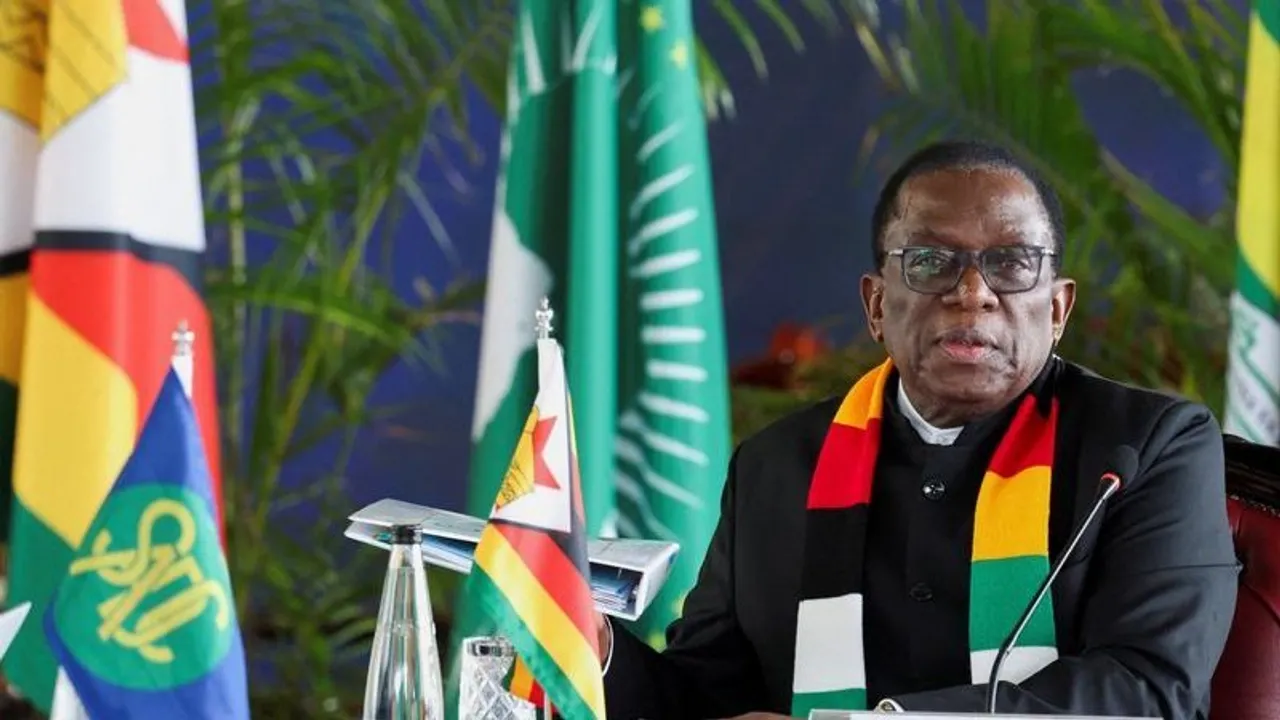
Zimbabwe's government introduced a bill to parliament on Tuesday that would extend President Emmerson Mnangagwa's term by two years to 2030.
The draft legislation will be debated on Tuesday at a second reading in parliament.
Mnangagwa, 83, is meant to step down in 2028 after serving two five-year stints as head of state, but his supporters want to change the constitution to extend presidential terms from five years to seven.
They also want presidents to be elected by parliament rather than by direct popular vote.
Justice Minister Ziyambi Ziyambi introduced the bill in the lower house of parliament.
Bill faces mixed reactions




President Mnangagwa's ZANU-PF party has a two-thirds majority in the lower house and also overwhelmingly controls the upper house through traditional leaders and other members.
Ziyambi has said previously that he expects the legislative process will take about a month.
ZANU-PF has ruled Zimbabwe since independence from Britain in 1980, first under longtime leader Robert Mugabe and then Mnangagwa, who took over after a 2017 coup.
On Tuesday a group of retired generals and former civil servants publicly voiced their opposition to the bill. They said they had met with Mnangagwa last month to voice their concerns.
Some war veterans and activists also challenged the bill in the Constitutional Court, which reserved judgement while it considers their arguments.