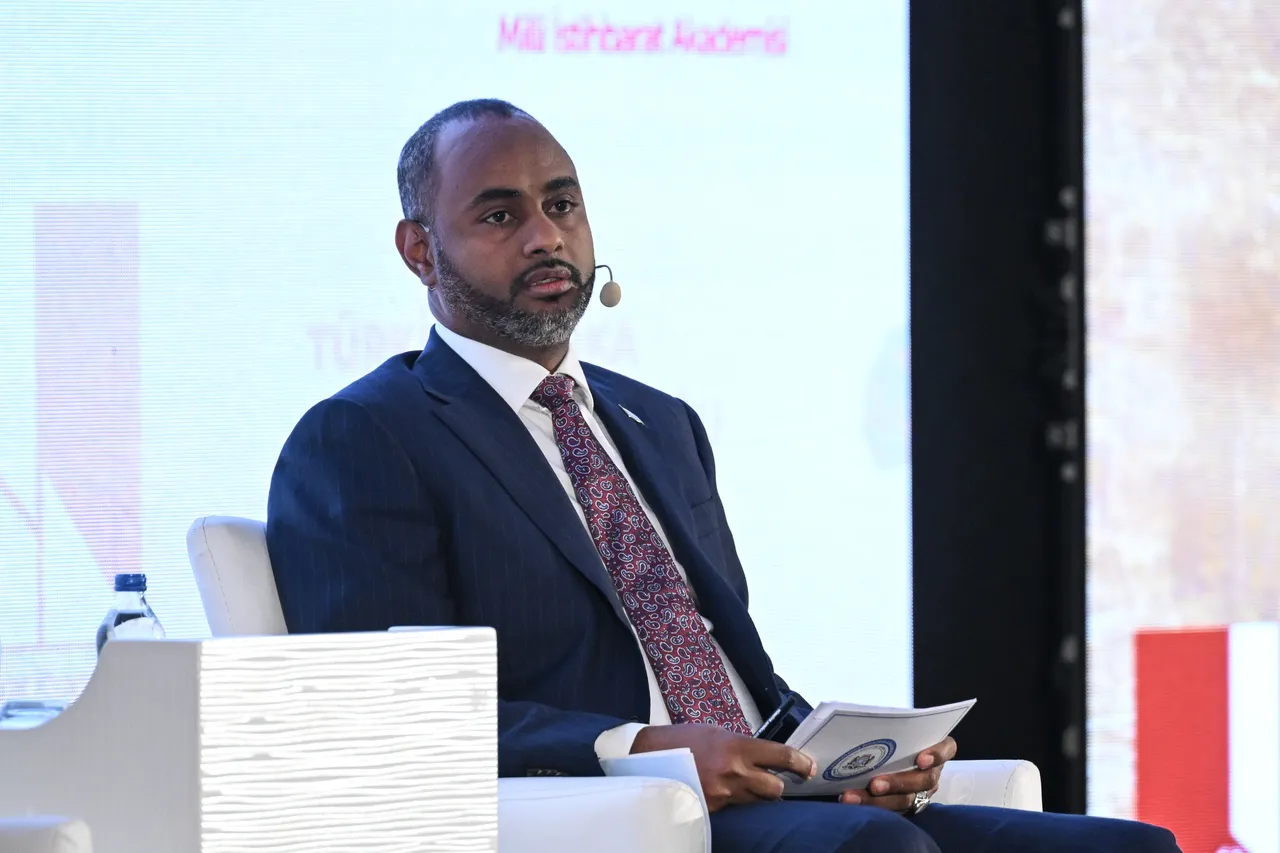
Somalia’s ports and marine transport minister has urged political actors to embrace democratic participation over conflict, saying the country is moving towards a future in which citizens directly shape government through a one-person, one-vote electoral system.
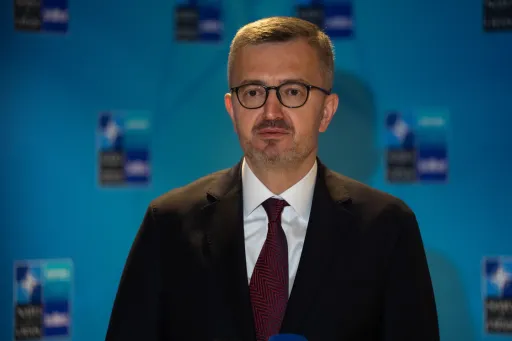
Speaking at a forum hosted by the Foundation for Political, Economic and Social Research (SETA) in Ankara, Abdulkadir Mohamed Nur said Somalia’s political transformation aims to replace clan-based power-sharing arrangements with a democratic system rooted in popular participation.
“Those who want to participate in politics must choose the path of the ballot box, not war,” Nur said, stressing that Somalia’s future should be determined by the will of its people rather than violence.
The event focused on Türkiye-Somalia relations and regional developments.
Nur, widely known as Jama, praised Türkiye’s role in Somalia, saying no international partner had contributed to the country’s development in such a comprehensive manner.
“Many countries and organisations have been present in Somalia,” he said. “However, there was no one assisting Somalia’s development in such a multi-dimensional way as Türkiye.”
He said the relationship between the two countries had deepened steadily over the years and expressed confidence that the arrival of the Çağrı Bey drilling vessel would help support economic growth and strengthen Somalia’s fisheries sector.
Moving towards direct elections
Outlining Somalia’s electoral reforms, Nur said the country’s previous 4.5 clan-based indirect system excluded ordinary citizens from directly participating in the political process.
Under that model, clan elders selected the country’s 275 members of parliament, who then elected the president. The president subsequently appointed the prime minister.
Nur said reforms introduced in 2016 expanded participation by allowing 51 representatives from each clan to elect members of parliament. That number was later increased to 101 in 2022.
The reforms, he said, were designed to create a pathway towards universal suffrage while Somalia continues its fight against terrorism.
“As Somalis actively combat terrorism, we have sought to create a system where citizens can participate in politics and genuinely have a voice,” he said.
Disinformation
Nur accused unnamed countries of financing disinformation campaigns aimed at damaging Somalia’s image abroad.
“Certain countries are paying money for disinformation to be produced on these matters, that is to say, to portray Somalia poorly,” he said.

He argued that positive developments in security and trade were often overlooked, while isolated incidents received disproportionate attention.
“There is a massive change regarding security,” he said. “They say nothing about the highly positive developments. Yet when there is a minor negative incident, it is exaggerated.”
Energy Cooperation
Turning to offshore energy exploration, Nur said Somalia had previously reached agreements with Western companies for drilling operations off its coast, but those projects failed to materialise. The agreement with Türkiye, he said, covers three offshore blocks.
Nur said the Oruç Reis and Çağrı Bey vessels continue to operate off Somalia’s coast, while Türkiye provides security, technology and substantial investment.
He rejected allegations that Türkiye’s involvement was aimed at exploiting Somalia’s resources, arguing instead that the partnership would generate benefits not only for Somalia but for the wider East African region.
Nur also dismissed claims that Somalia would receive only five per cent of revenues from any future offshore oil production, describing the allegations as disinformation.
He said officials and energy experts had repeatedly explained the terms of the agreement to interested parties, but acknowledged that more work was needed to ensure accurate information reached the broader public.
Opposition to electoral reform
Nur said Somalia’s transition towards a one-person, one-vote system had helped reduce the risk of clan-based conflict but had also faced resistance from some political figures.
“Certain politicians who lack foresight for the future are opposing this,” he said. “They, in turn, are receiving support from certain states.”
He pointed to recent municipal elections in Mogadishu, which he said were completed without security incidents, as evidence that the process was progressing successfully.
According to Nur, a small group of opposition figures and armed supporters recently staged what he described as inappropriate actions in the capital. He argued that some media organisations amplified the images to create the impression that Somalia was descending into chaos.
Nur said the individuals involved were quickly dispersed and failed to gain wider public support. “The Somali people know what they want,” he said. “They feel secure and did not support these groups that took to the streets.”
While acknowledging the challenges involved in implementing direct elections, he said the government remained committed to the process.
“We know this is not easy,” he said. “But we have tested this model and believe it is highly viable.”